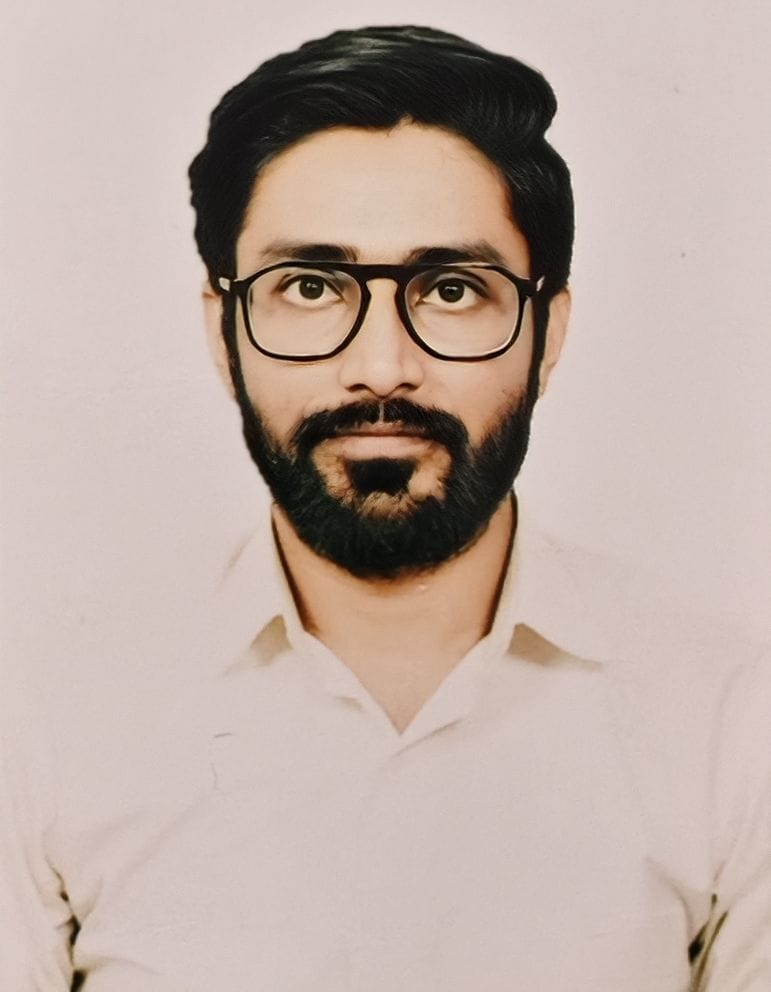
The living room of a Mumbai apartment is seldom the scene of a national controversy, but this living room belongs to Aamir Khan, the celebrated actor. On July 5, 2026, in a private civil ceremony at the actor’s Bandra residence, he married Gauri Spratt, a Bengaluru-based art consultant who he has known for nearly twenty-five years. It was an intimate gathering, attended by roughly 150 people including his children Junaid and Ira, and corporate titans like Mukesh Ambani.
For advertisement on our platform, do call at +91 6377460764 or email us at [email protected].
Then the internet erupted. Within 48 hours, social media had fractured along familiar, heated divides. Religious clerics stared into webcams sermonising about divine laws, fringe political activists held press conferences lambasting the marriage, and soon, a leading Islamic cleric issued a formal religious fatwa.
The offence?
The actor had apparently violated the sacred text by marrying outside his faith.
The actor’s reaction wasn’t to summon the television cameras for a press conference. He settled into a quiet chair, looking slightly weary but more amused than anything, by the fuss being generated over his personal life.
When Religion Draws the Line
The formal opposition was spearheaded from Uttar Pradesh. Maulana Chaudhary Ifrahim Hussain, the Shahi Chief Mufti of the Muslim Personal Darul Ifta, released a video on July 9 that went viral. The Mufti, with his practiced, measured tone, enunciated the strict parameters of Islamic law governing interfaith unions.
He categorically stated that for a Muslim man to marry a non-Muslim woman without her conversion to Islam was a sin as per Islamic doctrine and hence impermissible under the law.
He even went so far as to say that such a union sets a wrong example for public figures like Khan and gives a negative impression of Islam.
The actor remained mum for days through his official public relations apparatus. There were no defensive tweets or press releases from his camp.
Love and the House of Many Faiths
When Khan finally spoke to journalist Subhash K Jha, he steered clear of the theological points raised by the Mufti. Instead, he pointed to the lived reality of his own family. His is not a strictly religious household where adherence to a single faith is mandated.
Interfaith marriages are not an exception in his family, but rather the norm.
Both his sisters are married to Hindu men, his daughter Ira recently married her fitness coach Nupur Shikhare in a ceremony where no conversion took place, and his cousin, the filmmaker Mansoor Khan, married a Christian woman decades ago. “My home is not like that,” Khan had said in that interview. “My children live together, they work together, it’s a mixed-faith family. My own father was married to an Indian Christian, my own mother converted and came into a Muslim household.”
He described the current furore as increasingly hilarious.
“ I found it very comical that there’s such an interest in what I’m doing,” he admitted.
A Tale of Three Weddings and a Special Act
The vitriol against Khan on the internet has often been fueled by a politically charged phrase: “love jihad”. Right-wing social media activists and politicians have sometimes accused him of using his influence and platform to “woo” women of other faiths into his life with the ultimate objective of converting them.
Khan was blunt about this. “None of the three women that I have married over the last four decades has changed her faith to be with me. She has always been who she is, I have always been who I am, we are who we are.”
His first marriage, to Reena Dutta, was a civil union in 1986; they divorced in 2002, she is Hindu.
His second, to filmmaker Kiran Rao in 2005, was another civil union; they divorced amicably in 2021. She is also Hindu.
Spratt, who hails from Bengaluru and knows him for over two and a half decades, also married him under the Special Marriage Act. Further dispelling online misconceptions that Spratt is Hindu, Khan revealed that she is actually Christian, albeit “not a particularly practising Christian, to tell you the truth.”
The Crossed Signals
The peculiarity of the latest controversy lies in its positioning between two mutually exclusive poles of opposition. On one side was the outrage of traditionalist Islamic scholars such as Mufti Hussain for what they see as a deviation from scripture. On the extreme opposite, right-wing Hindu groups organized protests against the marriage, with activists in parts of Maharashtra even burning Khan’s effigies, terming the marriage an assault on their cultural identity. A fringe religious leader from Ayodhya even offered a bounty to anyone who would assault the actor physically.
For Khan, the choice of a civil wedding under the Special Marriage Act is the decisive answer to all the arguments against it. The law is designed specifically by the Indian state to allow people of different faiths to marry each other without the need for religious conversion or rituals.
From Sky Villas to Societal Norms
Adding to the furore, media reports began circulating about the actor’s plan to build a colossal “sky villa” in Bandra’s posh Pali Hill area, reportedly costing over ₹100 crore. Unverified accounts spoke of a lavish complex where his new wife, his former wives Reena and Kiran, his children, and other extended family members would each occupy different floors of the same building.
Khan took pains to set the record straight on this front too. He clarified that no sky villa is under construction. The building where he resides, Marina Apartments, is undergoing a routine redevelopment, a common phenomenon in a growing Mumbai.
The decision to redevelop was taken democratically by the building’s twenty-four independent members.
Although he owns several flats in the building, the idea of creating an exclusive family compound was blown out of proportion by entertainment journalists.
A Consistent Reality Amidst Chaos
What’s evident is the bizarre tightrope public figures in contemporary India walk, where their personal decisions are instantly refracted through the lenses of religion and politics. Despite the threats and the religious diktats, life within the Khan household, it seems, proceeds uninterrupted, anchored by a quiet confidence in personal autonomy and the logic of civil law, irrespective of the storm outside.