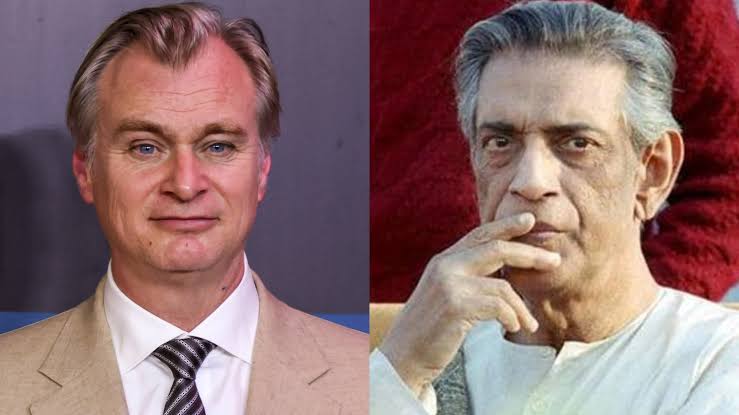
The surprising New York import This small, claustrophobic room in New YorkCity– the Criterion Closet – has beenshe the stuff of film buff fantasies. Directors walk in empty-handed, pick their favorite classic DVDs from theshelves. Late July,Christopher Nolanslipped in.
For advertisement on our platform, do call at +91 6377460764 or email us at [email protected].
Nolan is now 55 and coming off the mega-grossing openingforhisnew film The Odyssey, but rather than reaching fora science-fiction epicor an enigmatic French thriller, he goesstraight to a box set of film classic and grasps The Apu Trilogy directed by Satyajit Ray.
He didn’t just take the box set, however, just tolook good for the cameras. He starts speaking about how profoundly thefirst of the trilogy, then new to cinema, has moved him. Ray, heexplains in a new Criterion film clip released on X andInstagram, is one of the greatest filmmakers of all timein his home country. Yet Nolan readily admits something unexpected: “Pather Panchali – in ’55- just blew my bloody mind.” he adds thathehasn’t even watched the other two movies.
He has taken the three-disc box set so thathe can finally go home and finish the Apu story.
Why Pather Panchali so thrilled him. What isit that this modernmaster of the IMAX spectacle is so keen on this oldblack-and-white drama from Bengal? Itis in the sheer realism.
Rather thanbuildsets in Kolkata studios,Ray ventures into the actual villages and cast amateuractors. Young Apu is played by Subir Banerjeee; his fatherbyKanuBanerjee; and none have any motionpicture experience. The film doesn’t bother with a rapidfirescriptor anoverthe-top screenplay, Instead, Ray focuses on the natural rhythmsand routine ofa verystruggling family life.
For a poor boy strugglingin rural India- how can a guy who just made a $200 millionepic notbe fascinated? – The filmmaking was, at the time, disasterincurred financially: Rayspentallhis money many times, and therewere monthswhen the production simply had to cease until he wentback and Worked atan advertising agencyfor an extension period.
Thestategovernmentatone point subsidized the continuing effort,ostensiblythinkingit wasavillage road project due to the title. But it’s preciselythis lack of Hollywood sheenthat creates the realism that Nolanis soattracted to. The cameracop Subrata Mitrai, whohadnever before made a motion picture and actually invent bounceighting by pinning up white bed- sheets over windowssoastosupport realism indoors-that becomes the newbenchmark. All that you need are observation of the human face andcommon life-not all these digital trimmings.
The life and deathofApu One reason why Nolan’ll surely love those second and third discsis to go back tobibhitibhusanBandyopadhyay’s1929Bengali Novel onwhichtheRay filmsarebased.
The three part odyssey spans from 1955’s Pather Panchali to 1956’s Aparajitoto 1959’s Apur Sansar, charting Apu’s childhood and journey towardadult life, from bamboo forest romp with Durga to solitary solitary confinementin a rented Kolkata flat-as an observer’s eye would follow an entire lifetime on celluloid. Indians were accustomed to historical films or musical pageants before Ray appeared. WhenPather Panchali began its run at the Cannes Film Festival in 1956 , it caused quite the stir .
Some critics called it too slow, but by the end it took home The Best Human Document award. Later that year ,Aparajito scooped theGoldenLion, the top Prize at the Venice International Film Festival and made Ray a global phenomenon, inaugurating the parallel Indian cinematic movement and ushering in new kinds of Indian filmmaking: not flashy, just real. Other international filmmakers as legendary as Kurosawa (who said an uninformed person in the film world is like someone who’s never seen the sun or the moon) have credited Ray as a prime example of visual naturalism.
So have Martin Scorsese and Francis Ford Coppola, but the latest auteur adding their name to this prestigious group is a director known for immense visual scale:Christopher Nolan.
Going Global with theindian Cinema Nolan’s interest in Indian filmmaking and history isn’t merely tangential either;he’s a recurring visitor. This mid-July of 2026, Nolan, along with producers Emma Thomas, andactors Matt Damon and Tom Holland travelled to Mumbai, as part of global PR duties for The Odyssey,where Nolantold Indian filmmakers during a press conference that this was not a fly-by night visit. He had previously attended a film preservation event in the city hosted by his friend Shivendra Singh Dungarpur. While there, he spent time with local filmmakers and got a firsthand look at the way they are preserving the country’s film heritage .
Nolanhas shot in India before , spending 10 days of August in Mumbai in 2019 shooting for Tenet, and as far back as 2011 brought his colossal IMAX cameras to Rajasthan ‘s Mehrangarh Fort to shoot a vast subterranean torture chamber for The Dark Knight Rises .
The Nolan Method There’s a rich irony watching director of the 2019, $300m epic on the Trojan War become enamored by a 1950s black-and-white rural Drama. The Hollywood norm has for decades now embraced cg and fast-paced, digitally compressed narrative for phones. Rarely today do cameras hold for longenoughontopursuestructure at rest to truly see or register character breathing, with the diametrically Opposed approaches in the work Of Satyajit Ray .
While others focus on the immediate impact Of dialogue on an already busy action , Ray’s stillness conveys gravity-or wonder-as whenApu and Durgaruntough fields of white flowers only to gaze upon a departing steamboator at a passing train. It isn’t simply an aesthetic choice;it demonstrates a profound faith in the power of observation alone , a commitment to recording life as it happens . And it is why , all these decades later, a guy as famous as Nolan can step into the Criterion Closet, and walk out with not a special effects extravaganza, but a box set on how one young boy’s journey is one for the ages .