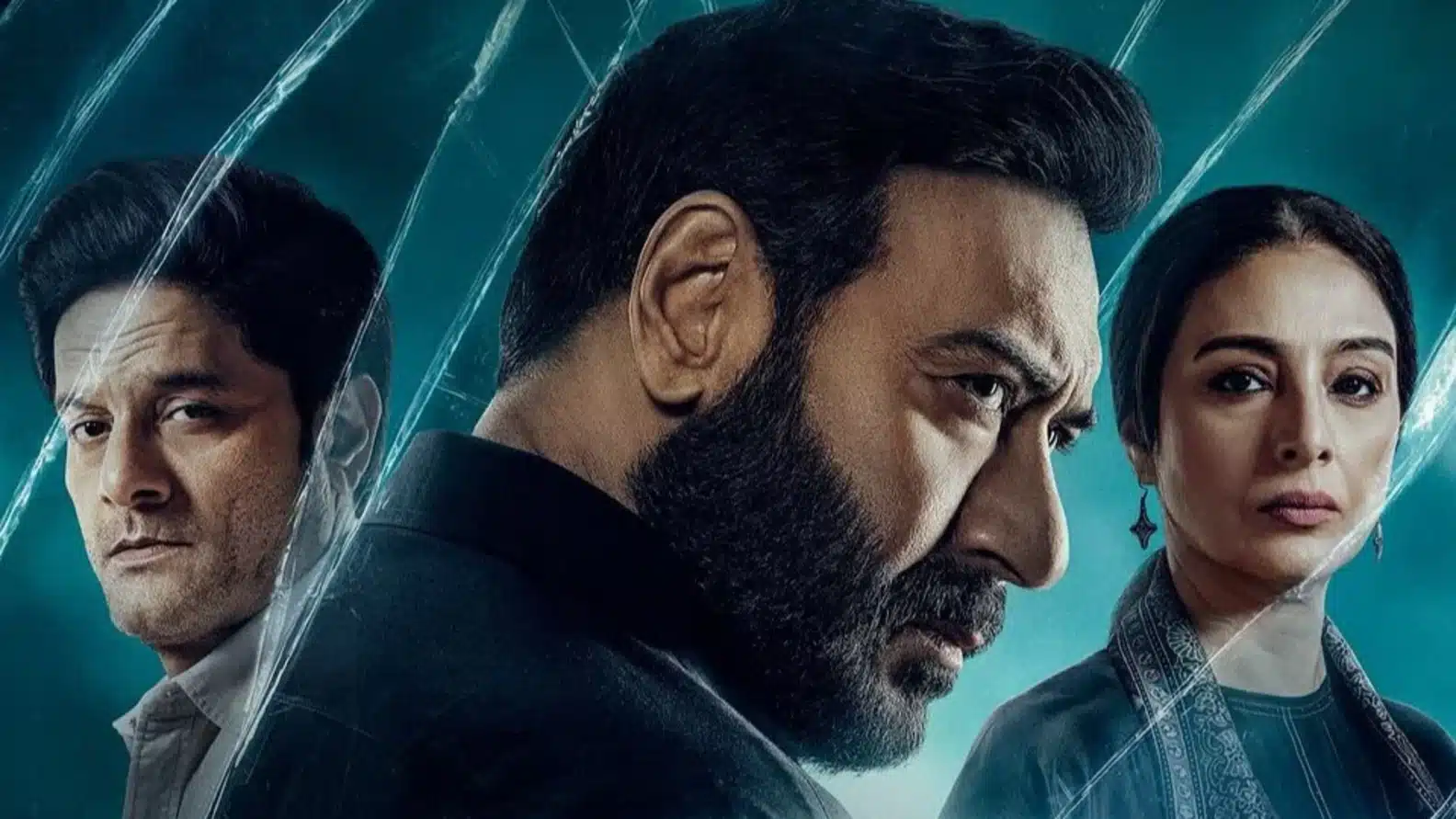
Towards the end, a viewer asked if he had enough dialogue in the film Ajay Devgn’s performance in Drishyam 3: The Conclusion is being discussed with many viewers noticing that the actor has lines in some important scenes. Abhishek Pathak’s Hindi crime thriller has Devgn reprising his role of Vijay Salgaonkar, a family man who continues to stay sharp and unfazed in protecting his loved ones. While some viewers have questions on the lack of lines for the actor, others have been praising his silent anxiety conveying body language. The actor’s performance has also brought attention to Jaideep Ahlawat, whose long exchanges with him have received positive mentions from early reviews. (Koimoi)
For advertisement on our platform, do call at +91 6377460764 or email us at [email protected].
Why Does Ajay Devgn Speak So Little in Drishyam 3?
One of the most talked-about elements of the film is Vijay Salgaonkar’s sparing use of dialogue. In his review, film trade analyst Taran Adarsh was reportedly quoted as saying that Devgn has minimal dialogue, but she is expressing the character’s thoughts through his eyes and the persona’s face. Another portion of the film, just before the interval, where Jaideep Ahlawat’s character visits Vijay’s house was noted for having long conversations between the two, with Ahlawat speaking much of the time, while Devgn is silent.
It is in keeping with the persona built in the previous films. Vijay is not the type of character who spells out everything he thinks aloud. Like all stalkers, his strength is in the art of noticing, in knowing what a person is going to do and in knowing when to say what. In a suspense thriller, silence can be as powerful as words in creating anticipation about a character’s state of mind. (Bollywood Hungama)
Fans Argue If Silence Improves the Performance
However, the sparse use of words has divided audiences. While some viewers have criticized the film’s pacing and claimed the plot takes its sweet time to unfold, particularly during the first half, others have lauded Devgn’s restraint and suggest that he says more with his face and those long pauses than a whole speech.
Published in The Indian Express this morning, early audience reactions have emphasised a few instances where Vijay’s silence was a cause for discomfort as well, including courtroom scenes. While some applauded the interval scene, the overall suspense of the film, many others also mentioned how aspects of the storyline were predictable. This points to the fact that the discussion is not about how much Devgn speaks but that a silent screenplay is interesting throughout. (The Indian Express)
Jaideep Ahlawat’s Performance Adds to the Discussion
Jaideep Ahlawat has been a talking point for his performance. The actor’s style and character adds a new dynamic to the investigation, playing out scenes in which where words and mental duress are high points of the scene. Ahlawat’s heavy dialogue-driven style compared to Devgn’s subdued version has been an area of discussion in some reviews.
The sequence where Ahlawat goes to Vijay’s house is the first one that stood out for Taran Adarsh. The scene lasts for about 15 minutes and Devgn hardly speaks before he finally speaks. Adarsh said that the scene is set up for that moment and the fact that there isn’t much dialogue makes it all the more effective. The sequence actually demonstrates how the film uses the chasm in the performances of the two actors to keep up the suspense, rather than dialogue. (Hungama Express)
Does Fewer Dialogue Mean Less Acting?
A character can’t be judged solely by the number of lines he or she has. How an actor uses facial expressions, posture and reactions to other characters can reveal as much as the words spoken, and timing can be everything. In a mystery or suspense story, details such as that can draw the audience further into the story.
But even silence isn’t foolproof. If a performance can be made to work, its success hinges on the writing, the direction, the editing, and what each scene is trying to make you feel. If a scene is underdeveloped or lackluster, a speech-light approach may seem to be a weakness rather than an inventive stylistic choice. Which accounts for why some audiences will watch the same performance and find it successful and others won’t.
In Drishyam 3, Devgn’s subtle depiction of Vijay Salgaonkar has endeared him to some critics, whereas the pacing and way in which established characters were handled has disappointed others. The question about the dialogue in a suspense film has been raised: is it necessary for the character to say what he is feeling or can one sense it by what is left unsaid?