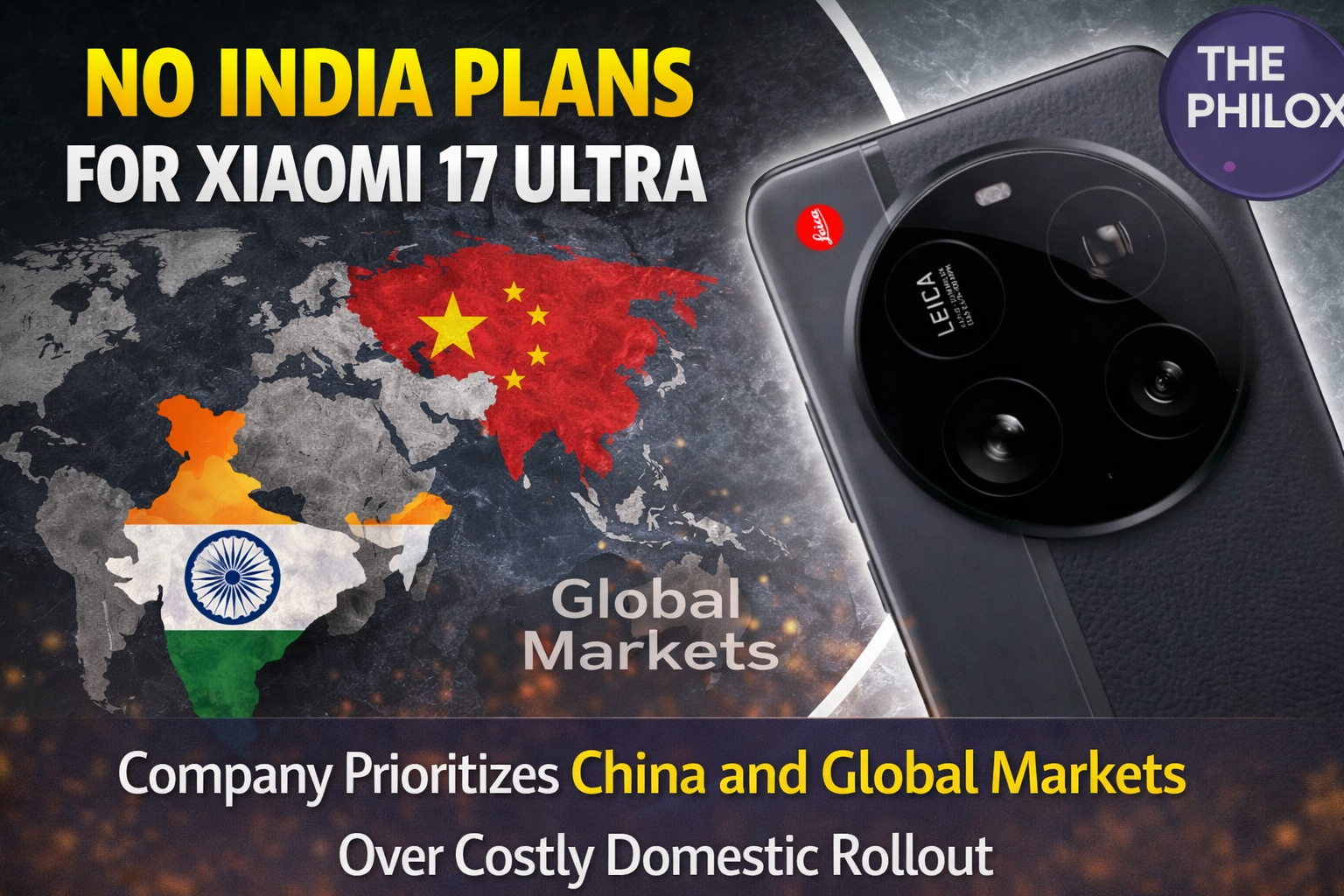
A Pivot in Strategy: Xiaomi 17 Skips the Indian Market.
The build up to Xiaomi 17 Ultra has been felt by the technology enthusiasts in India, but as of late, there has been a notable change in terms of Xiaomi approach towards the region. It has been reported that Xiaomi has chosen not to engage its new marquee flagship, the Xiaomi 17 Ultra, in the India-based market. This announcement is a very big surprise to the faithful followers who were already anticipating the camera-focused juggernaut, considering that the company had gradually begun to re-introduce its high-end products in the region over the past few years. The shift is a reversion to a more conservative strategy, focusing on markets in which the ROI has on ultra-premium devices is assured.
For advertisement on our platform, do call at +91 6377460764 or email us at [email protected].
This omission has been explained by the fundamental reasons as a strategic re-allocation of resources to the Chinese domestic market and major world markets such as Europe. The leadership of Xiaomi has allegedly evaluated the feasibility of the ultra-premium segment in India and came to the conclusion that the quantity of sales is not worth the tremendous logistical and marketing expenses necessary. Although the Xiaomi 17 Ultra will bewitch the buyers in Beijing, Berlin, and Paris with its Leica-tuned optics and Snapdragon 8 Gen 5 processor, the Indian consumers will need to go elsewhere. This estimation is indicative of a cool and stark consideration of the sales figures of older models of “Ultra” in the subcontinent, which were still niche products regardless of the critical reviews.
The Economic Hurdle: Several Domestic Rollout and Tariffs are expensive.
The cost preventing nature of entry of a device such as the Xiaomi 17 Ultra into the Indian shores is one of the main factors making this decision. The Indian government is promoting local production through their program of Make in India and it is a good initiative, however, installing assembly lines to as complicated a device as the 17 Ultra is a logistical nightmare. The phone has such a use of specialized materials as vegan leather, high grade ceramics and a special 1-inch sensor array that cannot be easily recreated using standard assembly units. To import the device as a Completely Built Unit (CBU) would invite high customs charges, and the retail price would easily exceed the psychological ceiling of Rs 1,20,000 thus making the product incompetitive against the established luxury competitors.
https://www.91mobiles.com/hub/xiaomi-17-ultra-china-launch-next-week-certified-globally
Moreover, the size of sales volume of the super-premium Android flagships in India is significantly low in comparison with mass market. To have Xiaomi produce the device in China to escape the tariffs, they would have to order a minimum of one which the market demand cannot sustain. It will not make financial sense to a company that lives off scale and efficiency to invest in tooling factories to run a limited scale production of a few thousand units. This would in turn compel the company to import the units and the ensuing price tag would repel the value-conscious customer base that Xiaomi has earned over a decade. It is a typical economics dictates strategy type where the margins just do not justify the risk of unsold inventory.
Legacy Player Premium Sector Dominance.
The next fact that cannot be disregarded when making this decision is the fact that Apple and Samsung have the Indian high-end smartphone market in their grip. When an Indian consumer is spending more than one lakh rupee on buying a smart phone, the option of choice is most clearly to buy an iPhone or a Galaxy S-series phone. These brands have created a certain degree of modernization and resale that Xiaomi, even with its technological expertise, cannot compete with on the ultra-premium segment. Xiaomi could perhaps do a better job on the hardware, or the cameras, but the brand awareness in India remains deeply rooted in the low-cost Redmi brand. To overcome this perception, a marketing budget that Xiaomi is not ready to invest in just one model is needed.
Market observers have indicated that even though Xiaomi dominates the lower and middle-end markets, they are worse at converting at the flagship market as compared to China or Europe. Carrier partnerships in Europe enable users to purchase high-priced phones on contract, which cushions them against the initial expense of purchasing a phone. India is largely an open market whereby customers pay top price or through consumer finance and therefore they are much more discriminating. Xiaomi does not seem to be willing to fight a losing match against the juggernaut of the iPhone 17 Pro and the upcoming Galaxy S26 Ultra. They are instead saving their ammunition in portions where they can actually win like in the sub-40,000 rupee segment.
The concentration on the Core Markets: China and Global Expansion.
The reason not to enter India also underscores the refocused attention to Xiaomi to establish its supremacy in the Chinese market, where it is competing with Huawei and Vivo. The Chinese market is a consummate consumer of the new technology, and it is ready to spend above on domestic innovation. With the supply chain and marketing focus on China, Xiaomi can guarantee that it is able to fulfill the high demand without shifting the few components to markets of uncertainty. The Xiaomi 17 Ultra is the direct competitor to the hegemony of Huawei, and the homeland is now the priority of the company.
The trend around the world is moving towards markets that value the brand name of Leica and the photography-first model of the Ultra series. European customers have been more willing to try the upscale Chinese flagships as they have perceived them as valid substitutes to status quo. The brand equity of Xiaomi in such countries as Spain, Italy, and Germany has already grown to the level where an Ultra phone is regarded as the status symbol. Thus, targeting the low production capacity of Xiaomi 17 Ultra to those markets guarantees an increased level of sell-through and enhanced brand presence in the international arena. Unfortunately, India belongs to another strategic category where quantity is the priority over the prestige.