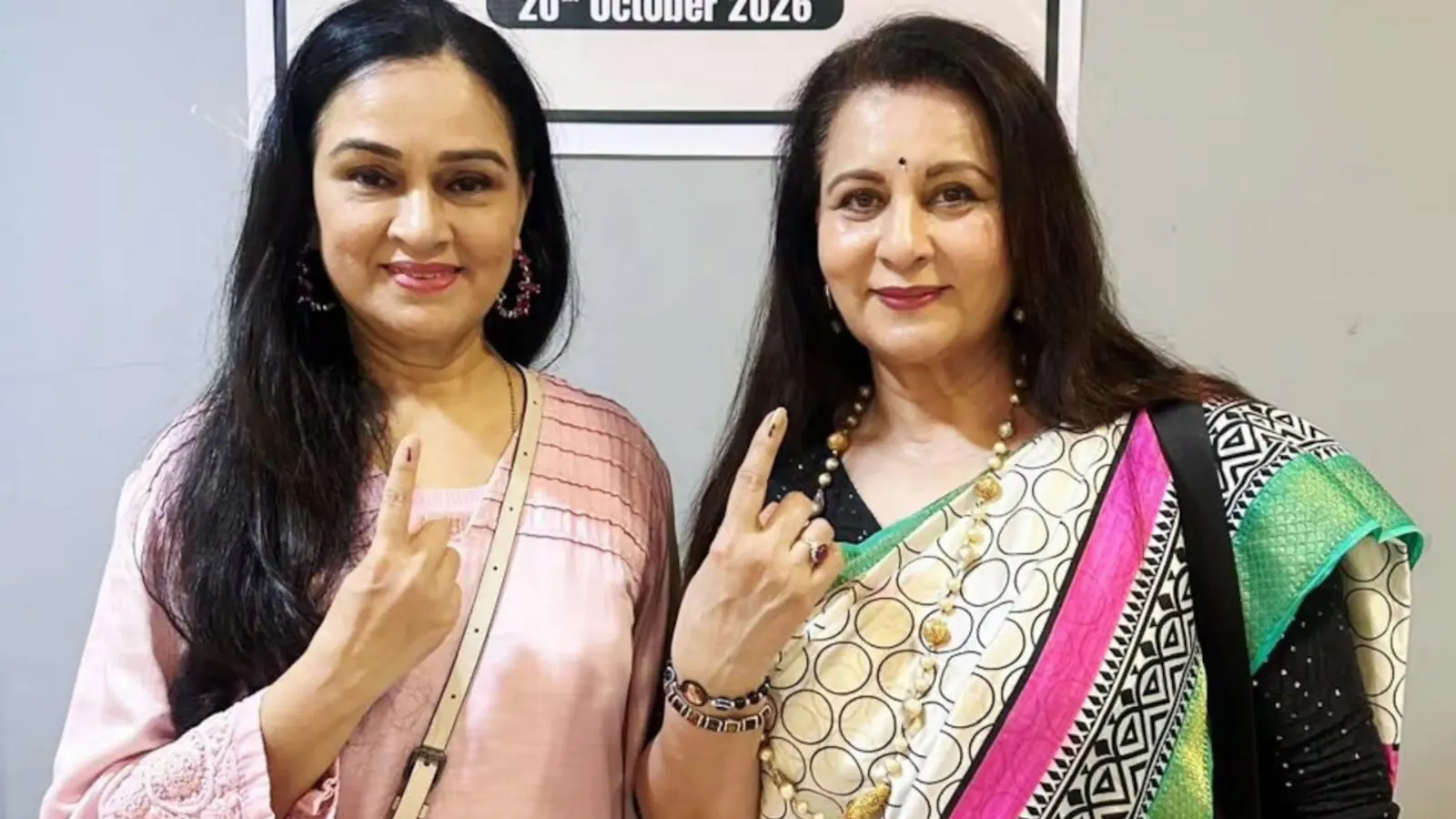
Bombay High Court Intervenes in CINTAA Election Dispute
Following the dispute in the Cine and Television Artistes Association (CINTAA), the matter has turned into a serious legal issue. The Bombay High Court has issued a contempt show-cause notice to CINTAA after charges of holding elections against the court’s earlier direction.
For advertisement on our platform, do call at +91 6377460764 or email us at [email protected].
This order was granted by Justice Aarti Sathe on 22nd October 2026 on a petition filed by the Federation of Western India Cine Employees (FWICE).
The dispute pertains to the faction led by veteran actors Poonam Dhillon and Padmini Kolhapure, which held elections and announced the results on October 20.
The High Court held that the material before the court appeared to give a prima facie case of wilful disobedience of a previous direction of the court and breach of undertaking.
The court further ordered that the October 20 polls should not be acted upon or implemented.
The development has escalated a dispute that has already seen competing claims for leadership, the right to hold elections and the administration of an organisation which represents film and television artistes.
It does not, however, suggest that the association or its office-bearers are already convicted of contempt. The proceedings are as yet in progress, and the respondents may be given a chance to justify their conduct.
What Is CINTAA and Why Does Its Leadership Matter?
CINTAA is an organisation which includes artists involved in the film and television industries of India.
This work involves dealing with professional complaints, and also members’ concerns and working conditions and the welfare of performers.
In the case of actors who have conflicts over payment, contractual disputes or professional challenges, industry associations offer a means of collective representation.
The leader of such an organisation, therefore, has responsibilities other than just being an honorary worker.
It may be possible for the Executive Committee to make decisions on membership, finances, administration, organisation policy and industry representation.
There could be disagreement over who has the right to control the association. This can impact on the smooth running of it.
The current dispute has escalated to the point where there is a debate whether the present leadership should be allowed to carry on or whether new elections should be held to determine who runs the organisation.
How Did the Dispute Between the Two Groups Begin?
The row was made public after some of the executive members of CINTAA had stepped down earlier in 2026.
Those who resigned included actors Mukesh Rishi, Puneet Issar, Vindu Dara Singh, Deepak Parashar and others.
The members who resigned stated that the association was not functioning properly and that crucial decisions were being taken without sufficient consultation.
There were several members who criticized Poonam Dhillon and Padmini Kolhapure leadership regarding organisation related issues.
These are the allegations reported by the disputants and not found by the court to be instances of shame.
Poonam Dhillon rejected the criticism.
She insisted that the previous committee was acting legally, and claimed that the association’s rules did not allow the new group to disband the old committee or hold an election the way they suggested.
The conflict was finally taken to the courts, where the combatants were divided as to the extent to which the elections were valid and the authority of the FWICE.
Why Did FWICE Become Involved?
–FWICE is a federation of some association related to the film and television industries.
In the CINTAA fight, the FWICE had entered the process of fresh elections.
In the first draft, the faction not supporting Poonam Dhillon supported the election process which went along with FWICE.
Yet, what Dhillon’s team contested was whether the federation had the power to directly interfere in the CINTAA’s internal functioning.
However, the dispute was also related to the independence of the association.
-One side claimed fresh elections were needed after the resignation and internal complaints.
The other countered that the current executive body still held jurisdiction and that an outside federation had no right to take the reins of the election from them.
They fueled rival arguments at the heart of the legal battle.
What occurred all through the September 12 elections?
There had been another election process before October’s controversy.
Anand, under the jurisdiction of the court. The court granted permission to go ahead with the September 12 election process (also a FWICE election), subject to legal proceedings.
This implied that the election could happen, but that its final legal impact was still subject to judicial review.
The dispute had not even necessarily put to bed the broader issue of which group had the right to govern CINTAA.
The disagreement persisted as the rival body contested the jurisdiction of FWICE and argued that it was right in interpreting the constitution of CINTAA.
The competition between election processes was creating uncertainty in the leadership of the association.
That was made worse when they had another election in October.
Why Were the October 20 Elections Controversial?
The faction of Poonam Dhillon & Padmini Kolhapure announced their own election results on 20th October 20 2026.
Sources said Padmini Kolhapure was leading in the polls and just by a whisker ahead of Poonam Dhillon.
But the legal fight was about more than numbers of votes for either actor.
Whether it was legal to carry out the election in light of the directions previously given by the court.
The FWICE claimed that the orders passed on September 11 and October 19 prohibited the parties from proceeding to act in a manner that would jeopardize or prejudice the pending proceedings.
The federation says re-polling and subsequently announcing the results was a breach of those orders.
Hence, FWICE filed contempt proceedings before the Bombay High Court.
“The federation held that the October election process was wilful disobedience of the orders of the court.
Whether or not the association gets a chance to address that complaint is still in proceedings.
What Did Justice Aarti Sathe Say?
22 October 2023 Ms. Aarti Sathe, J. On October 22, the Court has heard the contempt petition and the material placed before the Court.
A prima facie case of wilful disobedience and breach of the undertaking had been proved, the judge found.
Before a court, a prima facie decision indicates that there is enough material to support the investigation.
Not necessarily a finding of liability.
CINTAA was served with a show-cause notice by the Court through Rule 9(1) of the Contempt of Courts (Bombay High Court Rules, 1994).
The association was directed to show cause as to why proceedings should not be initiated against it under the Contempt of Courts Act, 1971.
Furthermore, the court enjoined the association from implementing the elections of 20 October and its outcome.
Thus the election result in question is not available to justify a change of leadership in the short term.
What Is Contempt of Court Under Indian Law?
Contempt of court means any act which shows disrespect or causes breach of the authority of the court or the course of justice.
Contempt of Courts Act, 1971 involves two umbrella heads of contempt which are: civil contempt and criminal contempt.
2 (b) Civil contempt means wilful disobedience to any judgment, decree, direction, order, other process of a court or wilful breach of an undertaking given to a court.
The word wilful is important.
A person may not be found in civil contempt for failure to obey a court order.
The court needs to consider if the purported disobedience was wilful.
For instance, the bad faith conduct of a party in continuing to go forward after knowing that they are doing something contrary to a court order can amount to wilful disobedience.