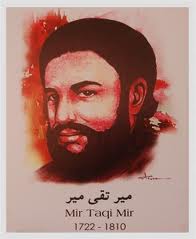
The death anniversary of the great Urdu poet Mir Taqi Mir ( known briefly as Mir ) falls on the coming 20th September.
For advertisement on our platform, do call at +91 6377460764 or email us at [email protected].
https://en.wikipedia.org/wiki/Mir_Taqi_Mir
https://sabrangindia.in/column/mir-taqi-mir-romancer-delhi
One of us, Justice Katju, has already written an article related to him recently, given below :
Now this new article has been written jointly by the three of us, which can broadly be divided into two parts (1) Mir’s contribution to Urdu poetry (2) His contemporary relevance.
1. Mir’s contribution to Urdu poetry
Mir ( 1722-1810 ) lived at a time when Urdu language and poetry were at a formative stage. There were no doubt some Urdu poets before him ( though most poets in Delhi and Agra at that time wrote in Persian, and regarded writing in Urdu infra dig, as they regarded Urdu as a language inferior to Persian ).
Mir gave Urdu poetry its classical form, particularly ghazal poetry, which is why he is the only Urdu poet known as ‘khuda-e-sukhan’ or god of poetry. His instinctive aesthetic sense helped him strike a balance between the indigenous expression and new enrichment coming from Persian imagery and idiom, to constitute the new elite language known as Rekhta or Hindavi. Basing his language on his native Hindustani, he leavened it with a sprinkling of Persian diction and phraseology, and created a poetic language at once simple, natural and elegant, which was to guide generations of future poets.
Mirza Ghalib ( 1697-1769 ) was no doubt a greater Urdu poet than Mir, but he had the shoulders of Mir to stand on, whereas Mir had to almost single handedly create classical Urdu poetry, having no classical Urdu poet’s shoulders to stand on.
Ghalib has himself acknowledged :
” Rekhta ke tum hi ustaad nahi ho Ghalib
Kehte hain agle zamaane mein koi Mir bhi tha ”
i.e.
” You alone are not the master of Urdu, Ghalib
It is said that earlier there was a man called Mir ”
Mir’s ghazals are remarkable for their simplicity and emotional depth. Unlike poetry that relies heavily on complicated language, Mir usually used simple words to express profound emotions. His style is simple, not allusive or allegorical. His contemplation of a thing is without a host of associative images, and this distinguishes him from Ghalib, who often wrote in highly Persianized language using metaphors, indications, suggestions, and allusions, which often made his poetry difficult to understand
Mir’s poetry is intensely personal, yet the emotions are universal.
His poetry is particularly associated with ishq (love), hijr (separation), dard (pain), tanhai (loneliness), and the experience of loss. His own suffering became a source of poetic expression.
Some famous Ashaar ( verses ) of Mir are
1.
پتا پتا، بوٹا بوٹا حال ہمارا جانے ہے
جانے نہ جانے گل ہی نہ جانے، باغ تو سارا جانے ہے
Patta patta, boota boota haal hamara jaane hai
Jaane na jaane gul hi na jaane, baagh to saara jaane hai
Meaning:
Every leaf and every plant knows the condition of my heart. Perhaps the beloved does not know, but the entire garden knows my sorrow.
2.
اشک آنکھوں میں کب نہیں آتا
لہو آتا ہے جب نہیں آتا
Ashk aankhon mein kab nahin aata
Lahu aata hai jab nahin aata
Meaning:
When do tears not come into my eyes? And when tears do not come, it feels as though blood comes instead.
This is a powerful expression of deep emotional suffering.
3.
نازکی اس کے لب کی کیا کہیے
پنکھڑی اک گلاب کی سی ہے
Nazuki us ke lab ki kya kahiye
Pankhri ek gulaab ki si hai
Meaning:
How can I describe the delicacy of her lips? They are as delicate as a petal of a rose.
4.
میر کیا سادہ ہیں، بیمار ہوئے جس کے سبب
اسی عطار کے لونڈے سے دوا لیتے ہیں
Mir kya saadah hain, beemaar hue jis ke sabab
Usi attar ke launde se dawa lete hain
Meaning:
How naïve Mir is! He became ill because of someone, and yet he goes to that very person’s shop to seek a cure.
The “illness” is love, and the beloved is ironically the very person who can either cause or cure it.
5.
دیکھ تو دل کہ جاں سے اٹھتا ہے
یہ دھواں سا کہاں سے اٹھتا ہے
Dekh to dil ki jaan se uthta hai
Ye dhuaan sa kahaan se uthta hai
Meaning:
Look at my heart and see—something seems to be rising from within my very soul. Where is this smoke coming from?
The smoke becomes a metaphor for inner pain and burning emotions.
Mir’s greatness lies not merely in his beautiful language but in his ability to transform personal pain into universal poetry. His ghazals often feel like the voice of someone who has experienced love, separation and loss deeply.
Mir was totally secular, as evident from this sher ( couplet ) :
“Mir ke deen-o-mazhab ko ab poochhte kya ho unne to
Kashqa kheencha, dair mein baitha, kab ka tark Islam kiya.”
His poetry also contains a strong sense of Delhi’s cultural loss and the changing world around him. He lived in Delhi when it was ransacked, vandalized and plundered during the invasions of Nadir Shah ( 1739 ) and Ahmad Shah Abdali ( 1757 ).
Mir’s language may appear simple, but beneath that simplicity lies considerable emotional and philosophical depth. This is why, even centuries later, his ashaar ( verses ) continue to resonate with readers.He is the poet who turned personal grief, love and loneliness into some of the most enduring expressions of Urdu poetry.
We may compare Mir’s poetry with that of the great American poet Walt Whitman ( 1819-1892 ). Though separated by a century and vastly different cultures, there are striking similarities. Both these titans of literature use the raw material of their respective worlds to map the true expanse of human consciousness.
Before Mir and Whitman, the literary establishments of their times demanded a rigid, elitist separation between the art of the court and the language of the common man. Both poets consciously tore down these barriers, to speak in the direct cadence and emotions of commoners. Whitman rejected the conventions of British Victorian poetry, and wrote in free verse, using the raw vocabulary of the American working class, and the slang of Manhattan Broadway drivers. Mir did not have so much freedom, and had to work within the strict structural confines of the Urdu ghazal. Nevertheless, he radically altered its DNA. He bypassed the highly complex, elitist Persian vocabulary favoured by the courts of the day, opting instead for Rekhta, the vibrant, every day Urdu spoken in bazaars of Delhi. As he himself says :
” Mir ke sher hain sabhi dilkash
Jo hain baaten woh saaf kehta hai ”
i.e.
” Mir’s verses are all so captivating
How beautifully and clearly he writes them ”
Whitman says in his book ‘Leaves of Grass’ :
” I am large, I contain multitudes ”
Similarly, Mir writes :
” Gharaz main jo kuch hoon so hoon yaaro, par
Mujhe tum na samajhna ki main hi hoon bas ”
i.e.
Whatever I am, I am, my friends
But do not think that I am merely myself ”
Perhaps the most striking parallels between the two lies in how they used the trauma of their external environments to process their internal psychological landscapes. Whitman served as a volunteer nurse in the American Civil War ( 1861-65 ), seeing all its horrors in hospitals and the fields of war. He wrote :
” I onward go
With hinged knees and steady hands to dress wounds,
I share the soldier’s ash coloured cheeks
I see the white skeletons ”
Mir lived through the violent sackings and catastrophic decline of Delhi, following which Delhi became desolate and in ruins, and writes verses of sheer pathos :
” Kya bood-o-baash poochte ho, poorab ke saakinon
Humko ghareeb jaan ke, hans hans pukaar ke
Dilli jo tha ek sheher, aalam mein intikhaab
Rehte the muntakhib hi jahaan rozgaar ke
Usko falak ne loot kar veeraan kar diyaa
Hum rehne waale hain usi ujde dayaar ke “
N.B.
Boosh-o-baash means residence, saakin means inhabitant, aalam means world, intekhaab means to choose or select, muntakhib means selected, falak means sky, veeraan means ruined or desolate or depopulated, dayaar means region or country
2. Mir’s contemporary relevance
Today’s India has some striking similarities with Delhi during the life of Mir. Just as Delhi was reduced to shambles in Mir’s time due to foreign invasions and crass indolence, pleasure seeking, and incompetence of the local rulers, today India is in a pathetic condition, with massive poverty, massive unemployment, appalling level of child malnutrition, almost total lack of proper healthcare and good education for the masses, skyrocketing prices of essential commodities like food, oppression of minorities and dalits, etc, and with political leaders who only seek power and pelf, and with that aim polarize society and incite caste and communal hatred to get votes, but having no genuine love for the people.
A new just order in which people will have a high standard of living and decent lives is still far off.
In the words of the English poet Matthew Arnold, in his poem ‘Grande Charteuse’, the past is dead, but the future is powerless to be born
https://indicanews.com/justice-markandey-katju-the-old-is-dead-the-new-is-powerless-to-be-born
However, despite the dark times prevailing in India today, which cause despondency among many, Mir’s poetry lifts up our spirit and morale, and in a subtle, indirect way, points at better times to come in the future. As the Bible ( Psalm 30 : 5 ) says :
” Weeping may stay for the night,
But rejoicing comes in the morning ”
In other words, it is always darkest before the dawn
On 20th September 2 programs have been fixed to commemorate Mir Taqi Mir on Justice Katju’s request (1) an online webinar at 8 pm organized by co-author of this article Ms. Mehlaqa Mukhtar, advocate Lucknow ( email id [email protected] and whatsapp number 96516-78608 ) and (2) A jalsa in Lucknow ( time and venue yet to be decided ) organised by Mehdians Organization headed by Kumail Abbas ( email id [email protected] and whatsapp number 9696111004 ). Those interested in participating may contact the above
Add