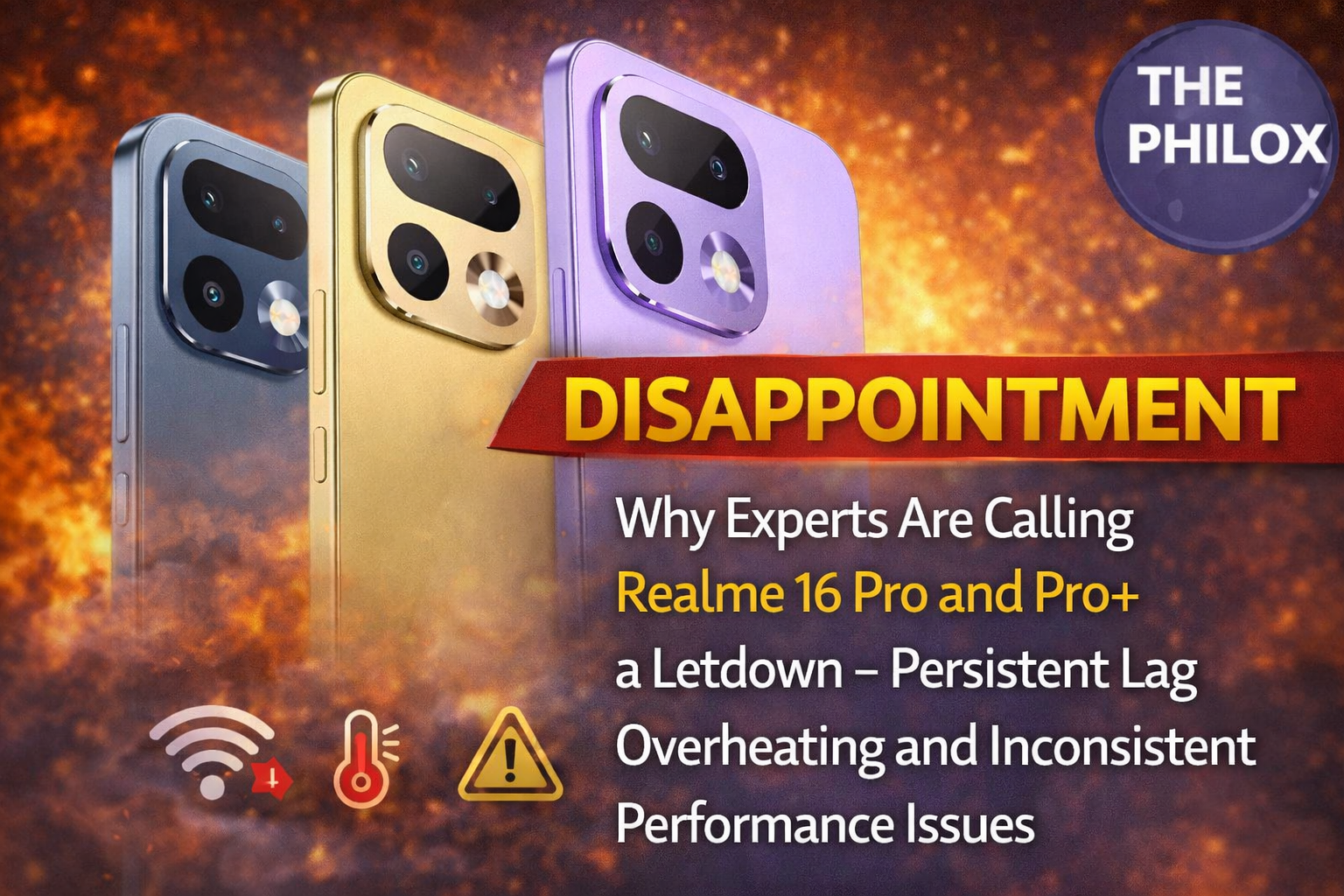
The Hype Train Crashes: Great Expectations Fallen with Fire.
One of the most expected events in the smartphone calendar towards the end of the year was the launch of the Realme 16 Pro and 16 Pro+. The fans had high expectations of a flagship killer with hard-selling campaigns of Master Design and radical 200MP photography. But with the initial burst of criticisms and first user impressions inundating the web, an alternate scenario is being shown. The gadgets are being dubbed by tech analysts as a major disappointment with a basic failure to control simple thermal physics. The hype has already become a frustration as the smooth surface has difficulty holding the heat anarchy inside.
For advertisement on our platform, do call at +91 6377460764 or email us at [email protected].
The main bone of contention is the chronic overheating that appears to afflict the two models despite the task. Users have also complained that the gadgets get remarkably hot not only when they are engaged in gaming, but also when they are performing simple tasks such as scrolling through their social media. According to experts, the thin frame of the phone, though aesthetically good, does not provide adequate surface, especially in heat dissipation. This is a design issue that causes the processor to reach thermal issues soon, and the system has to slow down to avoid damaging hardware.
Bad Optimization Kills Processor Potential.
The Realme 16 Pro+ is powered by a Snapdragon chipset, which is purportedly a scaled-down version of the 7 series, whereas the regular Pro version is powered by the MediaTek Dimensity 7300 Max. Paper-wise these are good engines, and it is in reality that the engines lack software optimization. Critics have observed that the aggressive clock speeds that are boasted in marketing do not last many minutes. The peak performance is a short spike and not a steady performance and hence the device is becoming jerky and unreliable.
https://www.realme.com/in/support/kw/doc/2175079
This discrepancy is the most apparent in the benchmark stress tests in which the phones are significantly worse on the second or subsequent run. A device that reduces its performance capacity by almost 40 percent within ten minutes of load is a significant indicator of power wastage to power users. Technology experts say that Realme was so much into marketing high benchmark scores rather than long term stability. What follows is a phone that appears superb on a spec sheet but turns into a slug and unresponsive when it comes to actual work.
Gaming Nightmares: Frame Drops and Throttling.
The Realme 16 Pro series has been a nightmare to the gaming community. Being a capable mid-ranger with gaming capabilities, the phone has a hard time keeping consistent frame rates in such popular games as BGMI and Call of Duty: Mobile. According to gamers, the device turns into a hand warmer after fifteen minutes of play, and the frame rate drops to 30-40fps instead of 60fps. This throttling renders competitive gaming practically unfeasible since lag spikes will tend to happen in highly important combat situations.
Performance is supposed to be enhanced with the help of the so-called GT Mode, which is ironically worsening the situation as it pushes the hardware to the edges of its thermal performance. In lieu of an enjoyable experience, users receive a hot and phone that uses batteries at an astonishing pace. Professionals take the position that vapor chamber cooling system promoted by Realme seems to be smaller than the amount of heat produced by the new chips. This imbalance of power and cooling is a typical engineering mistake that will be difficult to rectify thorough with software updates.
The UI Stutter and Bloatware Cursed.
Realme has always been a divisive issue in terms of software, and these new Realme UI 6.0 have made it no better. Although it is powered by powerful hardware, the user interface is also plagued by random stutters and lost animations. Browsing the menu or going through the apps can feel rather weighty than it should, and there is a noticeable delay that is a spoil to the elite feel. Others blame this to improper management of memory and too much pre-installed bloatware running on the background.
These micro-stutters that happen during the day-to-day navigation are sometimes referred to as the persistent lag included in the headlines. Having a phone that has a 144Hz refresh rate display is especially unpleasant to experience such choppiness. According to experts a high refresh rate demands the GPU to process frames as quickly as possible, however the thermal throttling makes the GPU stutter. This causes an unpleasant visual effect in which the screen can be smooth but the processor cannot match, causing a jelly scrolling effect.
Lag and Processing Delays of the Camera Shutter.
The 200MP camera is the icing on the cake of the Realme 16 Pro +, and even in this case, the problems with performance are towering. Photography is a high-resolution process that takes huge processing power and the overheating chipset cannot afford to process these huge files in a short period. The critical review has pointed out a severe shortcoming in the form of a huge shutter lag, the time between the point of the button press and the time the photo is actually taken. Such delay is known to cause blurred images particularly when attempting to take photographs of moving objects or quick acts.
Moreover, it is a risk to shoot a 4K video during long durations. Other tests have revealed that the camera application has been force-quitting or denying to record because of the high temperature on the device. In the case of a gadget available to content creators, such untrustworthiness is a deal-killer. It also appears that the image processing algorithm freezes the phone temporarily once it has captured a burst of photos and prevents the user to use the interface until the buffer is empty. This performance lag negates the usefulness of this amazing sensor hardware.
Battery Life Casualties
The battery efficiency is the foe of heat, and the Realme 16 Pro series demonstrates this statement. The thermals incessantly have to be controlled, and so the cooling operations and the leakage current of the processor are burning more energy than planned. The sizeable battery notwithstanding, the screen-on time is indicated to be lower than average in the class. The device is consuming power in an attempt to cool down, and end-users are by late afternoons going to the charger.
Another headline feature Fast charging is also affected by the thermal issues. Modern fast charging demands that the battery be at a given range of temperatures to operate safely at the highest speeds.