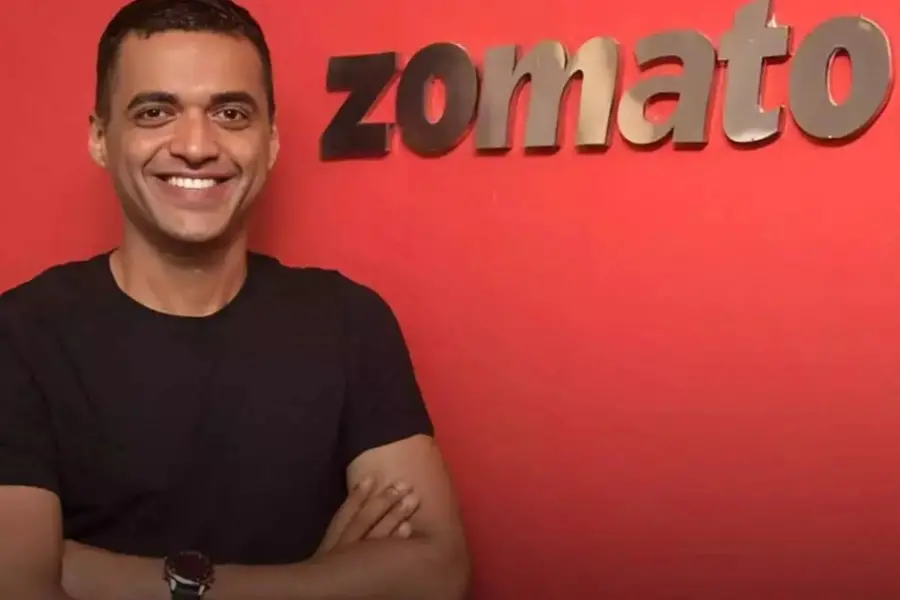
Zomato CEO heats up Firestorm with Miscreants statement.
The friction between the Indian booming quick-commerce industry and the number of employees has gone to a boiling point after a rather controversial comment by Zomato CEO Deepinder Goyal. After a national strike that was called by delivery partners on New Year Eve, Goyal went to social media to announce that the operations of the company were a record success. Yet his wording is the one that made a business win lap a nightmare in PR. When workers who were protesting went, Goyal called them a small number of miscreants and thanked local law enforcement to keep them in check. This particular wording has received strong criticism both among labor unions and on Twitter users who consider it an expression of an attitude toward legitimate complaints about compensation and safety.
For advertisement on our platform, do call at +91 6377460764 or email us at [email protected].
This was met with a strong backlash, which was instantly severe, as the term of miscreants began trending along with requests to boycott the platform. Critics say that the struggle of workers to be labeled as troublemakers and disregard the systemic problems that afflict the gig economy. To a large part, the strike was not vandalism but a cry of desperation to improve the working conditions. Goyal is facing the accusations of being an elitist and insensitive by directing the protest to be a law-and-order issue and not a labor conflict. The remark has divided the internet with some agreeing with the CEO on his rights to safeguard his business and the other siding with the riders who drive it.
Record-Breaking Numbers In the Bedlam.
Zomato and its quick-commerce subsidiary, Blinkit, said they had the highest volumes of orders in a single day despite the demands of a strike, the Chakka Jam, on one of the busiest evenings of the year. Goyal boasted of statistics that show that the company had over 4.5 lakh delivery partners who received over 75 lakh orders on December 31, 2025. He referred to these numbers to state that the strike was not successful and that the huge majority of riders wanted to work. In his opinion, the fact that the platform had become smooth to operate was an indication that the stories propagated by interested parties was not a reflection of the ground reality.
The fact that these record numbers are being celebrated has however only fueled the fire. It is not that the workers are satisfied with the turnout according to union leaders but rather desperate since they cannot afford loss of a single day earnings. They also claim that the company used temporary and over-inflated incentives to end the strike, a strategy common in suppressing dissent during peak times. The contrast between a CEO rejoicing about record-profits and at the same time sneering at people demanding fair pay has provided a visual impact of the inequality inherent in the gig model.
The 10-Minute Debate on Delivery Returns.
The controversial 10-minute delivery promise provided by Blinkit is at the centre of the demands of the delivery partners. Employees claim that this system puts unnecessary stress on them to ride without care and endanger their lives to achieve algorithmic deadlines. Although Goyal was able to justify the model in his posts by indicating that the speed was obtained by the density of the store rather than the rider speed, the street perception is not the same. The model has been criticized by protesters as being known as 10-minute torture, as this has led to accidents and mental stress. Part of the strike was also a request to reverse this feature or offer superior accident insurance and safety nets.
The fact that riders cannot see a countdown timer and are, in fact, not punished by poor delivery has not helped in calming down the fears of many people. In case a rider wishes to earn a livable wage, he or she has to do a set amount of deliveries every hour, which indirectly coerces him or her to speed up. The fact that the CEO dismissed these safety issues as being narratives has turned away a part of the population who is getting more and more aware of the human cost of convenient.
Political and Social Implications.
In the social media, the controversy has overflowed to the political side of the case with labor groups pushing the government to intervene. The Indian Federation of App-based Transport Workers (IFAT), has responded with great vigor saying that this is just a strategy to turn the opposition into a criminal act by naming the workers as miscreants. They are demanding the adoption of the Social Security Code giving the gig workers formal status and benefit. It has also been used by the opposition leaders to maliciously exploit the opportunity to criticize the unregulated nature of the gig economy, with Zomato acting as a case study to corporate overreach.
This difficulty is the core issue of the argument: do these “partners” receive due wage taking into consideration fuel and maintenance? The transparency requirement is on the rise, and these remarks of Goyal have unwillingly opened the door to further examination of how the company treats its employees financially. It is not just a mere strike but verifies a wider questioning of the sustainability and ethics of the whole industry.
The “Class Guilt” Defense
As a follow-up to the first hubbub, Deepinder Goyal tried to rebrand the discussion to include class guilt. His thesis is that the feeling of discomfort that people have towards the gig economy is associated with the visible aspect of inequality in which the working people are standing at the front door of their homes making inequality visible and personal. He proposed that the only solution would be to ban or over-regulate the sector, which will refer these workers to the invisible informal sector, which is worse than before. Although some considered this argument to be compelling, as realistic analysis of the job market in India, others saw this as a way to evade the issue.
Opponents also identified that neither acceptance of inequality nor does a company absolve its duty of correcting them. They posited that visibility is not the way to go but dignity and good remuneration. When Goyal characterizes the gig economy as a savior of the poor, some people view it as an excuse to exploit people in the guise of creating jobs. This philosophical defense has given an extra intellectual twist to the controversy, yet all the rider on the street wants is better compensation and respect not sociological theories.