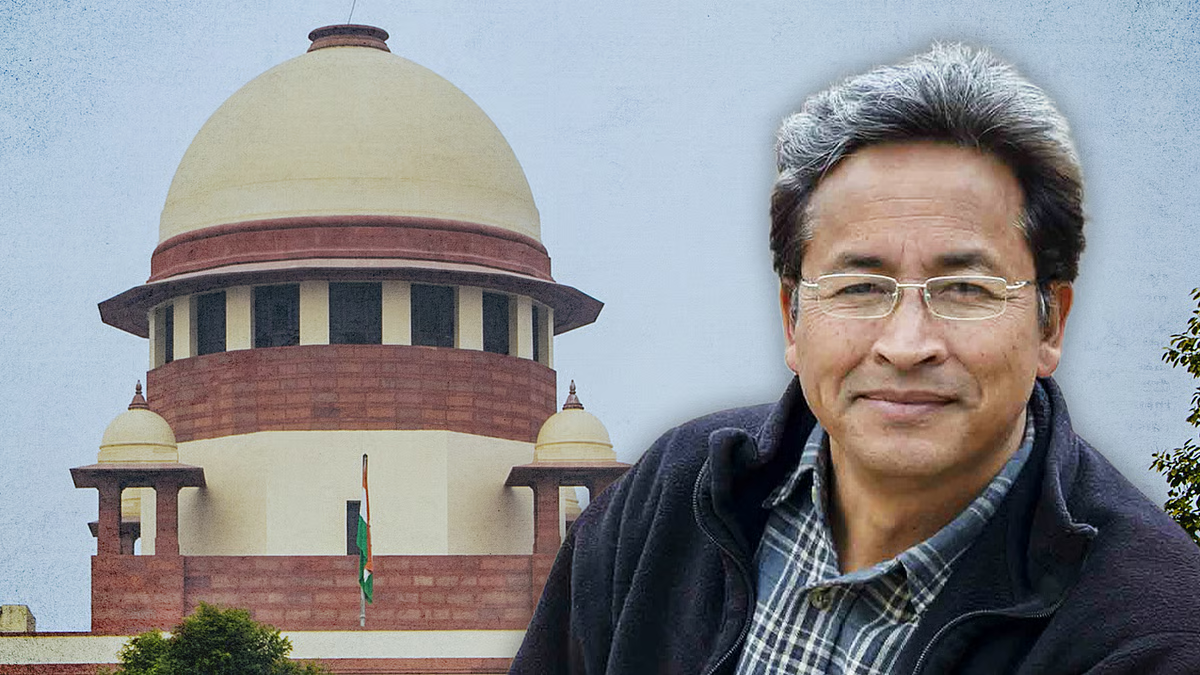
Wangchuk Case Production of Evidence by Supreme Court.
The Jodhpur Jail Superintendent has been directed by Supreme Court of India to produce a given pen drive which Sonam Wangchuk, the climate activist, was given when in custody. This order comes after a legal appeal by the wife of Wangchuk, Gitanjali Angmo, who has been challenging his arrest on the National Security Act (NSA) since late 2025.
For advertisement on our platform, do call at +91 6377460764 or email us at [email protected].
The ruling in this case was occasioned by allegations by the legal team of Wangchuk, senior advocate Kapil Sibal who reported that the information supplied to the activist was not complete. The defense claimed that four essential videos of speeches mentioned by the authorities to warrant the detention were absent on the pen drive provided on September 29, 2025. According to Sibal, such non-provision of material relevant to the detention order vitiates the detention order since it supposedly deprives the detainee of his right to make an effective representation against his arrest.
Inconsistencies Raised in Government Speech Transcripts.
In the case, the Supreme court showed great concern on the reliability of speech transcripts provided by the Central government. The court observed that there was a discrepancy between the original speeches the activist delivered in the Ladakhi language and the English translations that the detaining authoritarians used. In the particular case, the court has indicated that when a speech (three minutes) was translated in to a foreign language (seven to eight minutes), it was considered to represent the speech.
Justice Aravind Kumar stated that transcription accuracy would be almost flawless in the contemporary age of artificial intelligence. According to the bench, the state and the petitioner can disagree on the meaning of a speech, but they have to be ad idem or agree on the text. The court has since ordered the Union officials to submit the verbatim transcripts of the speeches that were given in order to declare Wangchuk a chief instigator of the violence in Leh.
In Center, National Security Risks Are Defended in Detention.
Additional Solicitor General, K.M. Nataraj acting on behalf of the Central government has argued that the detention was justified and procedurally proper. The government alleged that the speeches of the activist were being employed to stir youth into a Nepal or Bangladesh-like movement and this would pose a danger to the public order on a sensitive border area. Symmetrical reactions by the official sides indicate that it was not until Wangchuk was detained under the NSA that the situation in Ladakh was put under some sort of control.
In response to the disappearance of the videos, the Solicitor General told the court before that 23 videos were consulted and the activist himself was shown the content during his detention. The government has asserted that recording of this process of displaying these videos had been done using a video camera and a laptop was later given to the activist. The court however wondered whether Wangchuk had signed or put signature in a written form that he had actually viewed the particular clips that were used against him.
Lawsuits on the Issues of the Right to Representation.
The court fights have also been centered on whether the constitutional right of Wangchuk to be represented had been infringed. The petitioner had counsel who argued that the failure to provide the full grounds of detention as well as the applicable digital evidence in a timely manner prevented the ability of the defense to approach the Advisory Board. Sibal had claimed that the order of detention seemed to be a copy-pasting exercise, according to the police recommendations, and therefore it did not seem that the District Magistrate had exercised independent application of mind.
Since the case was in progress, the Supreme Court has pointed out the necessity of the true translations and proven evidence. The bench also eased the solemn legal mood with the help of an Urdu couplet about hearing things that had not been spoken, to which Sibal responded that the authorities had not not heard what the activist had said. The manufacture of the sealed pen drive will act as a turning point in either ascertaining that the procedural safeguards of the National Security Act have been strictly adhered to or that the detention was founded on the basis of invalid evidence.