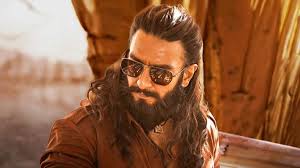
Nobody saw this specific number coming. You often hear whispers in the trade of actors boosting their prices. Sometimes it’s for 100 crore.
For advertisement on our platform, do call at +91 6377460764 or email us at [email protected].
Sometimes 150.
But 325 crore for a singular project is just an entirely different calculation. Ranveer Singh has completely rewritten the playbook for actor salaries in Indian cinema with his payday for ‘Dhurandhar’. This number surpasses Shah Rukh Khan’s earnings from single films, clears Rajinikanth and Allu Arjun’s large fees down south by a margin, and effectively shatters the seemingly hard ceiling of around 200 crore for top stars on their best projects.
Now, this wasn’t a scenario where a producer just slapped him with a novelty check on the first day. The story behind how he earned this fortune from one franchise is far more complex than that. The older model was simple: an actor quotes a figure, the producer pays it upfront, and if the film bombs, the producer is bankrupt, while the actor upgrades to a new Ferrari. This arrangement has been gradually bleeding the industry for years, and this situation completely turns the tables.
Betting the House
‘Dhurandhar’ was a high-stakes gambit. Helmed by Aditya Dhar and bankrolled by Jio Studios, it was initially envisioned as a single colossal action flick. However, things escalated rapidly on set; the budget effectively doubled after the first leg of production.
Although the footage looked impressive, the costs spiralled out of control.
Rather than asking for his standard upfront fee, Ranveer opted for a significant pay cut on his initial fixed payment. Instead, he entered into an elaborate profit-sharing agreement, essentially a backend deal.
Jyoti Deshpande of Jio Studios recently explained the intricacies of this arrangement. According to her, the only way for the film to absorb its growing scale was to distribute the financial burden among its stakeholders. Ranveer essentially bound his financial success entirely to the box office performance, even investing his own funds as production expenses continued to mount. He traded guaranteed upfront compensation for a stake in the future empire.
This leads to the question of royalties. The term “profit-sharing” is commonly thrown around in Mumbai, typically meaning an actor receives a small percentage of ticket sales after the distributor takes their hefty cut. However, the ‘Dhurandhar’ deal extended far beyond simple ticket receipts. Ranveer’s total earnings of 325 crore are derived from numerous substantial revenue streams.
He will receive a dedicated portion of the digital streaming rights, a share of the satellite television broadcast rights, and revenue from the music licensing. Trade analysts are noting that this makes him the first mainstream Indian actor to successfully negotiate a comprehensive, Hollywood-style royalty structure across all non-theatrical platforms for a single project. This isn’t merely a bonus cheque for a successful movie; it’s an ongoing percentage of the film’s intellectual property. While Jio Studios secured the largest share of the overall profits, followed by B62 Studios, Ranveer’s cut as the leading actor is unprecedented.
Two Films, One Massive Payout
To grasp how a percentage can amount to over three hundred crore rupees, one must examine the actual box office performance of ‘Dhurandhar’. The filmmakers, bold in their approach, split the expanding narrative into two installments. Part one, released in December 2025, was a phenomenal success, raking in approximately 1300 crore worldwide. ‘Dhurandhar 2’, released in March of this year, exceeded even that, generating more than 1790 crore globally.
When a franchise generates over 3200 crore in worldwide ticket sales, the resulting profit margins are astronomical. The calculated risk paid off handsomely because the films themselves delivered on the immense hype. If the first installment had flopped, Ranveer would have pocketed a fraction of his typical remuneration for months of work. The reward accurately reflects the enormous initial financial gamble he took when production was haemorrhaging money.
The Ripple Effect on Mumbai Studios
Every talent agency in Mumbai is currently fixated on these figures. The immediate aftermath is going to be a period of intense upheaval. Other A-list actors will be walking into producers’ offices demanding backend royalty deals similar to Ranveer’s.
The studio executives, however, will likely resist strenuously.
They are acutely aware that very few films achieve three thousand crore in revenue.
In principle, producers often welcome this model as it drastically reduces upfront production costs. If an actor accepts 20 crore instead of 100 crore, that 80 crore can be reinvested into higher-quality visual effects and more spectacular action set pieces, ultimately enhancing the film’s on-screen appeal. The main challenge is that a majority of actors are unwilling to assume that level of risk.
They prefer the security of immediate compensation before cameras even start rolling, cognizant that scripts can falter or directors may make poor choices during post-production.
Committing to a backend deal requires a substantial degree of trust in the individuals involved.
The phenomenal success of the ‘Dhurandhar’ deal is exclusively due to the film’s transformation into a cultural phenomenon that captivated the masses in a manner few action films do. Ranveer aligned himself with Aditya Dhar’s vision, and the gamble paid off handsomely. The 325 crore figure is set to become the new standard of discussion. However, the precise mechanism by which this fortune was generated will likely remain much more difficult for others to replicate without achieving comparable historic box office figures.