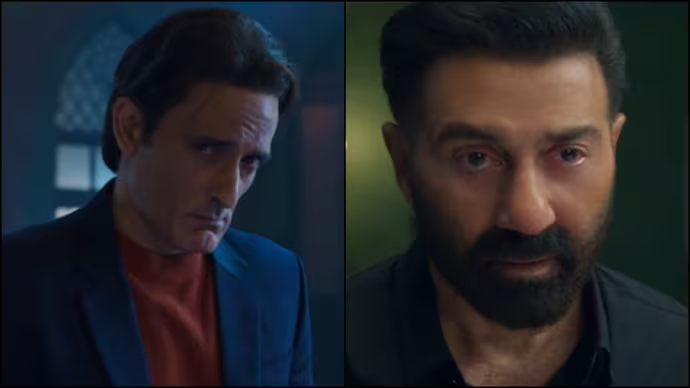
The recently dropped digital trailer for Siddharth P. Malhotra’s latest film Ikka (which is set to stream on Netflix on 10 July 2026) has resulted in an unexpected backlash. This film marks a significant reunion between actors Sunny Deol and Akshaye Khanna who famously collaborated almost three decades ago on the 1997 war blockbuster Border.
For advertisement on our platform, do call at +91 6377460764 or email us at [email protected].
Based on the trailer, the film promises a dramatic, high-stakes courtroom battle laced with morality, betrayals and harsh ethical compromises.
While Sunny Deol stars as the uncompromising and principled defence lawyer, Arjun Mehra – codenamed ‘Ikka’ for his unassailable courtroom record – Khanna plays the complex, affluent murder suspect Shauryaman Gaur who harbours his own moral ambiguities. The main crux of the plot lies in Arjun, the same man who once tried to send Shauryaman to jail, now being tasked with defending him. However, despite the grainy color grading, intense background music and the serious underlying plotline of the trailer, a sizable section of online users find the hyper-charged confrontations to be remarkably reminiscent of a self-aware spoof on old Bollywood film tropes.
High Pitched Legal Drama in a Modern Setting
The predominant factor behind this perceived parodical take is the abrupt juxtaposition of the over-the-top performing styles of the leads with the subtle and grounded aesthetic of contemporary streaming productions. The script – penned by Althea Kaushal and Mayank Tewari – juxtaposes colossal and exaggerated dialogue with sterile and minimalistic modern courtrooms. For example, we witness ample references to Sunny Deol’s trademark ‘dhai kilo ka haath’ persona which has long served as shorthand for raw justice on screen and is rooted in his nineties blockbusters.
When such overtly dramatic lines are layered upon a silent, grounded courtroom setting, populated with subtly acting performers such as Tillotama Shome, playing the shrewd public prosecutor Madhura Banerjee, the stylistic inconsistency comes as a jolt to the audience.
The deliberate disparity in the performance of Shome and the deafening and boisterous confrontation speeches of Deol and Khanna shatter the trailer’s narrative consistency and render the drama inflated and operatic rather than genuinely gritty.
Familiar Archetypes of Aggression and Eccentricity
The archetypal roles adopted by the two male leads mirror, to an almost uncanny extent, the personas the two have extensively portrayed throughout their respective film careers, giving rise to a predictability that approaches caricature. Akshaye Khanna, as Shauryaman Gaur, continues to engage in his signature repertoire of menacing smiles, wild stares and hyper-agitated voice modulation that immediately recall his earlier antagonistic performances in films such as Ittefaq and Race. Simultaneously, Sunny Deol’s approach consists of gasps of exasperation, prolonged stares, and sudden vocal outbursts that seem to convey the intense internal conflict of Arjun Mehra. The audience’s complete familiarity with such performance patterns derived from their long and prolific careers is such that any attempt to project their interaction as a fresh, dark and subversive psychodrama elicits the opposite response, making the film feel less like a genuine suspenseful game of who’s manipulating whom, and more like a duo of established action heroes playing exaggerated caricatures of themselves for an online audience.
Structural Overload and Tonal Fractures
The very structure of the two-minute trailer seems to try and incorporate multiple genres simultaneously, thereby undermining the seriousness of the underlying murder investigation. It swiftly transitions from muted, cool blue-hued courtroom deliberations to warm domestic scenes depicting the toll the case takes on Arjun’s family through his wife Avantika, played by Dia Mirza. Immediately following these sensitive and introspective sequences, the trailer abruptly switches back to loud and aggressive legal clashes, with the actors spouting highly polished and rhythmic lines instead of authentic arguments.
The rapid and inconsistent alternation between grounded domestic drama, stark procedural reality, and bombastic mainstream star power, ensures the trailer never settles on a definitive tone.
The intrusion of earnest, overwrought melodrama in a setting that is visually coded as sleek, global crime fare, results in an unintentional comedy, where the solemn weight of the performance actively battles with the slick, contemporary visual language of the movie.