June 28, 2026, has brought forth some online stir with the digital release of the teaser for Vishesh Films’ Awarapan 2. Helmed by director Nitin Kakkar and written by Bilal Siddiqui, the movie is slated to release in theatres on August 14, 2026. It is 19 years after Mohit Suri’s 2007 released ‘Awarapan’ became a cult favorite largely for its intense melodrama and its insanely popular soundtrack.
For advertisement on our platform, do call at +91 6377460764 or email us at [email protected].
To establish a direct link with its past and connect with nostalgia, the promotional video attempts to use a reprised version of Toh Phir Aao in the background.
However, the excessive reliance on the track that is almost two decades old, makes it appear like a lazy attempt instead of a creative one. Instead of establishing a fresh, modern vibe, it appears to be a project that can’t stand on its feet without borrowing heavily from the past.
Jarring Retcons and Broken Internal Logic
The setup introduced by the trailer is quite a bizzare narrative decision that seems to be totally derailing the emotional integrity of the previous story. In the 2007 film, Emraan Hashmi’s character, Shivam, had died a death that redeemed his character and brought him closer to his lost lover, Aaliyah, in the afterlife after a brutal shootout. But in the latest teaser, his death has been entirely rewritten as he is seen walking around, placing flowers on her grave.
The video opens with a slow pan shot of him riding a motorcycle on a desaturated desert, leading to a cemetery scene.
This change comes off as extremely cheap as it completely undermines the conclusive nature of the original film for the sake of manufacturing a sequel. Erasing the core tragic arc of the previous installment does nothing but makes the audience feel cheated.
Misplaced Visual Styles and Cheap Lighting Choices
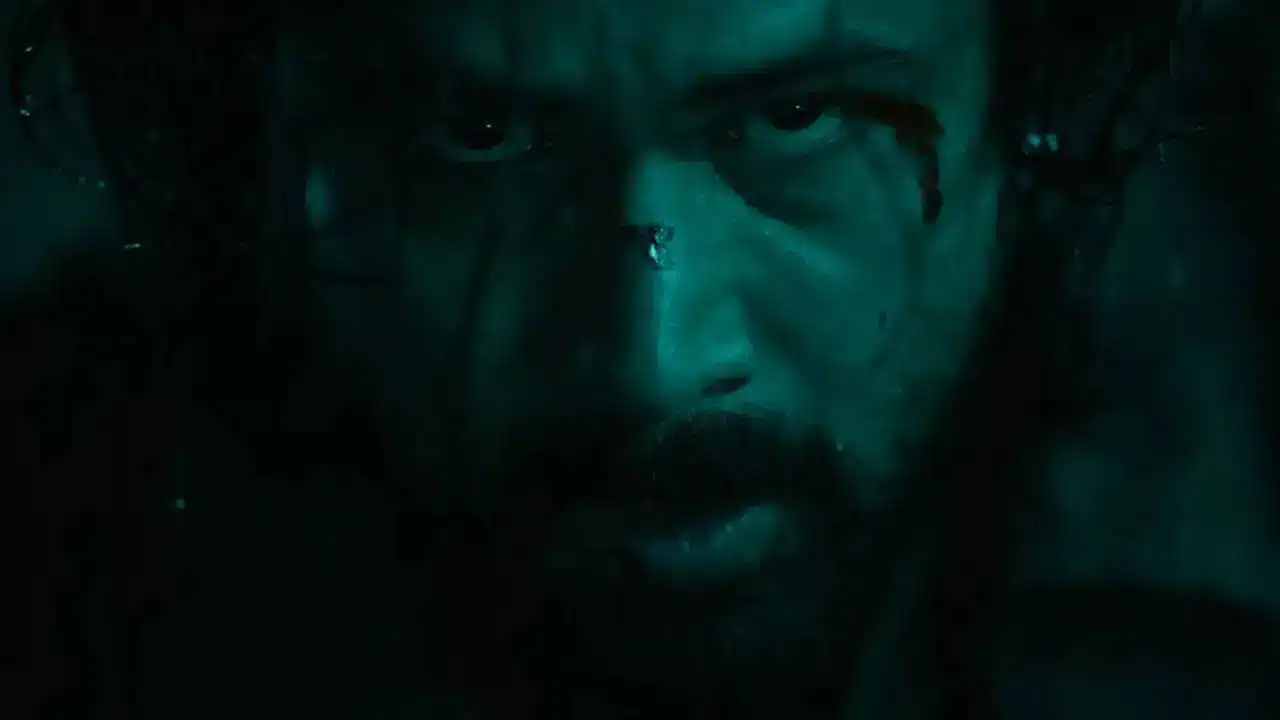
The visual aesthetics of the teaser predominantly utilize the prevalent modern desaturated, high-contrast visual style that seems to have taken over the Indian action streaming platforms. The colour scheme is flooded with flat greys, muddy blues, and artificial lens flares, most of which appear to be a cover-up for poorly crafted production design. This has given the film an exceptionally cheap, digital feel and completely lacks the warm, filmic appeal of Mohit Suri’s initial work.
The video alternates between the slow-motion, dramatic close-ups of a brooding, ripped Emraan Hashmi and the hurried introductions of new cast members like Disha Patani playing a cello and Shabana Azmi emerging from a luxury car.
These individual clips feel like an array of music video scenes spliced together to create some form of visual storytelling. Moreover, the action scenes depicting Shivam fighting in boxing rings and narrow alleys are so dark and heavily edited that the fight choreography becomes utterly blurred and confusing.
Tonal Identity Crisis and Awkward Dialogue
Perhaps the biggest failure of the promotional clip is the severe identity crisis it suffers from. The voiceover uses Emraan Hashmi reciting melodramatic and rather antiquated dialogue such as, “Dard se purana rishta hai mera,” attempting to establish a dark, philosophical mood. However, this somber narration is jarringly punctuated with the sound effects of loud punch-and-kick in sequence with fast-paced hand-to-hand combat.
The abrupt switch from a melancholic contemplation of existence to a boisterous commercial action scene does not bode well.
The final line delivered in the teaser, “Is baar ya to ye awarapan khahm hoga ya main,” is a predictable and clichéd attempt at dialogue, rather than a compelling and thought-provoking line for a nuanced psychological thriller. By attempting to balance both a deeply emotional, nostalgic romance and a slick, modern action film, the teaser ultimately falls short in achieving either.