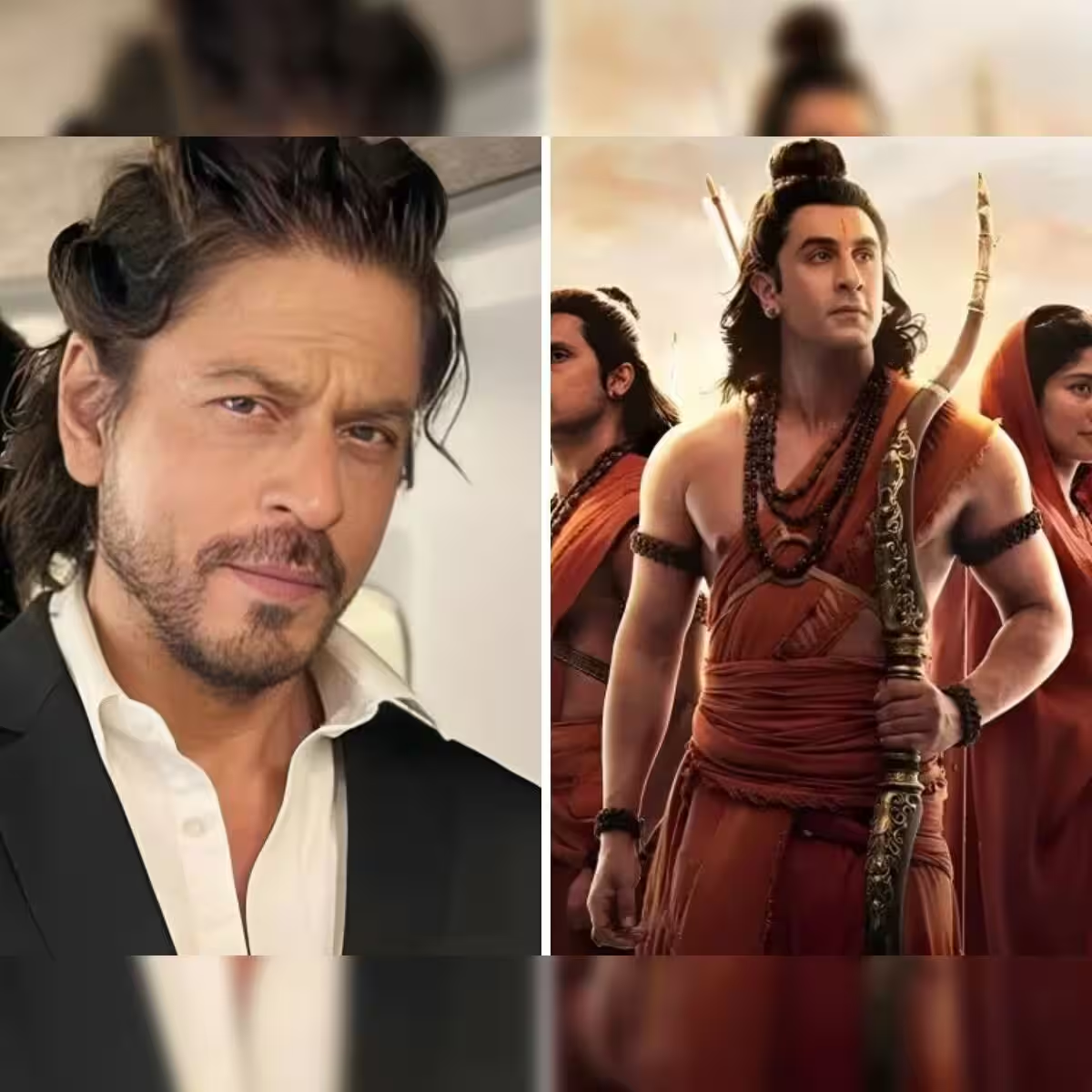
Huge expectations are looming on the shoulders of Nitesh Tiwari’s Ramayana before its release.Nitesh Tiwari’s Ramayana faces huge expectations ahead of its release.
For advertisement on our platform, do call at +91 6377460764 or email us at [email protected].
Ramayana is one of the most awaited Indian films of 2026, which is also a film directed by Ranbir Kapoor. The ambitious mythological drama is directed by Nitesh Tiwari and produced by Namit Malhotra with international level visual effects, a big cast and grand production design with one of the most familiar stories of India being brought on the big screen.
The biggest hurdle, however, for the film may not be just the hundred of crore takings at theaters. It might be able to convince those who have already seen the teaser and trailer and have made their minds up about its characters and already have some comparisons to make with previous adaptations.
The first peek created a lot of hype, especially the appearance of Ravana (Yash) and Lord Rama (Ranbir Kapoor). It did, however, receive criticism over computer-generated imagery, colour grading and the overall presentation.
The official “One and a Half” trailer was released on July 30, 2026 and gained a much higher positive response from many viewers, while some viewers still had some questions of the visual effects, casting and how some familiar characters were treated.
With the story being a common one with millions of Indians already familiar with it, gaining the audience’s trust might be as crucial as making the film a spectacular success.
The first teaser trailer has sparked some confusion.
The initial film publicity for Ramayana revealed audiences to the visual universe of the film and provided them with a glimpses of Ranbir Kapoor as Lord Rama.
Many viewers appreciated the size of the production, background music along with Kapoor’s screen presence. The visuals were described as impressive by some, and that they were excited to see the epic presented using modern filmmaking technology.
Others were not so convinced.
There was some criticism of some of the visual effects, the use of CG environments and the colour treatment of some sequences. Some of the viewers thought that the images were too manipulated for a tale so embedded in Indian cultural traditions.
There were also references to earlier TV serials of Ramayana like Ramanand Sagar’s popular serial.
Producer Namit Malhotra admitted that they were listening to the audience and claimed that the criticism was not given to them.
The filmmakers were faced with an interesting challenge in the reactions shown. It wasn’t just about introducing a new story. They were acting out roles that viewers knew and in most cases liked very much.
The July Trailer Helped, but Did Not End the Debate
The official trailer provided a more in-depth glimpse of the film’s main characters and dramatic tension.
Ranbir Kapoor was seen as Rama, Sai Pallavi as Sita, Ravi Dubey as Lakshmana and Yash as Ravana.
There were also bigger action scenes and a wider range of shots from the film’s settings in the trailer.
A number of audience reaction videos from cinemas demonstrated that the audience was thrilled to see Kapoor and Yash. The size of the project was also singled out as a feature by filmmakers and entertainers.
However, there was no across-the-board enthusiasm for the answer.
Some people still had some doubt about the visual effects and character designs. Others, however, thought that the trailer was too focused on the spectacle, and gave the audience little idea of the depth of the emotional story.
The lack of a noticeable presence of Sunny Deol as Hanuman was also a talking point.
These reactions indicate that the promotion has done its job—it has caught people’s attention—but getting attention doesn’t necessarily mean that the audience will accept the final film.
Ranbir Kapoor as Lord Rama, meets an acting challenge of a different kind.
Playing divinely inspired characters such as Lord Rama is definitely more challenging than portraying other memorable characters that he has played over the years.
Rama is not a common fictional character, whose personality one can reproduce freely for a new movie.
To numerous observers he embodies notions of obligation, self-control, pity, bravery and moral obligation.
The character has also been acted in an actor’s performance that is very associated with the epic.
The television serial of Ramanand Sagar is still going on in the Indian television industry and Arun Govil’s character in that serial is still affecting the minds of many young Indians that comes to think of Lord Rama.
It is Kapoor’s job to find his own way to convey this, without alienating the character from these expectations.
Emotion in dialogue delivery, expressions, body language and importance of scenes will likely be judged during the performance.
The viewer may be drawn to the cinema by the impressive visual effects, but whether or not he/she will believe Rama to be the character that is portrayed in the film is another matter.
If Yash is able to act his Ravana role, it could be one of the most talked about parts in the film.
Yash’s role of Ravana has become a big talking point.
The actor has a strong fan base in view of the success of the KGF movies and his imposing screen presence has given Ramayana a huge fan base.
In the trailer, Ravana was shown as an intimidating and powerful figure.
Yash’s look was appreciated by many viewers and some wondered if the movie could have been too focused on the antagonist’s eye-catching look.
This poses an important problem for the storyteller.
The film should clearly articulate the moral and emotional battle between Rama and Ravana, while at the same time making Ravana a formidable figure for Rama.
When the character is made impressive only through action scenes and effects, the story may not be as substantial as it would be if the “acting” was a secondary consideration.
However, a good Ravana could be used to enhance the film’s story and make Rama’s choices and sacrifices more meaningful.
This balance will be dependent on the screenplay and not just the marketing.
Why it’s hard to not make comparisons with Adipurush
The popularity of Ramayana is partly due to the recent big-budget mythological films.
Om Raut’s ‘Adipurush’ (2023) is the subject of a number of complaints for its visual effects, dialogue, and character design.
The controversy proved to be a lesson that size and computer-generated imagery aren’t always enough to make a successful adaptation of a familiar epic.
Though there are no comparisons between Ramayana and the production, they have been mentioned on several occasions in online discussions, with different filmmakers, cast and creative directions.
It is an opportunity and a challenge to make these comparisons.
Ramayana’s success at narrative and visuals may prove to be an example of how modern film technology can be utilized to enhance a story from the Indian mythology.
But there will be some who are even more critical because of their previous experience with the computer-generated spectacle in the film, if it seems too reliant on computer graphics.
The filmmakers will have to prove that they are using technology to support the emotion in the story, and not diminish it.
Do costly visual effects ensure audience satisfaction?
Ramayana has been touted as an unusually ambitious production, and major visual effects work is being done by DNEG.
The film is also set to be accompanied by music from two internationally acclaimed composers A.R. Rahman and Hans Zimmer.
These elements have raised the benchmarks.
But cutting-edge technology won’t ensure that people get hooked on a movie.
The best visual effects are when they help to make an imaginary world believable and help to evoke the emotions of the characters.
However, if viewers are distracted by too fake-looking backgrounds or lack of consistency in character design, technology can have a negative impact on the experience.
In response to the criticism of the film’s promotional material, Ranbir Kapoor defended the extensive work put in for computer graphics used in the film.
Producer Namit Malhotra also suggested that the film’s visuals need to be seen on a big cinema screen, especially IMAX, which it has not yet been shown at.
The argument could be valid as the visual presentation can vary greatly between a mobile phone and a cinema screen.
However, one final question will have to be answered: does it hold up through the whole film and does it add anything to the narrative?
The Emotional Story Matters More than the Budget
The Ramayana has several scenes which are known to the Indian masses.
Rama’s exile, separation of Rama from Sita, devotion of Lakshmana, Hanuman’s devotion, and the rivalry with Ravana is not just an opportunity for orchestrated action scenes.
These are emotional and moral junctures.
A movie that tends to concentrate on big battles and big action might not be able to explain how important these moments are.
The story also involves relationships between parents and children, brothers, spouses, rulers and subjects.
The emotional power of this epic is due to these relationships.
If you have been reading the book to kids who already know the story, it’s not about what else is going to happen. It’s going through the things it goes through, in a way that is meaningful.
Nitesh Tiwari’s previous productions such as Dangal and Chhichhore had shown his preference for movies that had an emotional undertone.
Whether it will work well as a large-scale mythological adaptation will only be apparent once people are able to watch the finished movie.
The two-part release provides extra pressure.
The makers have envisioned Ramayana to be a bi-partite movie.
The first part will be released during Diwali 2026 and the second part will be released in Diwali 2027.
The benefit of this is that it gives the filmmakers the opportunity to develop the movie, but it also generates some expectations.
The first movie has to be a good movie, and make the viewers want to see the rest of the story.
The first installment could create a lot of anticipation for the second installment if it was received well.
But if they’re not impressed by the first movie’s plot or acting, then that could impact their interest in the sequel.
The project is already attracting scrutiny in its promotional campaign, and with the first instalment already released, reactions from the audience will be very significant.
Can Ramayana Conquer Audiences That Have Already Sent Judgement On Its Teasers?
One of the dilemmas of this age is that people start commenting on the films before they are released either in theaters or home theaters.One of the problems that modern films have to face is that viewers start commenting on the films before seeing them in theatres even before they are released.
The teaser can be frame by frame. It is possible for short clips to run without context and criticism of a single visual effect can shape overall opinions of a production.
Reactions on social media can also give the impression of widespread support or rejection, even if the opinion expressed actually only a small proportion of the ultimate audience.
This is particularly difficult for Ramayana due to the viewers’ high expectations of the characters and the story.
It does not mean that the end product will turn out bad, just the initial criticism. Likewise, if the trailer gets a lot of positive feedback, there isn’t any guarantee of success.
The final movie must prove the synergy of casting, visual effects, music and storytelling.
There’s a way of assessing whether the adaptation resonated with audiences that isn’t just through the numbers on the box-office, but that’s something that will be detected in the long term.
The more permanent success for a movie that tries to share one of India’s most significant cultural stories with the next generation would be if the characters and scenes stick with the audience long after the movie’s release.
Hence, the most important test for Ramayana could be the opening day collection. It could be if the teers asked the viewers whether they will become convinced.