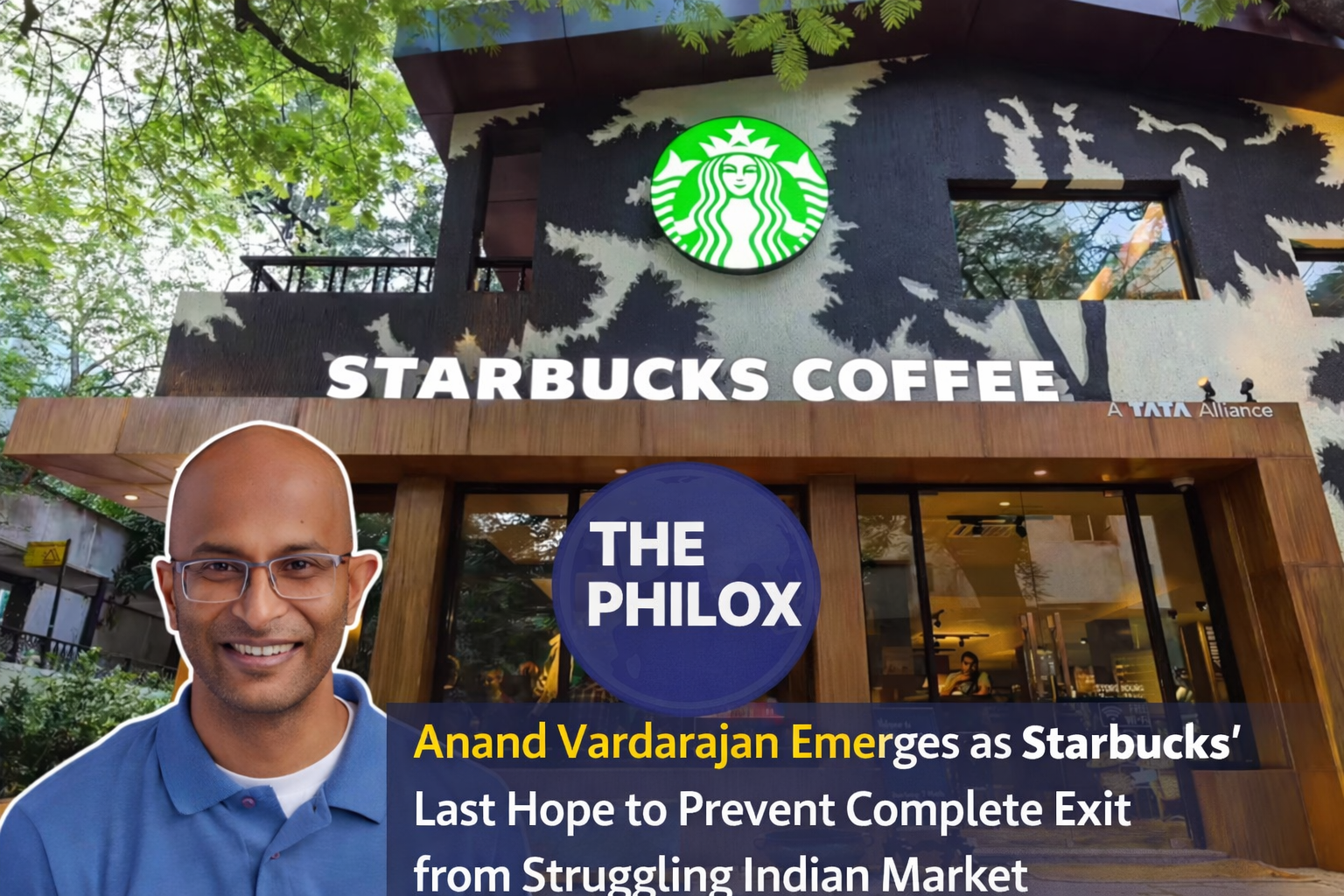
The Crisis in the Indian Coffee Market that is getting deeper.
The green siren of Starbucks has been undergoing one of the most challenging experiences in its demanding Indian market. The brand has attempted to establish itself as the leading coffee place among the Indian middle classes who are steadily increasing in number over a decade. Nevertheless, the recent financial reports and rumors have painted a dark picture about the position of the company in the country. The whispers are that the giant may put its bags pack since its mounting losses and stiff competition with agile local startups are taking a toll. This has not caused the profitability that stakeholders had envisaged because of the high cost of operating in premium locations.
For advertisement on our platform, do call at +91 6377460764 or email us at [email protected].
Anand Varadarajan, a man, has been given an appointment that has been a shattering event in the corporate world. Since he is the new Chief Technology Officer, his mandate is on a worldwide basis, yet his Indian heritage subjects him to the storm in the locality. The move by industry insiders is seen as a desperate, last minute effort to rescue the brand that is already in a bad state in one of the largest consumer markets in the world. The story has changed its direction to growth to survival and Varadararajan is perceived as the genius behind this life saving venture. It is his experience in breaking down complex systems that is being billed as the missing ingredient in the puzzle.
The difficulties that Starbucks has in India are not related to selling coffee but the business model as a whole. The large stores with high prices used by the brand has been in conflict with the price-sensitive status of Indian consumers. As much as people are fond of the brand, the pricing is usually prohibitive to their daily use as it is an occasional luxury. This has enabled localized brands to attract the daily coffee drinker with an improved price and a local cuisine. The management will be hoping the technical know-how of Varadarajan will help streamline such expensive operations and reduce overheads to a great extent.
The Amazon Veteran Takes Command.
Anand Varadarajan carries a reputation that is impeccable and earned in almost 20 years at Amazon. The skills he has acquired in handling the technology and supply chain of the global grocery business at Amazon come specifically in handy. His role at Amazon involved developing systems which made a big difference in guaranteeing speed, efficiency and customer satisfaction. These are precisely the areas that Starbucks has been bleeding in India market. His streamlining capability of the intricate supply chains might be the answer to the reduction of wastage and high logistical costs which are the bane of the coffee chain.
The choice is a strategic position taken by the global CEO Brian Niccol, who has realized that there was need to take a tech-first approach to the conventional retail issues. Varadarajan is not only a technologist but a leader who knows how to involve digital solutions in solving the problems with the physical store. His experience at Amazon has given him a lesson on putting his money on data-guided decision-making, and it is this culture that he should bring to Starbucks. It is hoped that he will be able to implement automated inventory and AI-based demand prediction into the Indian outlets. This would make sure the stores are stocked in an efficient manner without carrying the overload of unsold inventory that consumes margins.
His Indian heritage can also be evaluated as a latent yet a major strength in maneuvering cultural intricacies of the market. Although his position is international, it is great to have a top executive who is knowledgeable about the Indian psyche, who can act as an asset to the local team. He realizes the peculiarity of Indian retailing and the variety of tastes of the people in various states. This cultural fluency might enable the global tech strategy to be customized to suit the local requirements of the Indian stores. It closes the divide between the head office in Seattle and what is going on the ground in either Mumbai or Delhi.
Technology-Based Relief to Business ills.
A total overhaul of the digital interface is one of the first causes through which Varadararajan is likely to make a turnaround. Digital ordering and food delivery are the new ways of doing things in India, and Starbucks has frequently fallen behind in terms of smooth integration. Competitors seem to be more personalized and faster when it comes to the app experience, which is also functional. Varadararajan has a specialization in creating platforms through which the customer can order a cup of coffee with the press of a button. To reclaim the lost customers, it can be better to enhance the digital loyalty program to provide more relevant rewards.
The real revolution is to take place behind the counter contrary to the customer-facing app. The inefficiencies of the manual process of service deceleration are often shrouded by the “theatre” of coffee making. The new CTO intends to reduce service times by introducing smart kitchen displays and automatic workflow management. A high volume market such as India could have huge revenues gained by just a few seconds per order of shaving off. Technology would also assist in enhancing labor management with regard to the staff being the most effectively deployed during the peak hours.
The other weapon that Varadararajan is bound to utilize with aggressiveness to rescue the Indian operations is Artificial Intelligence. The AI is able to process a lot of sales data to determine precisely what products will sell at what time of the day. This can be used to do hyper-local marketing, such that a store in Bangalore can market filter coffee and another in Delhi can market a seasonal frappaccino. These targeted interventions have the capability of increasing average ticket size which is a key indicator of profitability. It aim to shift between a universal model of the world to a dynamic and data-driven local approach.