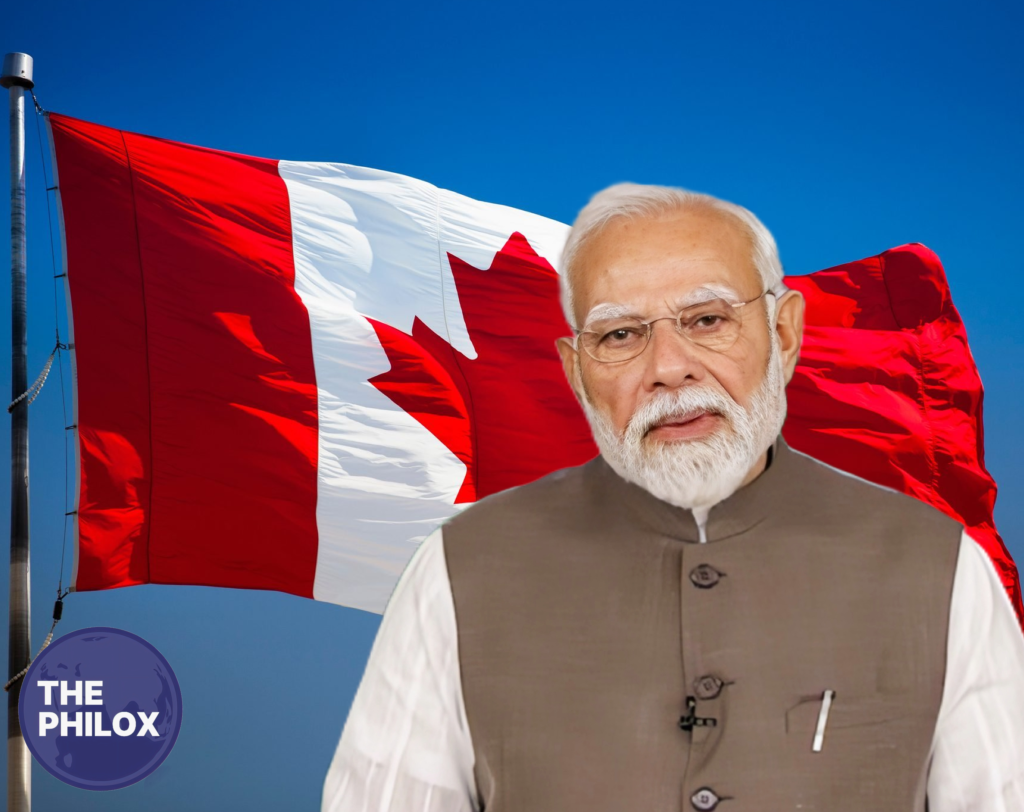
Canada and India are in a bitter diplomatic row, which started with a dramatic accusation by Canadian leaders. The core of standoff is the argument that the Indian government acting through its ruling Bharatiya Janata Party (BJP) through a notorious transnational organized crime group, namely, the Lawrence Bishnoi gang, targeted and threatened Canadian citizens on its territory.
For advertisement on our platform, do call at +91 6377460764 or email us at [email protected].
The incident has been termed as a historic breakdown of sovereignty and it has resulted in a significant aftermath between the two nations that used to be close allies. The situation has gotten worse in the recent past when Canada officially declared the Lawrence Bishnoi gang to be a terrorist organization.
The Main Charge: Trying to have Critics Silenced with a Gang.
In 2023 the diplomatic feud took a theatrical turn as Hardeep Singh Nijjar, an eminent Sikh and a Canadian citizen was assassinated in Surrey, British Columbia. Nijjar was an ardent supporter of the Khalistan movement which demands the establishment of an independent Sikh state in India, in the Punjab region.
Canadian police started providing information about the investigation in several months after the murder. These facts led to an appalling conclusion: the fact that Indian government agents have been involved in the violence.
The argument, presented by the Royal Canadian Mounted Police (RCMP), is that Indian government officials supposedly provided intelligence on Khalistan related activists in Canada to criminal organizations, namely the Lawrence Bishnoi gang. It was then alleged that these gangs were instructed to execute various acts of violence, extortion and targeted killings against the opponents of the Modi government.
Stated differently, it is not merely an accusation of a gang crime syndicate, but the activity of an organized crime syndicate by a foreign state as a means of carrying out transnational repression, or the state silencing its critics in exile.
The Lawrence Bishnoi Gang: A Global Menace.
The gang in the spotlight of this scandal is headed by Lawrence Bishnoi, a 32-year old ex-student leader (Punjab) who is serving time in jail in India. Although he has been in jail almost ten years, Bishnoi is considered as one of the most dreaded crime bosses in India.
His association has developed into a huge, international network that is involved in drug peddling, smuggling of arms and extensive extortion. The group employs violence, such as murder, shootings, arson, to terrorize the South Asian diaspora population, such as owners of prominent businesses and cultural leaders. They have been infamously associated with the 2022 killing of popular Punjab rapper Sidhu Moose Wala.
Canadian police assert that some of the most important Bishnoi affiliates, including Goldy Brar, have been based in Canada, organizing extortion rackets and targeted assassinations in Canadian provinces, including British Columbia, Alberta, and Ontario. These criminal activities have resulted in a high level of threat like never before and a climate of insecurity among Canadian-Sikhs communities.
It is associated with the bigger diplomatic scandal in the assertions that the Indian government supposedly used this established, strong criminal network to execute its political agendas against the Khalistan movement in Canada.
Strong Denial and Counter-Accusations of India.
The Indian government through its Prime Minister Narendra Modi and his BJP party have harshly denied that they were involved in the murder of Nijjar or that the Bishnoi gang was used to target Canadian nationals. New Delhi has constantly rebuffed the allegations terming them absurd, strange and ludicrous demanding that Canada produce hard, believable facts to back the explosive allegation.
India has constantly insisted that the more serious security issue is with Canada, that Ottawa has not done anything about Sikh extremists and separatist groups who have been operating freely on Canadian territory.
New Delhi has argued:
- Failure to make Extradition: Indian states that it has already issued dozens of extradition requests to the Bishnoi gang members and other criminals to Canada, which is purportedly ignored by Ottawa. India also accuses Canada of protecting those who have absconded to Canada to commit crimes in India.
- Protecting the Extremists: Over an extended time, the Indian governments have alleged that the Canadian governments have been serving the pro-Khalistan extremists vote bank and have been letting them fund and organize anti-India operations that endanger the national security of India.
It was the first allegations that led the diplomatic relation to the lowest ebb as several diplomats were expelled by both nations and also the trade negotiations were stalled.
New Counter-Strike: Terrorist Designation in Canada.
Currently, however, in a major and recent advance, the Lawrence Bishnoi gang has been officially named a terrorists group under the Canadian Criminal Code. It is a step that simultaneously recognizes the seriousness of the gang and offers Canadian law enforcement a lot more authority.
The designation means:
- Asset Seizure and Freezing: Canadian police can now seize or freeze any property, vehicles or money that the gang owns or controls in Canada.
- Criminal Offence: It is now a criminal offence in Canada that a person knowingly supplies financial or material assistance, or that he/she transacts with the gang property.
- Sharper Law Enforcement Means: The list provides police and intelligence with more resources to prosecute gang members in terms of financing, recruitment and traveling.
According to Public Safety Minister Gary Anandasangaree, the name will assist in tackling and halting their offenses and it is the first step towards countering the terror that the gang spreads within the diaspora communities.
This move follows the push by the new Canadian government under Prime Minister Mark Carney to have his government revive relationships with New Delhi. In listening to India, and about the criminal actions of the gang, Ottawa is trying to forge a working way forward on security and intelligence-sharing, despite the deeply disturbing allegations of state involvement in targeted assassinations, which are still unproven.
The case is still a significant international law challenge to the nations and the multithingual issue of dealing with transnational criminal networks, mixed with the political opposition.