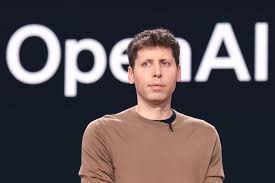
Elon Musk Sues to Recovery Record Damages in Revised OpenAI Case.
Elon Musk has outrageously increased the level of his legal struggle against OpenAI and Microsoft by submitting a court request with damages between 79 and 134 billion dollars. According to a filing made by lawyers of the Tesla CEO against the federal court in Oakland, California, the defendants have enriched themselves unfairly by early financial and strategic assistance that Musk provided. The lawsuit asserts that OpenAI, which is currently worth about $500 billion, would not be what it is today without the essential capital and credibility that Musk injected into the company at its inception stage. This new demand turns what had started out as a question of corporate mission into a financial claim of tremendous proportions in Silicon Valley history.
For advertisement on our platform, do call at +91 6377460764 or email us at [email protected].
The finer analysis of the damages is based on the calculation of financial economist C. Paul Wazzan, who was hired by the legal team of Musk as an expert witness. The analysis of Wazzan states that OpenAI was awarded undeserved profits of between 65.5 to 109.4 billion directly because of the earlier input by Musk. Besides, the claim is directed at Microsoft, the biggest commercial partner of OpenAI, purporting that the software giant had gained around $13.3 billion to 25.1 billion as a result of the purported breach of contract. Lawyers of Musk claim that these amounts are a just disgorgement of profits based on assets and intellectual property that were originally destined to a non-profit and open-source organization.
Actions of Treachery and Unjustified Profit.
The crux of the lawsuit is based on the argument that OpenAI has forsaken its original charter, which promised the creation of artificial intelligence in the service of humanity and not to gain shareholder wealth. The current leader, Musk, who was co-founder of the organization in 2015, says he invested about 38 million dollars as seed capital on the express promise that the organization would be a non-profit counter to Google. The lawsuit asserts that the repositioning of OpenAI into a commercial subsidiary and its consequent subsequent multiple dealings with Microsoft under exclusive licensing amounts to a breach of this original agreement. The filing underlines the fact that the company could not have made it through the initial stages without the recruitment of the key talent as well as the initial capital of the company, which was made possible by Musk.
The legal team of the plaintiff has made the damages not just a payback of the investment made but restitution of the value of the head start Musk had offered. They posit that OpenAI and Microsoft achieved a successful takeover of the technology that was intended to be publicly available infrastructure by switching to a closed-source business model. The case claims that it was a kind of a bait-and-switch scheme that enabled the defendants to monopolize the generative AI industry, crowding out other competitors such as the own venture of Musk, xAI. The complaint implies that the damages would be in proportion to the huge valuation difference between a non-profit research laboratory and the half-trillion-dollar commercial business OpenAI is now.
OpenAI, Microsoft Denies allegations of harassment.
OpenAI has reacted violently to the new filing, describing the $134 billion request as being non-serious and a further step in a walls-ignited harassment effort by a competitor. An OpenAI spokesperson in a statement issued after the court filing repeated that Musk is complaining out of professional jealousy and not the legal substance of the complaint. The company referenced earlier disclosures in courts where Musk supposedly explained how he intended to transform OpenAI into a profit-making entity himself and majority control prior to quitting the board in 2018. According to them, Musk is trying to use the courts to hurt an adversary which had managed to gain an advantage over him where he had failed to win over.
Microsoft has also not been accepting the allegations and its legal representatives have filed a motion to suppress the expert testimony made by Wazzan. The attorneys of the tech giant claimed that the model of damages is speculative and unverifiable, and it does not have a firm foundation on the economic reality. They argued that it cannot be proved that Microsoft assisted and encouraged any fiduciary violation since their investment took place long after Musk had left the organization. The two defendants have requested the judge to dismiss the damages claim saying that it is an unprecedented effort to take billions away off the successful operation of a non-profit to get a former donor.
The Road to a High-Stakes trial of jury.
The damages increase is just after U.S. District Judge Yvonne Gonzalez Rogers refused a motion to dismiss the case by OpenAI and Microsoft, paving the way to a jury trial to be held in April 2026. The judge found that the evidence on the allegations of breach of contract and fraud that were made by the plaintiff, Musk, was substantial to grant a full evidentiary hearing. This decision was a procedural win to Musk, as his team was now able to go through the discovery phase where they could obtain the internal communications on how OpenAI was restructuring. According to legal analysts, the threat of a trial would be made public might compel the release of sensitive documents regarding the company association with Microsoft.
The result of this lawsuit may have far reaching consequences to the management of the non-profit making organizations that incubate high value technology. In case the jury decided to grant at least a small amount of damages requested, it would change the monetary environment of the artificial intelligence industry profoundly. The case also points at the increasing conflict between open-source activism and the commercial business model in which AI is being developed. Both parties will focus on their pre-trial motions as the trial date approaches, and the investigation of Musk side is likely to remove several key figures, such as OpenAI CEO Sam Altman.