For advertisement on our platform, do call at +91 6377460764 or email us at [email protected].
The Food Safety and Standards Authority of India unleashed a torrent of notices at the food industry. Fifteen different brands were slapped with formal warnings over the weekend. The controversy hinges on what names and marketing taglines companies are slapping on their products. According to the food regulator, this is designed to dupe consumers directly. At the root of it all lies the Food Safety and Standards Act of 2006, which is rife with regulations regarding packaging and display.
Anyone walking into a grocery store today will notice that almost every product boasts either healthiness or some form of “naturalness” in their branding. But now, the FSSAI is pulling some of the most brazen marketing ploys to a halt. “Trade names and taglines are misrepresenting consumers,” the FSSAI clearly stated. When a consumer picks up a packet of chips or a loaf of bread, they think they’re making a conscious healthy choice for their families. But the fine print at the back of the packet tells a totally different story.
“Zero Maida” is Not What It Sounds Like
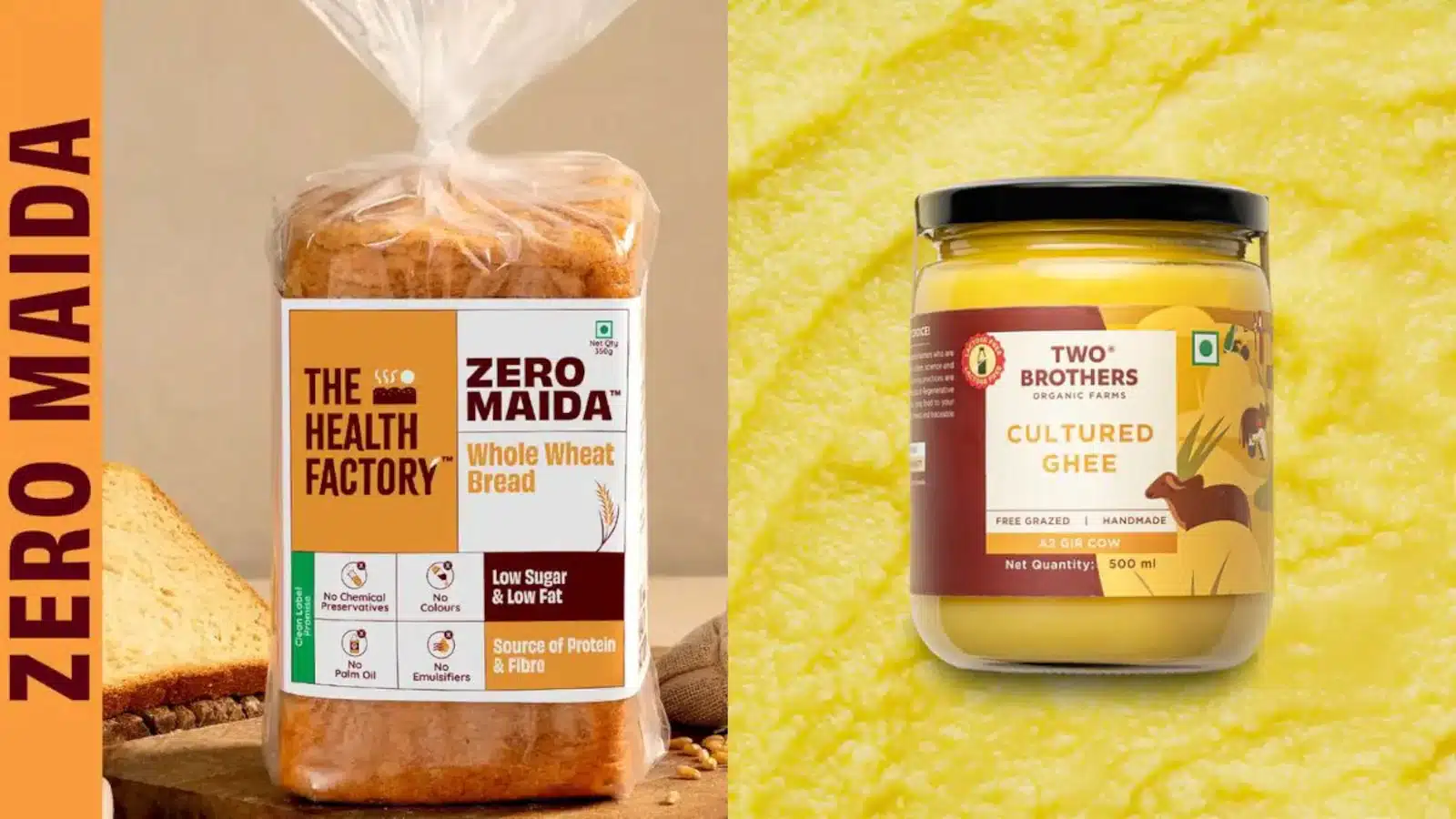
Among the brands facing the wrath of the FSSAI’s recent sweep is The Health Factory, a company which has built an empire on selling products such as “Zero Maida Whole Wheat Bread” and “Zero Maida Pizza Base.” The branding of these items clearly implies that they are a healthy alternative to traditional bakery goods, especially those made with refined flour.
However, on further scrutiny, the food safety watchdog observed that the “Zero Maida Whole Wheat Bread” actually contains chakki fresh atta and wheat gluten. Similar discrepancies were noted for the “Zero Maida Pizza Base.” The FSSAI flagged these trade names, along with the massive “Zero Maida” claims on the front label, because they were in direct contravention of its applicable regulations. The core of the argument lies in the idea that the statement “Zero Maida” on the front of the packaging misrepresents to an ordinary consumer what is actually present within, as wheat gluten and atta essentially do not count as zero maida.
The Organic Hoax
The food regulator’s crusade against deceptive packaging did not end with bakery items alone. Four companies selling organic products were targeted for their exaggerated claims: Organic Wisdom, Shine Organic, Two Brothers Organic Farms, and World of Organic.
Under current Indian regulations, any food item marketed as organic must carry proof in the form of either a National Programme for Organic Production certificate or a Participatory Guarantee System certification. In addition, the packaging must bear the official FSSAI Jaivik Bharat logo. The food safety body noticed that these four brands had incorporated “organic” in their trade names or taglines and in doing so were directly misrepresenting their products. However, the company paperwork revealed a lack of any approved organic endorsements or certifications. A mere registration of the trade name does not make a product officially certified organic.
Slapping Health Labels on Unhealthy Food
The casual application of “healthy” in food product names also came under the scanner. Food businesses have long known that a health-conscious consumer is willing to pay more for a “healthy” product. The FSSAI received complaints about numerous businesses that were taking advantage of this.
For example, a range of snacks from Troovy, such as The Healthy Mix Veggie Chips, The Healthy Ragi Chips and The Healthy Moong Dal Chips were issued notices. The FSSAI pointed out that these products contained numerous ingredients that effectively nullified the ‘healthy’ branding and stated that their use in the trade name constituted a misrepresentation to consumers. Similarly, Health Master, a company which promotes its brand with the slogan “Vision to serve healthy,” and Healthy Choice for its “Healthy Food for Healthy Life Poha,” received notices for the same reason. Emami Healthy & Tasty, a cooking oil, and Health Aid were also flagged by the regulator on the grounds that their trade names violated applicable regulations. The FSSAI has effectively said that companies can no longer simply register the word “health” as part of their trade name to fool shoppers.
Vitamins are Not “True,” Juice is Not Fruit
Different strategies are also being used by companies to mislead their consumers. Neuherbs’ multivitamin product, “True Vitamin,” has been rejected because “True Vitamin” is not defined anywhere in Indian food regulations and is thus a non-existent scientific or legal classification of food product. Storia Juice Pomegranate was flagged because it actually contains just four percent pomegranate juice concentrate and hence a misrepresentation of its contents. Lota Water, a brand of water, was also warned for the claim “Feel The Difference” along with an addition of minerals. As per regulations for packaged drinking water, added minerals are allowed to be listed in the ingredient list, but this can only be done in case they are naturally present in the water and are being added as replacements. Companies cannot add any nutrients for health benefit purposes if these are present in negligible amounts in the ingredient list or they would result in a misrepresentation of the facts to consumers. Plant-based food company Plan B Plant-Based Vegan, was issued a notice because although their brand name conveys the obvious meaning of vegan products, their FSSAI license did not indicate any endorsement or registration for vegan food.
What Will Happen to the Businesses?
The Food Safety and Standards Authority has not immediately pulled all the affected products off the shelves. Instead, these notices represent an initial aggressive step. All Food Business Operators have been given a specific amount of time to respond to the regulator. They must clearly explain their product branding and endeavor to validate their claims. If they cannot sufficiently demonstrate the accuracy of their labels, they will be compelled to redesign all their packaging, modify their registered trade names and suspend their deceptive advertisements on all platforms. The FSSAI has sternly instructed the businesses involved to strictly adhere to the food labelling laws. Consumers depend on what they read on the packaging, and the regulator is making an earnest attempt to ensure the truth of these statements.