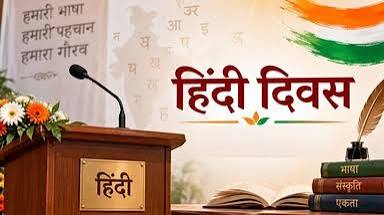
Today, 14th September, is Hindi Diwas, on which I have already written an article given below :
For advertisement on our platform, do call at +91 6377460764 or email us at [email protected].
Now I am writing another article on the same topic.
I have often said that modern Hindi poetry has no ‘dum’ ( power ) in it compared to Urdu poetry. In this connection I am reminded of an incident which happened a few months after I had been appointed a Judge of the Allahabad High Court in 1991.
My good friend late Neelkant, was a Hindi writer and critic, of Allahabad, my native town. One day he came to meet me at my residence in Allahabad. He had written a book on Rahul Sanskritayan, a famous Hindi writer, and he wanted me to be the Chief Guest in a function for its release at the Hindustani Academy, Allahabad.
I normally avoided going to functions as long as I was a sitting judge, but since Neelkant was such a fine and loveable person I agreed.
When I reached the venue there was a huge crowd of over 200 persons assembled in the hall of the Hindustani Academy. Many of them were Hindi literary figures who regarded themselves as great writers. After the function began, several speakers spoke, praising modern Hindi literature, and then came my turn.
I got up and said that I was sorry but I could not agree with the previous speakers who had spoken before me. While I regard medieval Hindi poets of the bhaktikaal and reetikaal periods, like Sur, Tulsi, Kabir, Raskhan, Rahim, Meera, Keshav, Bhushan, etc as undoubtedly great, modern Hindi poetry was ‘daridra’ and ‘ghatiya’ (low level), and it has no place in world literature. I also said that modern Hindi poetry had no dum (strength) in it, and was no match to Urdu poetry.
I quoted several Urdu poets to show the power of Urdu poetry, e.g. Bismil’s poem ‘Sarfaroshi ki tamanna ab hamaare dil mein hai’ which was very powerful, and inspired India’s freedom struggle. But if it is translated into Hindi it will become ‘Sheersh katwaane ki manokaamna ab hamaare hriday mein hai’, which has no ‘dum’ in it. Similarly, Faiz’s verse ‘Bol ki lab azaad hain tere, bol zubaan ab tak teri hai’ will, on Hindi translation, becomes ‘abhivyakt karo ki onth swatantra hain tumhaare, abhivyakt karo ki jeebh abhi bhi tumhaari hai’. Again, no ’dum’ in it. I also mentioned Faiz’s poems ‘Hum dekhenge‘, ‘Nisar main teri galiyon ke ai watan’, and the poetry of several Urdu poets
I referred to Mir, Ghalib, Faiz, Firaq, Josh, Sahir, etc and said that Indians read and loved their poetry, whereas no one reads modern Hindi poets like Sumitra Nandan Pant or Mahadevi Verma, except for their school/college examinations, since there is no ‘dum’ in them.
At first, the audience was stunned, but gradually as I was speaking an uproar began, which soon reached a crescendo. People in the audience started shouting ‘Aise anpadh aadmi ko kisne judge bana diya’ (who appointed such an illiterate person as a judge), ‘ap yahan kyon aaye hain?’ (why have you come here?), etc.
I replied calmly that I had come because I had been invited by Neelkant whose book was being released. I also said that if anyone in the audience disagreed with me he could have politely pointed out where I was wrong and discussed the good things in modern Hindi poetry, but this was no way to behave.
But no one was prepared to listen to me, and a barrage of abuses, invectives, and vituperations were soon hurled on me.
When this crossed the limits of my endurance I said ‘You are a bunch of gundas’ and stormed out of the hall.
The next day, many newspapers published accounts of this incident, including my statement that modern Hindi poetry was ‘daridra’ and ‘ghatiya’, and that Hindi literateurs consisted mostly of a bunch of gundas. The result of these newspaper reports was, as Neelkant later told me, there was a huge demand for his book, and the first print was soon sold out, and there was a demand for a second edition.
A few days later Neelkant came to my house and apologized profusely for the misbehaviour of the crowd.
I told him not to worry. He should now write another book on modern Hindi literature and invite me again for its release, where I would again lambast modern Hindi literature, and this would ensure another huge sale of his book.