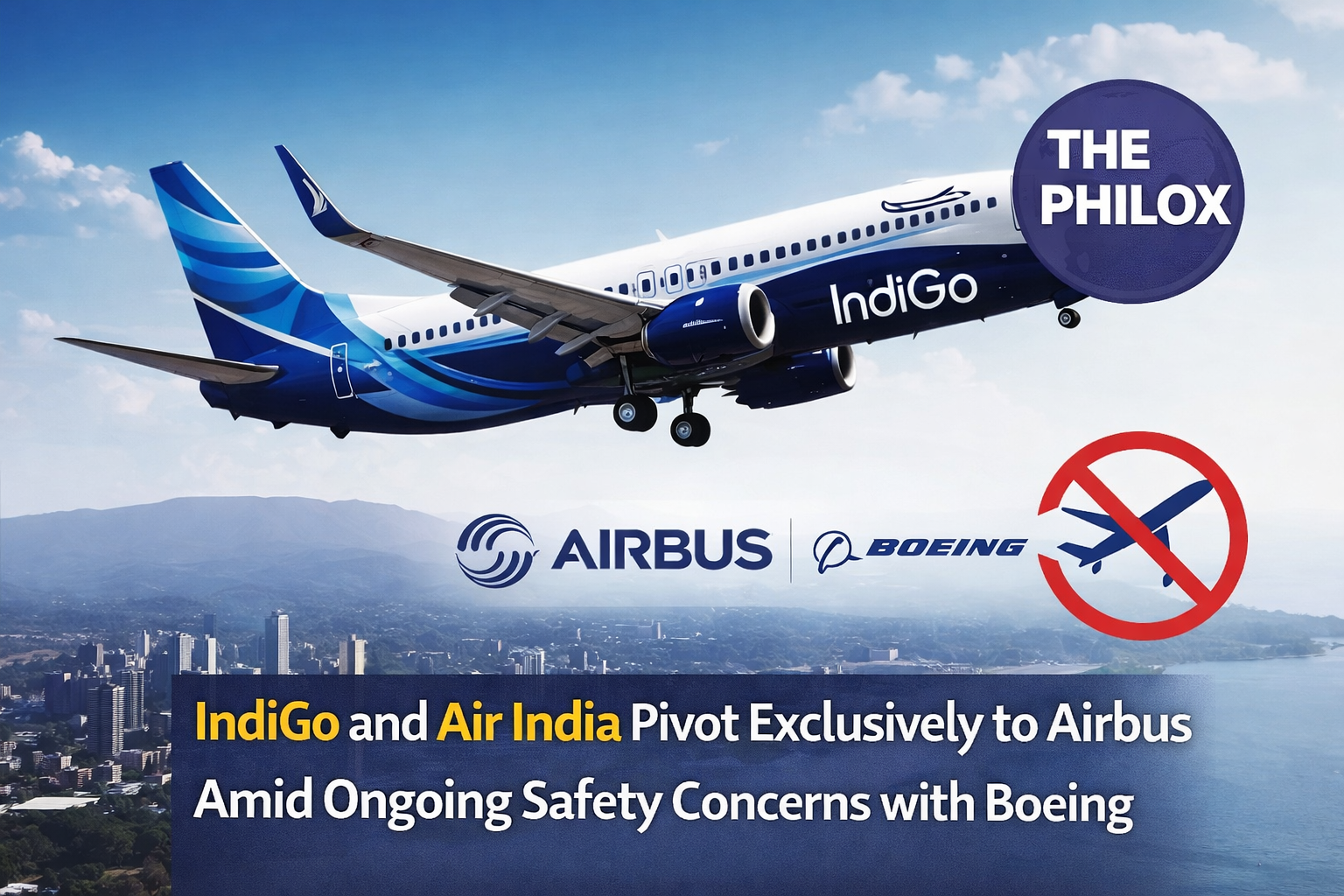
Indian Aviation Paradigm Shift.
The Indian aviation industry is radically changing as the two largest airlines in the country, the IndiGo and Air India, are committed to solely using Airbus aircraft in their future fleet programs. It is a resounding shift following the mounting security issues with Boeing airplanes, and it culminates in an event that rattles the entire industry in mid-2025. Air India has long had a mixed fleet, relying on wide-body jets manufactured by Boeing as it had long-haul routes to North America and Europe, which have been very profitable to the company. Nevertheless, the operational risks and reputational losses that have been linked to the recent Boeing failures have compelled the Tata-owned airline to reevaluate its long-term partnerships. The alignment with the long-time Airbus loyalist IndiGo is an indication of a common front in the Indian air industry where reliability is put over diversification.
For advertisement on our platform, do call at +91 6377460764 or email us at [email protected].
The Shadow of Flight AI 171
Boeing 787-8 Dreamliner, which was flying out of Ahmedabad, crashed soon after takeoff killing 260 people and it was one of the saddest days in the Indian aviation history. Initial reports by the Aircraft Accident Investigation Bureau (AAIB) were suggesting critical design flaws in fuel control switches and the possible cockpit-design weakness which Boeing had supposedly ignored. The catastrophe was not only putting a large percentage of Air India wide-body fleet on the ground but it also destroyed the confidence of the passengers in the Dreamliner a jet that was the jewel in the crown of its international fleet. The airline found itself in a situation of a lot of pressure by the society and legal scrutiny, and thus, the further reliance on Boeing was not viable to its brand rehabilitation.
Market Dominance and Airbus Reliance at IndiGo.
At a time when Air India is struggling with its transition, IndiGo has used the chaos to its advantage to establish itself as the market leader unquestioned. IndiGo already had one of the largest Airbus A320 fleets in the globe and its consistency in operation was a sharp contrast to the troubles its competitor experienced in the time of crisis. After the AI 171 accident, passengers rushed to the international operations offered by IndiGo and the low-cost carrier became the first airline to surpass the Air India Group in international traffic in July-September 2025 quarter. The Airbus A320neo and A321neo families have enabled IndiGo to grow fast without the fleet mix confusions faced by Air India due to its heterogeneous fleet composition. The success has confirmed the single-manufacturer model and this has impacted Air India to adopt the lean model of its competitor in future orders.
Conformity Crackdown and Social opinion.
The Directorate General of Civil Aviation (DGCA) has stepped up its regulation and has established a regulatory framework that implicitly contributes to the proven stability of the Airbus platforms in the present climate. The crash also meant that the regulator conducted tough inspections to all Boeing planes causing regular groundings, and schedule delays that cost Air India dearly. It was reported that the DGCA noticed that Air India was violating safety protocols days before the crash and that this complicated maintenance needs of an aging plane fleet of Boeing. The perception of the population has changed significantly, and now passengers are boycotting the flights performed by Boeing, compelling travel agents and company reservation services to screen aircraft models. This consumerism has seen the tag of Airbus-only becoming a strong selling tool to the safety-conscious flyers.
The Future is European: Strategic Balancing of Air India.
Air India is currently speeding up the negotiations to substitute its Boeing order book with Airbus A350s and more A321neos. According to industry sources, this airline is exploring the possibility of standardizing its pilots and maintenance as well as its inventory to an all-Airbus ecosystem, in line with the efficiency of IndiGo. The relocation will reduce supply chain risk and regain the confidence of leasing the scandalous 787s and 777s within ten years. This is not only a procurement move but also a survival plan to gain momentum in the competitive global market. Air India is hoping that by associating with Airbus, it will be able to forget the turbulence of Boeing crisis and proceed along a safer and sure path in the future of Indian aviation.