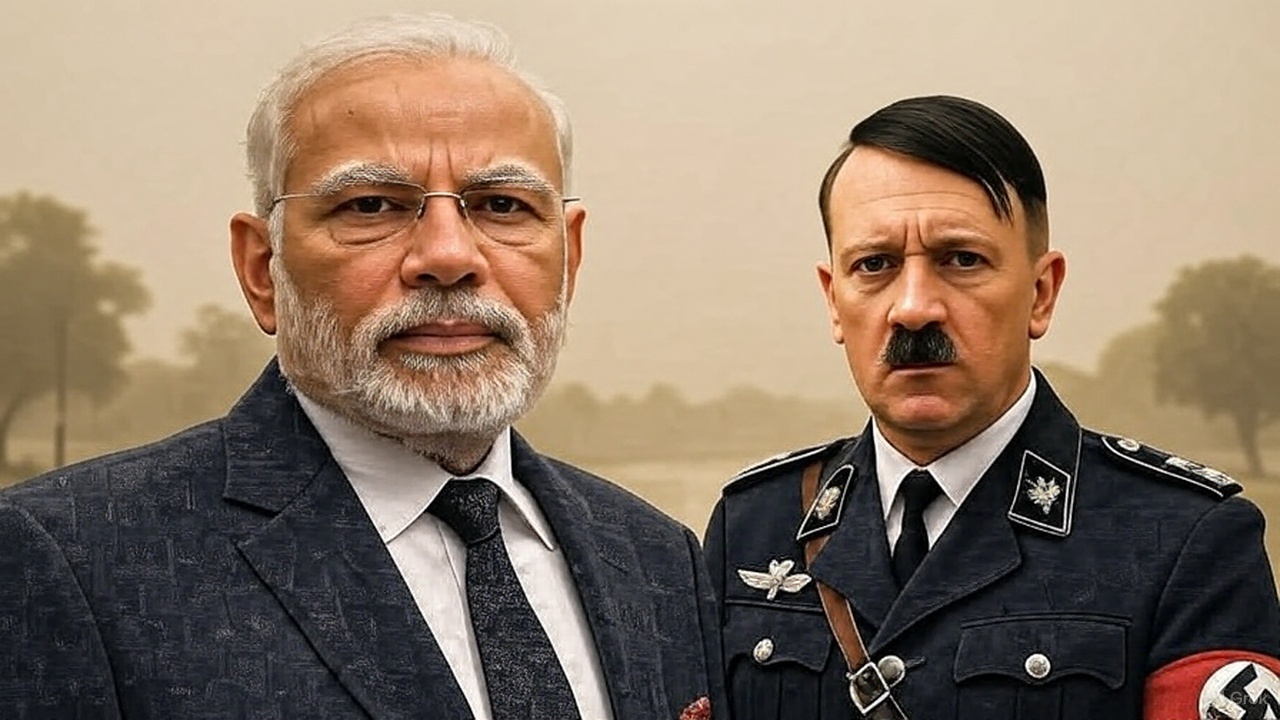
And it is now Delhi with its smog curling around like a smothering shroud of smog, and people living there in the city face another round of breathing problems. However this time there has been a darker twist to the comparison. The netizens being frustrated and desperate have resorted to comparing the air pollution in Delhi to the gas chambers of Hitler, with the villain of today, being the Modi government.
For advertisement on our platform, do call at +91 6377460764 or email us at [email protected].
When we get down to the meat of this debatable analogy, we should consider the background, the indignation, and the connotation of such an analogy.
The Gas Chamber Analogy: A Cry of Help or Hyperbole?
The analogy of comparing the air in Delhi with that in the gas chambers of Hitler is not a recent development, but one that has gained even more attention over the past few weeks. The comparison, although drastic, is founded on the desperate air that is the winter in the city. As Air Quality Index (AQI) tend to enter the range of the hazardous category, the population has to use masks and not leave the house, and in some cases, even leave the city, should they afford it.
The mention of gas chambers, which symbolizes one of the worst periods in the history of humanity is a clear example of how bad the situation is perceived to be.Posts such as, “Delhi is becoming a gas chamber, and the Modi government is the Hitler of it all can be seen on social media. This feeling shows that there is an increasing dissatisfaction regarding the way the government is dealing with the pollution crisis.
The gas chambers of Nazi Germany were tools of genocide, which were used to mass murder millions of people under the Holocaust.
The Historical Context: A Sensitive Comparison
It is a controversial step to compare the air pollution in Delhi with these chambers. It reminds about the pictures of planned, methodical extermination that though hyperbolic, indicates the panic many Delhiites were in. The role of the government is also the subject of the criticism as the government has not taken any measures to protect its people as the pollution is not merely an environmental problem but a life-threatening one.
The AQI of Delhi has not been good and the concentration of particulate matter (PM 2.5 and PM10) is way beyond the safe standards. Stubble burning in surrounding states, motor emission, and industrial pollution has been cited as some of the key reasons.
The reaction that has been taken by the government, or rather the absence of it has been a cause of criticism.Opposition leaders especially those of the Aam Aadmi Party (AAP) have been very quick to point fingers at the central government.
Delhi Environment Minister Gopal Rai has gone on record to blame Prime Minister Modi and Environment Minister Yadav as having remained silent on the issue, making it a moral duty that they have avoided. The perceived insufficiency of existing actions has further been made apparent by the demand of the artificial rain, a controversial and untested solution, which has been amplified by the Internet.
Social media (such as X (now Twitter)) have become the hot spots of public opinion, with hashtags such as #DelhiGasChamber trending during the most active pollution times of the day. There have been memes, satirical posts, and desperate calls to action which have all become a part of the story that the Modi government has failed its people.One such viral post, an example, was, Ego > Oxygen, which is not only assigning blame to policies but also to a general unwillingness to act. This is indicative of a larger sentiment that the issue is more social and political than it is environmental.
The internet has provided a platform to people who feel literally and figuratively choked by the pollution and the reaction of the government towards it.
The Health Toll: A Stark Reality
The health effects of air pollution in Delhi cannot be ignored. Air pollution has become the largest health risk in Delhi according to the Institute for Health Metrics and Evaluation (IHME), which is expected to cause close to 15% of all deaths in 2023. Other illnesses such as respiratory distress, asthma, and even premature death are increasingly becoming common particularly during winter when the pollution is at its highest level.Senior pulmonologist Dr. Gopi Chand Khilnani has advised of the extreme stages of pneumonia that may arise due to a longer exposure to the polluted air. His recommendation to leave Delhi until the middle or end of December is a chilling statement of what the city is like at this time of the year but has also been criticized as being insensitive.
The Controversy: A Double-Edged Sword
Although the gas chamber analogy is a subject of discussion, criticism has also been directed at the analogy as being insensitive. A comparison of a public health crisis to a genocide is a provocative thing to say and may downplay atrocities of the past. But to most this is really a cry of desperation to communicate the imperative of the situation. The controversy itself has caused the issue to continue to stay in the public eye and has necessitated a discussion of accountability and action
.Looking Forward: What Can Be Done?
The answer remains: what can be done to address this crisis. Such short-term solutions as artificial rain though controversial are under consideration. To address transboundary pollution, a multi-pronged strategy should be applied, such as tighter emission standards, waste management, and international collaboration to eliminate transboundary pollution, which is what the Modi government has done, though the critics believe that this is not much. It is the responsibility of the central and state governments to collaborate but the blame game can be a setback at times.