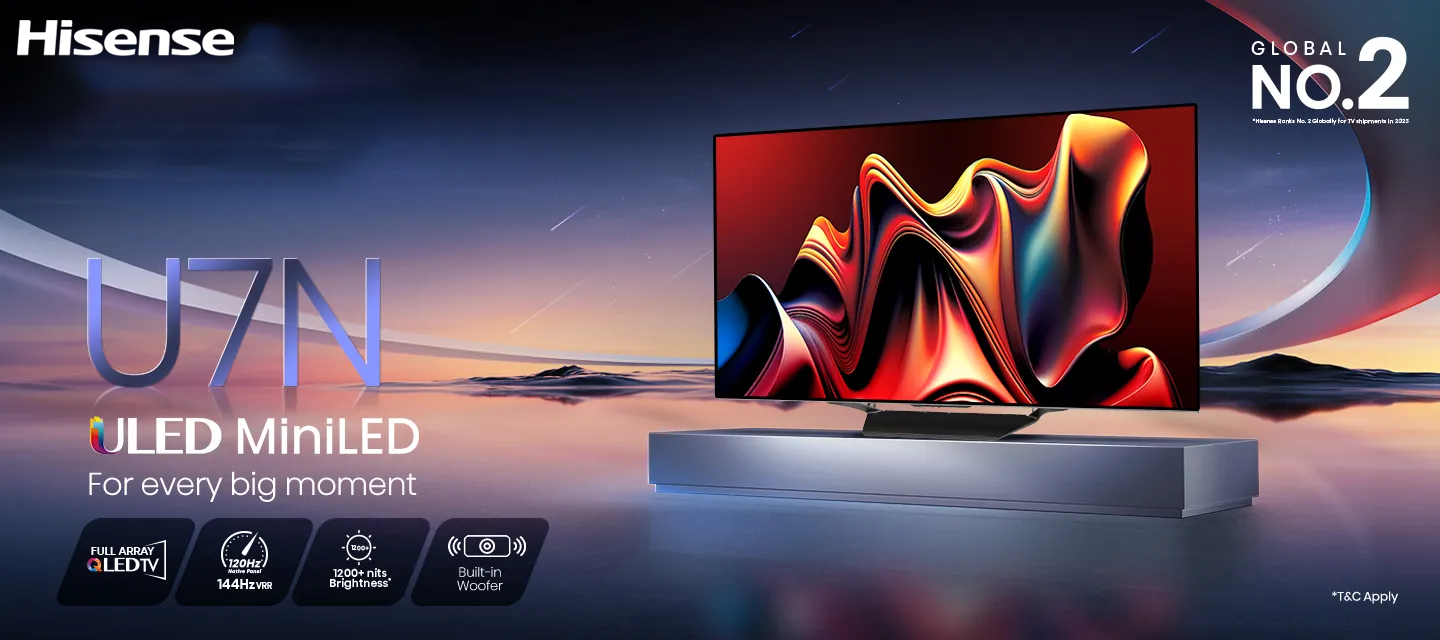
Man, if you thought the TV wars were all about Sony’s fancy Bravia glow or Samsung’s endless QLED parade, think again. Hisense premium TVs are straight-up shaking things up this year, basically sneaking into the big leagues and stealing the show from the usual suspects. We’re talking models like the U8QG Mini-LED and U9N that pack punchy ULED tech – that’s Hisense’s spin on mini-LED with quantum dots for killer colors and brightness. Globally, Hisense grabbed a solid 14% market share in 2024, hitting second place behind Samsung, and in 2025’s first half, they snagged nearly 60% of shipments for those massive 100-inch beasts. In India, where the TV market’s buzzing at 15 million units a year, Hisense is pushing hard for 10% slice in the east alone, with plans to blanket the country by mid-year. Prices? A 65-inch U8QG goes for around ₹1,20,000 here, while Sony’s Bravia 8 or Samsung’s S95F easily double that. It’s not just cheap thrills; these TVs are delivering bang-on performance that has folks ditching brand loyalty for real value. But how’s a Chinese underdog pulling this off against the Korean-Japanese giants? Let’s break it down, you know, without the fluff.
For advertisement on our platform, do call at +91 6377460764 or email us at [email protected].
First off, picture quality – that’s where Hisense is landing proper body blows. Their ULED Mini-LED lineup cranks out insane brightness, like the U8QG hitting 4,500 nits peak, which smokes Samsung’s QN90F at 2,000 nits and even edges LG’s G5 OLED in super-bright rooms. I mean, OLEDs from LG or Sony are gods for perfect blacks and infinite contrast, no blooming or anything, but they wash out in daylight – think Mumbai afternoons with the AC blasting. Hisense? It handles that glare like a champ, thanks to thousands of dimming zones that keep shadows deep without the halo mess you get on cheaper LEDs. Reviews from Tom’s Guide and RTings rave about the U7N series matching Sony’s color accuracy at 95% DCI-P3 coverage, all while staying punchy for HDR movies or IPL highlights. One tester called the U8QG “an OLED killer on steroids” for under ₹1.5 lakh. Basically, if you’re not in a pitch-black home theater, Hisense’s mini-LED gives you that vivid pop without the premium pain. And get this – their new RGB Mini-LED in the 116-inch TriChroma? It surpasses QD-OLED gamuts, per CES demos, making Samsung’s Neo QLED look a tad dated.
Gaming’s another arena where Hisense is going full-on nuts, especially for us desi PS5 or PC warriors. Forget Sony’s Bravia 9 with its two measly HDMI 2.1 ports – Hisense stuffs four of ’em on the U8QG, all at 144Hz with VRR, ALLM, and Dolby Vision gaming. That’s smoother than LG’s C5 in fast-paced stuff like Call of Duty or FIFA, no tearing or stutter. Latency? Under 10ms, beating Samsung’s Q80F in blind tests from TechRadar. Plus, the Hi-View Engine processor upsamples old Blu-rays or YouTube clips like a boss, close to Sony’s XR chip but at half the cost. In India, where PUBG Mobile pros are eyeing console upgrades, this is gold. Social media’s lit with unboxings from Bengaluru gamers saying, “Switched from Samsung – no more input lag headaches, and it’s brighter for late-night sessions.” Sure, Sony edges in PlayStation tweaks, but for multi-platform folks, Hisense feels like the smart, no-BS pick.
Then there’s the wallet factor – Hisense is undercutting like nobody’s business, and it’s working. While a 75-inch LG C5 OLED sets you back ₹2.5 lakh, Hisense’s U9N in the same size is ₹1.8 lakh with similar smarts. Counterpoint says premium TV shipments jumped 44% YoY in Q1 2025, and Hisense tripled theirs on mini-LED alone, chipping away at Samsung’s lead (now down to 30% share). In India, e-com giants like Flipkart are flying these off shelves during sales, with Diwali campaigns tying into Asia Cup ads for that mass appeal. Pankaj Rana from Hisense India nailed it: they’re stacking specs like 144Hz panels and Dolby Atmos into mid-range U7 series, stuff premium brands gatekeep. Reliability? Early bugs popped up, like off-axis viewing dips, but 2025 models fixed most with firmware – and hey, two-year warranties beat LG’s one-year standard. Netizens on Reddit’s r/IndianGaming are proper mad about it: “Why pay Sony tax when Hisense nails 90% of the job?”
Smart features keep the momentum rolling too. Hisense rocks Google TV on most premiums, smoother than Samsung’s Tizen for Netflix binges or Prime Video marathons. VIDAA OS on some is snappy for regional apps like Hotstar, and integration with Alexa or Google Assistant is seamless – no clunky remotes like older LGs. Audio? The U8QG’s 72W 4.1.2 setup with subwoofer thumps harder than Samsung’s basic speakers, though Sony’s Acoustic Surface still wins for purists. In bright Indian living rooms, where families cram for movies, this all adds up to a win. Global sales hit 29 million units last year, leading 100-inch category with 58% share – that’s uncles in Delhi societies pre-ordering wallscreen vibes without breaking the bank.
Look, Hisense isn’t flawless – build feels plasticky next to Sony’s metal frames, and OLED purists might miss that pixel-perfect depth. But in 2025, with tariffs hitting imports and folks hunting value amid rising costs, Hisense’s strategy is spot-on: flood the market with affordable firepower. Premium share jumped to 20% from 14%, per Counterpoint, threatening the big three’s grip. In India, targeting Tier-2 cities with e-com and sports tie-ups like FIFA Club World Cup, they’re building buzz fast. If you’re eyeing an upgrade, skip the hype – Hisense delivers the goods without the gouge. It’s not just beating them; it’s making premium accessible, one bright screen at a time. Who’s next to jump ship?