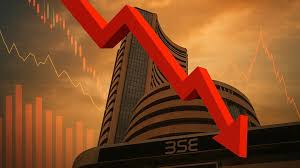
The Wealth Erosion and the Sudden Market Collapse.
Indeed the first week of January 2026 has seen a colossal selling off in the Indian stock market leaving investors in a panic state. The index or the sensex dropped by over 1,500 points in the four trading sessions and this wiped off a huge chunk of the market capitalization. It has cost the investors about 7 lakh crore of wealth in a very short span due to this sudden crash. The rate and severity of the fall have taken many of the retail investors by surprise because the market was trading at near record levels a few weeks ago. The volatility index has shot up indicating that the Dalal Street has been revived with fear after a relatively peaceful period.
For advertisement on our platform, do call at +91 6377460764 or email us at [email protected].
According to the market gurus, it is not just a normal correction but a response to the grave global and domestic forces. The selling pressure has been widespread and not only with the large-cap stocks but also with the mid-cap and the small-cap markets. It has taken days to have stocks, which were once regarded as the safe bets, lose their values by wide margins. People in the street changed their mood to being extremely cautious with traders scrambling to make profits and reduce their losses. This selling frenzy is being induced by a conglomeration of fears, about international trade policies, and the internal well-being of the Indian economy.
Banking and financial segments have suffered most in this four day losing streak. Heavyweight stocks such as HDFC Bank and Reliance industries have been the greatest contributors to the fall of the index pulling the entire market down. When these powerful corporations are at the point of selling, it leaves a domino effect, and it begins to drag the whole ecosystem down. Investors are now concerned that the support levels on which the market has been stemming on for months easily are broken. The magnitude of the offloading is an indication that institutional sellers are dumping their accounts and retail investors will be the ones who will suffer the volatility.
the Trump Tariff Threat and Global Trade Wars.
The re-emerging aggressive trade policy by the US President Donald Trump is among the main catalysts of this drastic downturn. There are reports that the US administration has plans of imposing a huge tariff of 500 per cent on those nations that still import oil in Russia. This has caused shocks in the Indian market since India is among the largest purchasers of Russian crude oil. This action by the US is something that would seriously cripple the energy security of India and make imports much higher. These punitive tariffs have caused a direct and negative response of investors who anticipate a possible diplomatic and economic crisis.
The threat of tariffs is regarded as a direct threat to the trade relations that India has been trying to maintain in the past couple of years. There is a risk of a trade war that would destroy the global supply chains and damage export-oriented sectors in case these tariffs are introduced. The IT and pharmaceutical sectors which depend on the US markets heavily are especially prone to worsening in trade relationship. Investors are investing on the worstest scenario where Indian firms are experiencing increased barriers to entry in the most significant market. This political insecurity is leading to an outflow of capital out of the emerging markets such as India to the security of less risky assets such as the US dollar and gold.
Moreover, the US President has openly stated how it uses the tariffs as a leverage against other nations such as India, China and Brazil. This kind of rhetoric in the political sphere has brought an aura of uncertainty which is more dreaded than anything in the market. The financial worry on how the Indian government will react to this pressure is contributing to the nervousness. In case India retaliates or fails to comply, the situation might become even worse causing even more economic pain. There is a high likelihood of strained relationship with the US and this is a significant dampening factor to the foreign investment which is essential to the continuation of the bull run in Indian equities.
Unrelenting Foreign Investor Selling.
FIIs have been offloading Indian shares at a chorus call and this has heightened in January 2026. Foreign investors have already withdrawn thousands of crores of money in a few days of the month through the cash market. This steady flight of foreign funds is busting the market upside down because the domestic inflows are finding it hard to absorb the supply. The funding of FII is moving to other economies such as China and the US where bond valuations are looking more appealing or the bond yields are increasing. The Sell India trade has become an option that has been picked up by the global fund managers who have also made efforts to re balance their portfolios in order to lower risk.
The continuous selling of the FIIs is also exerting too much pressure on the Indian Rupee which fell against the US dollar. A depreciated currency will render Indian asset less appealing to foreign investors and a cycle of outflows and currency depreciation will be created where a weak currency leads to a weak currency. The banking industry that is highly foreign owned is suffering the repercussion of this selling spree. Analysts note that high valuation of Indian shares is a cause of concern among the FIIs who are comparing them with their counterparts in emerging markets. As the growth rate has reduced and global risks have increased, foreign investors find no reason to continue to invest in India at the current prices.
This trend of FII selling is not new but the rate at which it is occurring in 2026 is worrying to the market players. In the past, long-term corrections of the market in India have always been considered to be connected with heavy selling of FII. Without the assistance of foreign funds to purchase the stocks, any glory in the market would be only momentary and would be faced by new selling. The domestic institutions are attempting to back the market, yet they lack the firepower to match the FII flow due to the huge liquidity released by the global market. The market will continue to be under a lot of pressure until such a trend is reversed.