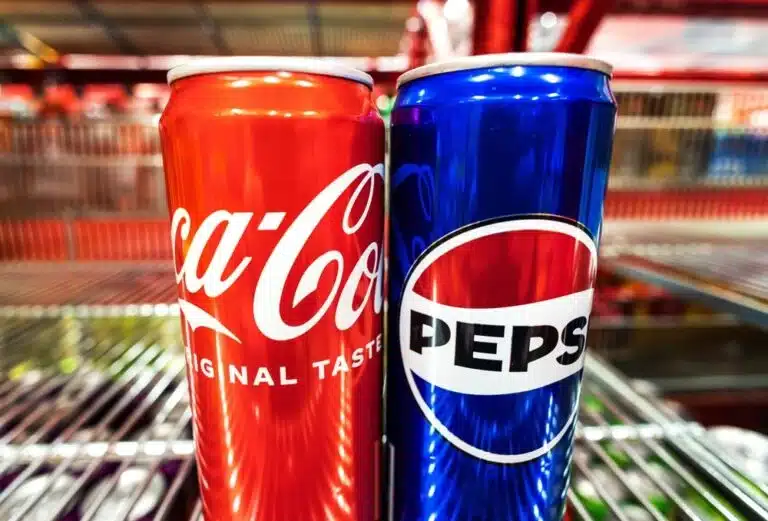
Stark Contrast Change of Formulation.
An increasing number of consumer reports and nutritional examination revealed a massive dissimilarity in the quantity of sugar in the common carbonated drinks offered in India and those available in Europe. Although all the major brands such as Coca-Cola and PepsiCo have a consistent brand image across the globe, the liquid content in the bottle differs by a significant level based on the location. Radical reformulations of classic cola products in the United Kingdom and in a number of other European Union countries have radically reduced the sugar content in their flagship products in recent years, to meet the stringent public health requirements. On the other hand, the variants marketed in India market are mostly based on their original recipes of high sugar content. The result of this departure has been the situation whereby an Indian soft drink may have much more sugar than the same brand in London or Paris and in some cases, specific low-sugar versions in Europe relative to standard Indian versions have been compared with a manyfold difference in the intensity of the sweetener.
For advertisement on our platform, do call at +91 6377460764 or email us at [email protected].
https://www.dailymail.co.uk/health/article-3255034/Coca-Cola-Pepsi-brands-differ-sugar-world.html
The Effect of the European Sugary Tax.
The main cause of this gap increase is the overly hostile regulatory environment in Europe, which is the introduction of the Soft Drinks Industry Levy (SDIL). Enacted in the UK in 2018, the policy was specifically aimed at fighting the increasing obesity rates and taxing drinks depending upon the amount of total sugar in them. Beverages that have a sugar content of above 5g/ 100ml will be subject to a normal tax whereas those with over 8g/ 100ml will be charged higher rate. PepsiCo and Coca-Cola manufacturers chose to redesign their products in order to avoid transferring these expenses to consumers who are price sensitive. As an example, a can of Pepsi in the UK now has significantly less sugar in it than it used to ten years ago, as the product has been reformulated to use high intensity-sweeteners such as acesulfame K and sucralose in place of sugar. Other fiscal steps by other countries such as France, Portugal and Ireland have also led to a wave of reformulation in the continent which has broken the nutritional profile of these sodas.
Regulatory Environment and Market Dynamics of India.
Conversely, the regulatory structure of the carbonated beverages in India has been more directed towards overall taxation in comparison to targeted incentives on reformulation. Although India levies a sin tax, in the form of 28% Goods and Services Tax (GST) and 12 percent compensation cess to aerated drinks, the tax applies evenly to the category and not based on the quantity of sugar. This leads to manufacturers who have high sugar content in their Indian products not to face a direct financial penalty. In its current form, the tax cliff that prevails in Europe does not give companies much economic impetus to change their traditional recipes in the near future. According to analysts in the industry, it is usually most cost effective to remain at the status quo in a high volume and price sensitive market such as India unless the government policy expressly states otherwise.
The Indian Consumer, the Sweet Tooth.
In addition to regulations, multinational beverage companies often explain such variations in formulations by local preferences of consumers. Market trends have always shown that Indian taste buds usually prefer sweeter food than the West. This is because when executives of industries have been asked about why they have been retaining higher sugar levels, they have always used the local taste as an excuse because they believe that the abrupt decrease in the level of sugar content would send away a large group of loyal customer base who have been accustomed to the initial flavor. This trend is not specific to India; there are other regions in Latin America and Middle East where high-sugar formulations are common, and that the taste of strong sweetness is promoted through products development by the culture. Therefore, a European consumer may now be used to the drier flavor of a reformulation of a cola, whereas an Indian consumer is still served the high-calorie, high-sugar one that was the norm in the world 20 years ago.
The role cost and Ingredients plays.
Another factor that is critical to the ingredients list is economic factors. The convenience of accessing and using advanced artificial sweeteners allows the move towards the rejection of sugar in most of the Western markets. In India though, sugar is a cheap and plentiful commodity and therefore can be easily used as a bulking agent and sweetener to mass-market beverages. In addition, logistics in India supply chain, where beverages may have uneven storage conditions may affect formulation decisions. Sugar is a natural preservative and flavor stabilizer and this is a benefit in markets that have complicated distribution channels.
Health Effect and Rising Consciousness.
The difference in the sugar content has been a grave issue among the general health promoters in India a nation commonly known as the diabetic center of the globe. Health scientists believe that intake of liquid calories is predominant in the increased cases of metabolic disorders among the Indian youthfulness. Stricter laws on labeling and warning signs of high-sugary foods such as the red traffic light system in certain western countries have been long-campaigned by the Centre of Science and Environment (CSE) and other advocacy groups. They argue that Indian consumers usually have no idea that the coke they consume in Delhi is nutritionally different to the one that is sold in London. With the expansion of the world-widely-known information about the health risks posed by overconsumption of sugar, such multinationals are under pressure to bring their Indian portfolios to the global standards of their own stated health and wellness-related promises.
Corporate Response and Future Outlook.
To adapt to this questioning, there has been an incremental change in beverage giants. Both Coca-Cola India and PepsiCo have introduced smaller pack sizes to help the consumer feel smaller portions and have added to the Indian market the so-called zero sugar versions. They have also had the commitment of cutting sugar to achieve certain portfolio brands including mango drinks and also iced teas. Nevertheless, the original red/blue colas are still rather similar. These companies, in their official statements, state that they provide a choice to the consumers, giving them an option of full-sugar and no-sugar versions. However, critics note that until the high-sugar version is no longer the default and the most affordable in the shelf, the negative health effects on the population will be minimal.