For advertisement on our platform, do call at +91 6377460764 or email us at [email protected].
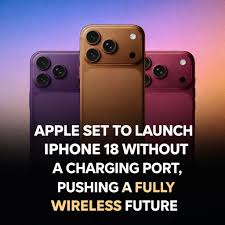
In February of 2026, a bizarre video was posted on TikTok. It went viral right away, all over the net. The clip, which appears to be the bottom of the next-generation iPhone 18, is short. The small, magnetic connection point was the only way to connect to it, rather than a familiar USB-C slot. It was a design that resembled the same MagSafe charging port that was used in the latest MacBooks. The video made more than 17 million views within hours and absolute shockwaves in tech industry.
Social Media Responds to the Design Change
Many users went to the comments to complain about the leaked footage. Many of the users resented the possibility of having to purchase a completely new charging cable. Many of the fans were going to migrate to Android viewers. If the leak was proven true, they said they would bail out. Android enthusiasts were only too happy to make fun of the iPhone users for the “says one” to “says two” change. The tempest became such a splash of news that the simple animation became mass news within days.
The medium used in the production of the footage has not been disclosed.The medium of the footage production is not known.
The original owner of the video failed to give any real sources in the supply chain. They didn’t even share any internal documents. There was immediate speculation from tech reporters, who sought to spot any authenticity in the video. From early on it was apparent that the video was just a computer-generated animation for views. The charging animation that appeared on the screen was in contrast to the way Apple software works. On a blank screen a green lightning bolt emerged, directly challenging the rest of iOS charging graphics.
The EU laws stand in the way.
I think there is a huge reason in law why this particular hardware change is unlikely to ever occur. The EU just enacted very tough regulations. With these laws in place, all smartphone manufacturers will need to follow a common standard for charging devices. This is the kind of law that led Apple to ditch its own Lightning cable years ago.This is the kind of law that made Apple ditch its own Lightning cable years ago. These are not optional, it is a legal requirement. Apple cannot simply ignore these legally binding requirements.
The Difference Between MagSafe Versions
One of the root causes of the confusion is Apple’s naming conventions for its charging technologies. MagSafe is the name given to two completely different types of systems. On MacBooks, it is a real cable that magnetically snaps into a port. On iPhones, the name refers to a circular wireless charging pad that is attached to the back of the iPhone. The viral video was nothing more than the laptop version that was pasted on a phone. This doesn’t make any sense for a handheld device.
Talking about why a Magnetic Port fails on Phones.
There’s one reason for having MagSafe for the laptop. When someone trips over the power cord, it will safely unplug. This keeps the computer from falling through the cracks to the floor. A mobile phone is displayed on a desk or hand in a different way than a laptop. If the connection gives out easily, you’ll constantly lose it when you’re trying to use the phone while you’re lying in bed. It would also make it difficult for accessory manufacturers to make anything that would fit in such a shallow port.
A truly portless future is a reality.
A full-featured portless phone is highly talked about, but for now, a MacBook-style port will not be possible. If there’s a wired port, it needs to be USB-C, but the European Union law doesn’t specify the rest of the story. Technically, a smartphone with zero ports (or holes) would meet these exact same rules. If the port was taken off completely, it would make a water-tight seal. It would also free up a lot of space within the phone housing! But Apple is not anticipated to venture that far with the iPhone 18 lineup.
Technical Hurdles of Removing Wires
Removing the actual port generates huge headaches for the professional repair person. A port allows direct and reliable data retrieval in case of a complete failure of the phone screen. Physical connection is a crucial component of diagnostic tools to determine the problem in a damaged device. Apple has been working on such recovery systems by the internet quietly and it is going to solve this exact problem. Those wireless recovery devices aren’t quite ready for prime time, just yet. They need more time before the port can be totally eliminated.
Upgrades Coming to Wireless Power
The device is also getting big upgrades for wireless connectivity, despite the presence of the USB-C port. As per leaks, the new devices will implement the new Qi2.2 charging standard. This technology upends the notion of wireless power delivery for up to 25 watts, or even more! This huge leap brings wireless charging on par with a traditional wall socket. The phone will also not get very hot due to the better magnetic alignment. It guarantees efficient power transmission when it is placed on a charging pad.
New Battery Technology Supports the Speeds
The power that’s pushed into a phone wirelessly creates a lot of heat. The heat stress can cause degradation of inboard components with time. Apple is said to be experimenting with new silicon-carbon battery cells to deal with this additional excess heat. The new batteries fit the same space, and are lighter, but store more energy. Another nifty software tweak in the next-generation iOS 27 will also keep an eye on the temperature and dynamically adjust speeds accordingly. The combination guarantees that the battery remains healthy, even during daily fast wireless charging.
The Accessory Market Adjusts Quickly
Indeed, China is already manufacturing to these new standards for wireless charging. Acoustic manufacturers are well aware that quicker wireless speeds will generate a ton of business. The power banks are becoming larger, with improved cooling mechanisms, and are now designed to attach to the rear of the device. Retailers are getting rid of older, slower charging stations to upgrade for the newer equipment. The whole accessory industry is getting ready for a big change. Their vision is for users to rarely plug in to a cable.