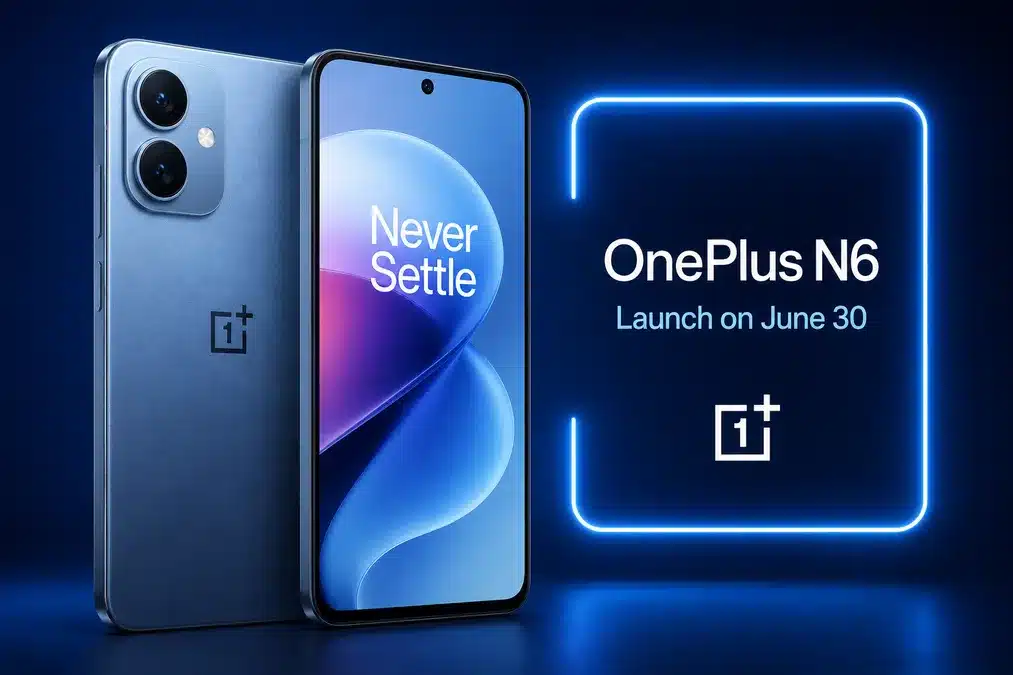
On June 30, OnePlus is scheduled to introduce the N6 to the Indian market. This will be their brand-new N-Series. In the Rs 18,000-Rs 25,000 price range, they will sell the device targeted at the youthful population.
For advertisement on our platform, do call at +91 6377460764 or email us at [email protected].
The plan is to deliver a high-end experience on a low-end device.
Last week, some teaser images and teasers were seen surfacing online. The marketing campaign, to be held back by an actual, fully spec-loaded phone, is expected to promote better battery backup. Recent leaks and statements from OnePlus, however, expose that this isn’t exactly the situation. The OnePlus N6 has multiple hardware downgrades that should give potential consumers reason enough to avoid buying it.
A monster of a battery comes with a hell of an anti-consumer charging catch.
While not confirmed yet, it seems the N6 packs a mammoth 8,000mAh battery – about twice the capacity of a typical flagship smartphone. OnePlus asserts this battery would last for three whole days on one charge and even maintain up to 80 percent capacity for a whole seven years. Although these numbers seem wonderful, these impressive specs may turn into a major let-down once you consider that they are combined with a pedestrian 45W SuperVOOC charging support.
Charging an 8,000mAh capacity phone with such low charging specifications will take an awful lot of time – likely well over two hours – to reach 100%.
While most devices in the price segment offer as much as 60W or 80W fast charging, OnePlus forces you to wait for hours. Such long charging times negate the freedom of having a giant battery in the first place.
Weak Chipset Under the N6 Hood
From the Geekbench testing results, we get an estimate that OnePlus N6 would carry MediaTek Dimensity 6300 as the internal processor. This should be considered an insult to the technology. The processor scored below 780 in the single-core test and below 2,000 points in the multi-core test – something that usually lands on the budget smartphones costing Rs 12,000 range.
Packing a chipset like Dimensity 6300 in a device approaching the Rs 20,000 market seems like a completely unjustifiable proposal.
This chip only contains a 2.4 GHz processor with two cortex-A76 cores and the basic Mali-G57 MC2 graphics support. Couple with that the 6GB of RAM in this phone and the experience will definitely falter as soon as a demanding game is launched.
Design Consists of Plastic body and ugly bezels
The design language on the OnePlus N6 is as straightforward as it can get. It boasts a fully flat rear body with a square-cut camera module located on the top left corner. This design will be available in black and green colours.
The plastic-based material quality is surprisingly awful – every part of the frame, as well as the posterior body, is made from hard-wearing plastic.
When you incorporate this plastic design language into a massive battery cell within, the overall smartphone feels like an awkwardly bulky, brick-like item, bereft of the usual high-quality finish typically delivered by OnePlus models with glass and metal bodies. The N6 does not offer much in terms of external aesthetics in the face as well; beveled in with large black bezels on every edge, there’s a gargantuan bottom chin that looks like something taken from a smartphone released back in 2019, making it hard to justify the price.
Over-the-top Design Affects Portability and Carrying Factors
Including an 8,000 mAh capacity on any smartphone naturally leads to some considerable size increase, along with weight as well. The N6 weighs as much as it does. Normal smartphones weigh close to 190g, so adding an enormous battery may just spike the device’s heft by a large margin, making it uncomfortable to slip into pockets, especially when wearing normal fitting jeans and trousers, and also quite strenuous on your hands and wrists to hold up for long periods if you are planning on playing a long gaming session.
Dated Port and Underprivileged camera Hardware
On the bottom end of the N6, you find a type-C USB port, yet as dated as it is possible to imagine, the port uses a slower USB 2.0 data transfer rate. This means downloading and moving large 4K videos and RAW files can take forever. As you would expect, using outdated connections for the display will result in no display output functionality, leaving you unable to hook the phone up to external displays for a presentations.
In the cameras department, although it will have dual rear setup to take decent everyday photographs, secondary sensors of those camera will just be there for namesake, with the camera system also having an insufficient high-performance sensor needed to capture great, crisp low-light pictures.
The Dimensity 6300 Chip will also not let the manufacturer perform high-resolution and excellent-quality recording.
Software Bloatware fills your phone with unnecessary junk.
On the software side, OnePlus was renowned for its lightweight software. Gone are the days where a simple, bloat-free UI experience was considered one of the brand’s signature features. The device is expected to launch with Android 14 based OxygenOS 16 and the company guarantees at least sixty months of system upgrades, yet there will be a host of additional pre-installed bloatware applications that users need to immediately delete to get proper internal storage space. In a device with only 6GB RAM, this is going to mean that even a couple of open applications will result in most, if not all the applications being terminated to keep the operating system from freezing, forcing them to load again whenever switching from a resource intensive app.