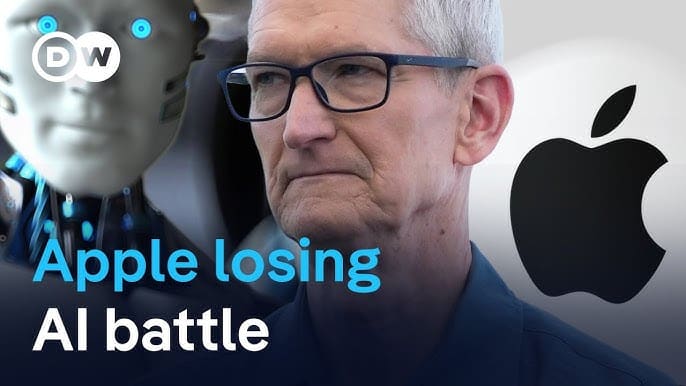
The Magic Is Fading: Why the iphone 18 Leaks Are Different.
Towards the end of the year of 2025, the tech community would typically be electric with anticipation of the next big thing to be launched by Cupertino. The tone that surrounded the initial leaks of the iPhone 18 lineup is however much different this time. Rather than the frantic outburst of excitement, both the response by the core fanbase and technology analysts can only be categorized as a collective sigh. The drips, indicating a split launch-plan and the long-hyped arrival of a foldable device in late 2026, have not been able to stir the imagination of an increasingly demanding public. This lack of enthusiasm is mostly due not to the hardware, but to the increasing understanding that Apple is engaged in a losing war on the biggest battle of the decade: Artificial Intelligence.
For advertisement on our platform, do call at +91 6377460764 or email us at [email protected].
The strategy of being a fast follower was long considered as one of the virtues of Apple, and an indication of a company that could not release a technology until it could master it. However, when Generative AI arrives, late is beginning to start appearing akin to being left behind. Although Google has re-invented the Android experience as proactive and multimodal intelligence in their Gemini 3, the Apple Intelligence platform proposed by Apple remains a beta product. The threat of the iPhone 18 being slightly faster powered or having a folding screen is insignificant when the software powering the phone appears to be generations behind the rest. The glitzy hardware additions are no longer sufficient to make people forget the fact that Siri still has some issues with the tasks that Gemini performs with ease.
https://www.wsj.com/tech/ai/apple-ai-siri-development-behind-9ea65ee8
The Fold That Came Ten Years Late.
Among the headline rumors in the 18 cycle of iPhones is the introduction of the so-called iPhone Fold, which is the first time that Apple would venture in the foldable smartphone market. During any other period, this would have been a newsworthy announcement that would have had months of headlines. However, the news is now being viewed with some distrust and jokes of Apple finally coming up with something that Samsung mainstreamed more than half a decade ago. The general consumer is already tired of the innovation of the folding screens and unless it has a killer software feature that could be worth the supposedly 200000-price, it appears like a last minute scramble.
The leaks indicate that the phone will have a display that is free of any creases, and a hinge made of titanium, which is an impressive feat of engineering, but not surprising at this price point. But, here is the question, what can an iPhone Fold do that a regular iPhone cannot do? On Android, foldables are driven by next-generation multitasking AI, enabling customers to run three applications at the same time and drop and drag content between apps, and utilize the additional screen space to perform more complicated workflows. IOS has been infamously deficient in multitasking features, and it is doubted that the system can be capable of capitalizing on a foldable form factor by 2026. The hardware may be a masterpiece but without the brain to come with it, it will be merely a gorgeous stationary item.
The Widening Artificial Intelligence Chasm: Gemini 3 vs. Siri.
The pink elephant behind all Apple keynotes in 2025 has been the dissimilarity in the capability concerning Apple Intelligence compared to its competitors. Although Apple has concentrated on on-device processing that is privacy-centric, it has highly constrained the extent to which its AI can achieve. Google Gemini 3 on the other hand has adopted a hybrid approach and is providing deep thinking reasoning and the integration of multimodal understanding. The users of Pixel and Samsung devices are already conversing in voice with their phones in real time and in fluid motion, displaying them live video of smashed appliances to have them offer quick repair suggestions, and write complicated code in a few seconds.
In the meantime, iPhone users cannot count on Siri to comprehend context in more than one app. The integration with the third-party tools promised is bulky and users are often forced to perform data sharing approval manually on a case-by-case basis. This tension ruins the illusion of a smart helper and makes the use of AI on an iPhone seem like a duty instead of a superpower. The iPhone 18 is also said to use the A20 chip which is a 2-nanometer powerhouse capable of improving AI performance. However, raw processing power cannot be used in applications that do not have smart enough underlying models. The hardware staff is producing Ferraris, and the software staff are yet to be able to decide how to construct the engine.
The Pricing Trap of the A20 Chip
The other significant aspect of controversy in the leaks is the expectation of a price increase of the iPhone 18 Pro models. The transition of A20 chip to TSMC most advanced 2nm process is anticipated to raise the cost of production by almost half. This will be unavoidably transferred to the consumer who is likely to see the initial price of the Pro Max model in India reaching much above 1.6 lakh. In a society where inflation is already stinging, expecting the fan to spend much more on the so-called performance that they cannot physically experience is a risky move.
This problem is enhanced by the fact that the performance improvement brought by these newer chips is not providing a diminishing returns to the typical user. The majority of smartphone work such as scrolling through social media or capturing 4K video is already instantaneous on modern devices. The only frontier that needs enormous computing capabilities is AI, and in case Apple AI capabilities are meager, then the A20 chip will be a costly solution to a non-existent issue. Users have started doubting the need to upgrade to an ultra-priced phone when their three years old iPhone 15 is still fast. The value proposition is becoming weak and the Pro name is beginning to be more of a marketing tax than a label of ability.