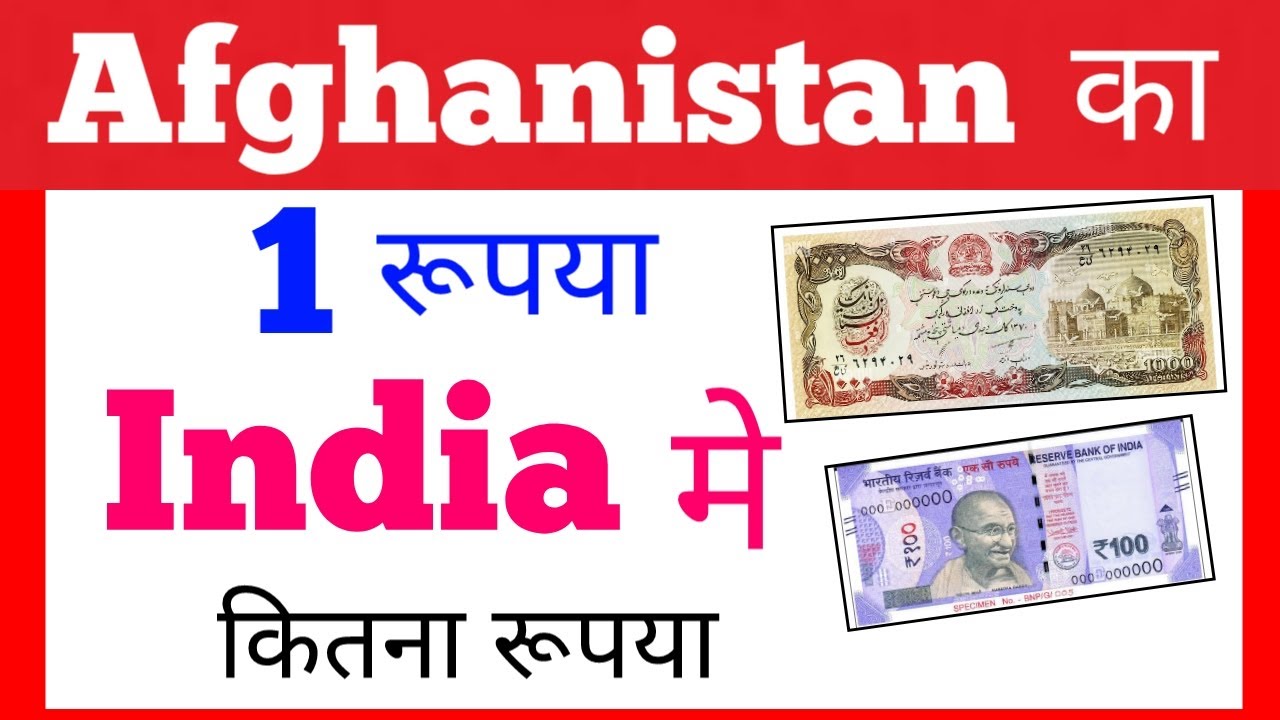
It would appear peculiar: a nation with a history of political unrest, little to no industrial production and sanctions, i.e. Afghanistan, is having a currency (the Afghani) that is trading at a rate greater than a single Indian Rupee per unit. By mid October 2025, one Afghani is equivalent to 1.32.
For advertisement on our platform, do call at +91 6377460764 or email us at [email protected].
But being stronger here does not imply having a better economy or a richer country. A combination of several policy, structural and accounting factors would give the current exchange rate. We’ll walk through them.
The most important causes of Afghani exchange rate performance.
A major cause is an extremely tight currency control and regulation that has been enforced by the central government of Afghanistan (the Taliban). The government has outlawed or highly limited the use of foreign currencies i.e. U.S. dollars as well as Pakistani rupees to transact local businesses.
The demand of Afghani is artificially boosted since it becomes almost impossible to conduct all domestic transactions in other currencies and restricting foreign currency outflow is also enforced. By restricting the options (foreign currencies) that people have a local currency may appear stronger since they have fewer options, and this can slow down depreciation in the short term.
A second reason is high inflow of foreign aid and remittance. Since Afghanistan has been isolated in most aspects through normal global finance (banking sanctions etc.), much of the humanitarian aid is in the form of cash and is turned into Afghani within the country.
Third, monetary policies of the Afghani central bank have been interventionist. These are controlled money supply, the capital flight, the foreign currency outflows, and the tight regulation of banking operations and foreign exchange operations.
This can be useful in making a currency appear stronger (as depreciation and speculative outflows are suppressed) when the underlying economic fundamentals (such as GDP per capita, industrial output, investment etc.) are weak.
Fourth, the comparatively low exposure to the global exchanges of trade also contributes in Afghanistan. Since imports are high and the export base of Afghanistan is low, several external pressure that impact the currencies in trade-intensive nations are not noticeable in Afghanistan because of its isolation. The value of imports as compared to exports might appear to be in the negative but when you add that to a tight control and the limited use of the foreign currencies, the force to make the Afghani fall is somehow reduced.
What Stronger Currency Does Not Mean Here.
One should be thankful that this currency comparison does not imply. It does not mean that Afghanistan is economically better or stronger than India since a unit of Afghan currency is more valuable than a unit of Indian Rupee. The economy of India is not only bigger but more diversified and its industrial production, international trade and investment are far more.
Further, the nominal exchange rate can be artificially supported (i.e. high value per unit) and not necessarily strong organically. As a matter of fact, analysts have been warning that there might be some distortions in these policies: consumer prices, imports, investment and cost of doing business will be hurt even when the local currency appears stable, or even strong.
The Big Picture
In a nutshell: the Afghani is considered to be trading at a premium of more than one Rupee largely due to the high level of government controls (prohibiting alternatives, prohibiting foreign exchange), dependency on aid and cash conversion, minimal outflows of capital, as well as inadequate exposure to some of the global forces. Instead, the Rupee belongs to a more liberalized, highly globalized economy in which the value of currency is more prone to trade deficits, inflation, international investor confidence, flows of capital etc.
Thus the title, which is the Afghan currency is valued higher than the Rupee, is technically right as far as exchange rate is concerned. That, however, does not automatically give an economic prosperity or strength. It is more of a policy, isolation, remittances/aid, and financial constraints than extensive economic health.