Triple Shot and Two Pumps: How Starbucks Financial Turn Around Works.
The plan, dubbed the Triple Shot Reinvention with Two Pumps, was designed to deal with key bottlenecks in the operations of the company as well as aggressively increase its presence across the globe. The plan aimed at three major pillars, including boosting the brand, enhancing digital capabilities, and rapid global store expansion. Two key enablers, or pumps, helped these pillars, which are unlocking efficiency and reinvigorating the culture of the partner (employee).
For advertisement on our platform, do call at +91 6377460764 or email us at [email protected].
The Triple Shot program was not just a marketing motto, but a radical reorganization of the way the coffee giant was conducting their business. Criticized as having long wait times and too complex a menu, the company dedicated itself to a 3billion efficiency program. Two thirds of these savings were directed external in the store supply chain and cost of goods sold whereby capital was reinvested into wages, training and technology. This financial discipline gave the company a runway that it needed to stabilize its margins and at the same time finance the costly implementation of new store formats and digital technologies.
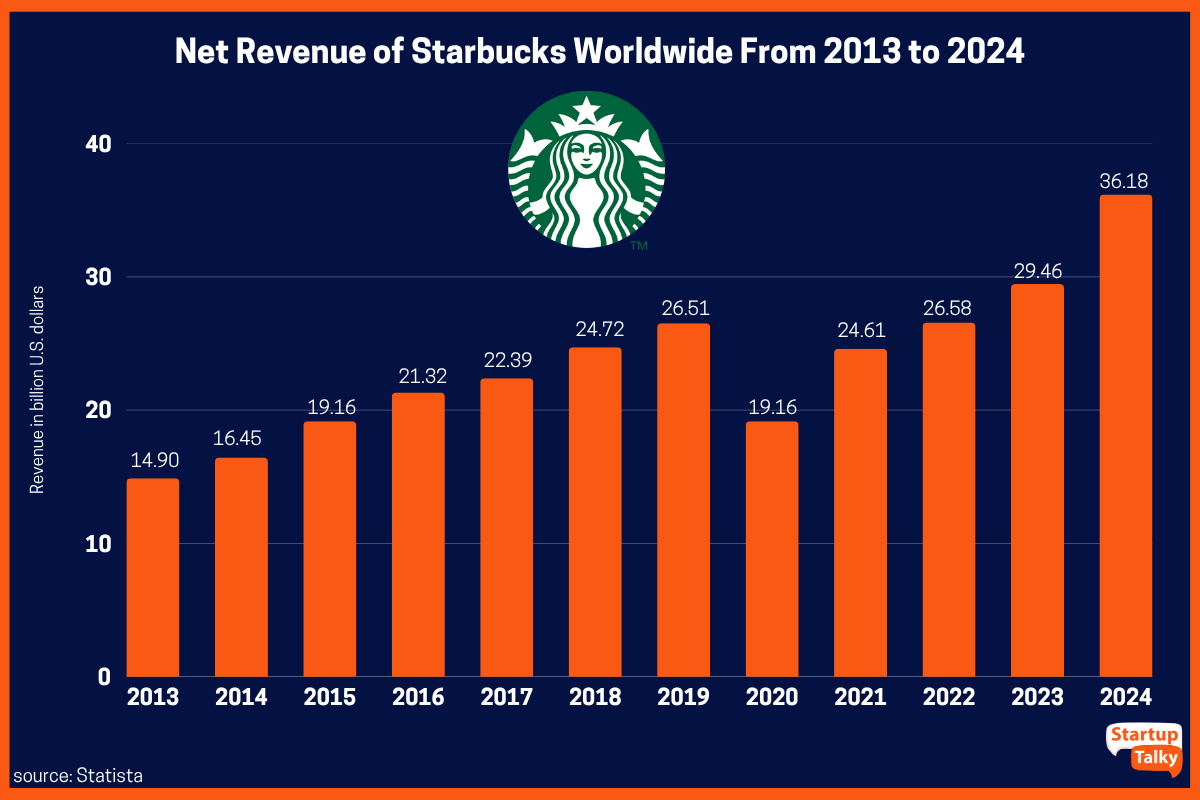
The effects of these strategic changes were reflected in the financial statements of the company by the conclusion of the fiscal year of 2025. Starbucks recorded a revenue of 37.18 billion dollars during the fiscal year ending in September 2025, which is almost 3 percent higher than the previous year. What is more essential, the fourth quarter of 2025 became a turning point, as the global comparable store sales have gone back into a positive trend after seven quarters of stagnations or decreases in a row. The recovering was especially evident within the International segment where the net revenues grew by 9, which justifies the genuinely global intent of the Triple Shot plan.
The “Back to Starbucks” Pivot: Minimalizing Operations and Food Structure.
Although the Triple Shot strategy was the foundation of the structural effectiveness, when Brian Niccol became the Chairman and CEO in September 2024, he suggested an essential refinement called the Back to Starbucks plan. This re-evaluation of strategy was a direct reaction to the customer and employee commentaries that the brand had gone too far out of its original focus of being a third place – a friendly community to work in between work and home. Niccol established that the customer experience had become transactional and the barista experience had become chaotic due to the quest to be efficient.
https://www.investopedia.com/articles/markets/021316/how-starbucks-makes-money-sbux.asp
The Back to Starbucks program focused on streamlining the in-store space. The remodeling of the menu structure was one of the major changes. The Starbucks menu had become a maze of changes and limited-time deals that dragged out service and disoriented the customers over years of following the fads. The new management simplified these services and eliminated those that were not achieving good performance to concentrate on the coffee products and the common customization. This was accompanied by a throwback to classic coffeehouse aspects like the revival of ceramic cups that diners would sit and have their coffee, removal of upcharges incurred by alternative non-dairy milk, and this was a big win by the consumers.
Staffing changes were also done to deal with operational complexity. The firm spent around 500 million dollars to add man power during peak time; this was a cold retaliation to the understaffing issues which had rocked other quarters. Starbucks was trying to make the shift to enhance the speed of throughput by adding more green aprons behind the bar not to compel the workers to work faster, but to make sure that it was enough to support the number of orders. According to early Q4 2025 results, these investments are already paying off, as the service time in U.S. company-operated stores was already below four minutes on orders of cafe drinks, a major indicator of customer trust being restored.
Technological Integration: The Siren System to Human-Centered AI.
Technology was at the center of the reinvention of Starbucks, but the strategy was developed much further than the original ideas. During the reinvention process, at the very beginning, the company was marketing the so-called Siren System which was a series of automated equipment to accelerate the process of producing the complex cold drinks. The implementation was however made rocky as the system was reported to have glitches and its bottlenecks were still being experienced. Acknowledging such limitations, the firm shifted its technology strategy in 2025 to the Deep Brew and human-centric AI instead of pure automation that estranged personnel to technology that enhanced human capability.
Recently, one of the successful integrations was the implementation of AI-based automated inventory counting. This system was designed together with technology partners and worked with computer vision and handheld tablets to track inventory of ingredients such as oat milk and caramel drizzle instantly. This laborious manual process was computerized and the company said it saved a lot of time that partners could spend more often doing beverage preparation and dealing with customers. This change became pivotal in the achievement of the Two Pumps objective of recharging partner culture by eliminating low-value administrative activities out of their work.
Further evolution of the digital pillar of the Triple Shot strategy was also observed. Its Starbucks Rewards program, which is a strong engine of a repeat business, reached 34 million active members in the U.S. by the end of 2024. The company used this platform not only to provide discounts, but to do personalized marketing that promoted frequency without margins. By abandoning blanket blanket-based discounting in favor of offering specific deals Starbucks could optimize its average ticket size and control the traffic flow to the stores to prevent overcrowding in the stores during the best promotion weeks.
Revitalizing Partner Culture and Labor Relations.
One of the core ideas of the reinvention was the recognition that Starbucks Experience is provided by its partners. Labor relations were also a turbulent time in the company as there was an attempt of unionization and strikes. To this, the reinvention plan had increased investments on partner welfare to stabilize the workforce and to ensure turnover was reduced. The company said that partner turnover had hit record-lows in fiscal year 2025, which was a result of higher wages, stability of scheduling and the expansion of benefits.