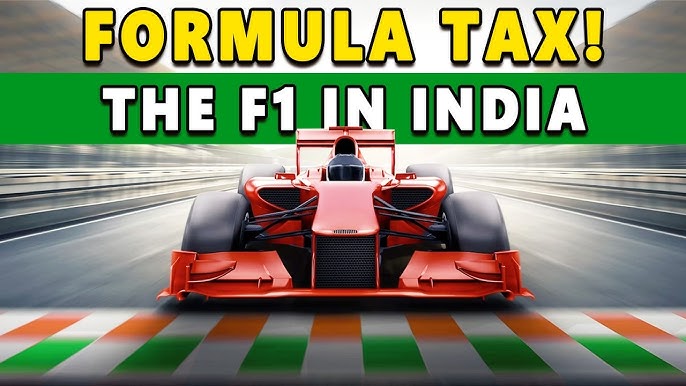
The Great Indian Motorsport Paradox.
The fantasy of an Indian driver who regularly competes on the highest level of motor sport is apparently becoming more and more distant with every season. Although India is the most populous country in the globe with a developing economy, it has not been able to make a sustained presence in the high-end sphere of Formula 1. A nation that has mastered cricket and excelled in the Olympics cannot afford to fail to create a stable F1 star and this is an ache to the sports lovers. The short lived introduction of Narain karthikeyan and Karun Chandhok seems like a long time ago, and the gap has not been able to be sealed with any young talent. This stagnation is not because of the lack of talent but it is because of the failures of the system and the unbeatable obstacles in the monetary sphere.
For advertisement on our platform, do call at +91 6377460764 or email us at [email protected].
https://shorts.growthx.club/p/why-formula-1-failed-in-india
The essence of the matter is in the fact that the amount of money needed to groom a Formula 1 driver since his/her early years is staggering. It is unlike football or even cricket where a talent can be demonstrated with little equipment but in the case of motorsport, millions of dollars are being spent before a driver can even get to the professional level. The Indian family must use crores of rupees just to get a child through at the karting levels in Europe, where there is the highest level of rivalry. This absence of a strong sponsorship ecosystem within the country suggests that only the extremely rich can be capable of having the fancied career in F1. Corporate India is still slow in supporting the racers, whereby they can be sure of the visibility of cricket celebrities rather than taking the gamble on the racers.
Ghost of Buddh international Circuit.
The Buddh International Circuit in Greater Noida is one of the saddest reminders of this unfulfilled dream. The construction of the race circuit was celebrated and the race circuit was quoted as being among the best in the world by pilots such as Sebastian Vettel. Nevertheless, it was only three seasons and the reason the race was removed off the calendar was because of tax issues and red tape. The failure to accept F1 as a sport by the government which instead treated it as entertainment brought about crippling tax requirements that scared the organizers away. Such hostility by the state not just killed the event, but also gave a message to the whole motorsport fraternity to go home.
The lack of a home Grand Prix has been catastrophic to the grassroot sport development. One of the triggers is a local race, which makes young children start karting and gives local talents an opportunity to prove their abilities to international teams. The Indian GP has cut the direct route to F1 hence the trip to Europe is still more necessary and costly. The race track has been left mostly unused as an international racing track a constant reminder to the Indian motorsport of the what might have been. Indian drivers and mechanics also lost their world networking opportunities with the loss of the race.
The Sponsorship Drought and Business Indifference.
Skilled motorists such as Jehan Daruvala and Kush Maini have demonstrated so much potential at the junior levels such as Formula 2, that they are knocking at the F1 door. They however are usually left behind when it comes to getting seats to the drivers who attract more sponsorship packages. In the ruthless Formula 1 business, talent comes second after the cash that a driver has to offer to a team. This is because Indian companies have not been in the forefront to sponsor these players when they need it most in their career. Although the brands are pouring their billions into the IPL teams, they are not keen on the global publicity that F1 can bring them due to the absence of the local relatabilities.
This financial weakness implies that Indian drivers will not be able to compete with their European or South American drivers on a level playing field. They frequently are forced to trade off quality of teams they race in junior formulas and it impacts on their performance and publicity. The vicious cycle goes on as they do not have results and without the results, they do not have sponsors and without the sponsors, they do not have the best equipment to produce results. The drivers and their families are on a lonely fight and in most cases, they end up consuming their own fortunes in a dream that is never achieved. The pay driver story runs the sport and in case there is no state-inflicted sovereign fund or a corporate conglomeration, the Indian talent is a standalone island.
Regulatory Roadblocks and Shortsightedness.
The lack of interest of the government towards motorsport is not only limited to taxation but there is also a lack of sporting roadmap. India is purely an individual affair and does not have any devoted programs to spot and develop racing talent, as in the case of other countries such as China or the UK. The motorsport regulating bodies in India are resource and influence strained to advocate to better policies or infrastructural support. Accessibility of the middle class is low because the number of professional karting tracks in a country of 1.4 billion is hardly any. Discovering that one generational talent is statistically unlikely cannot be done without a large pool of players in the grassroots level.
Moreover, the fact that people still see motorsport as a hobby of a wealthy man and not an athletic activity still prevents its development. The schools and universities do not have the motorsport engineering or racing as part of the curriculum due to this cultural stigma. The technical skills needed to develop a racing culture are lacking and drivers have to depend on expatriates, the foreign mechanics and engineers. The situation is not likely to change unless there is a change in mindset regarding the notion of racing as a legitimate sport that should be the focus of national pride and investments. It is not that the athletes have failed in the dream, but rather that the system has failed to create a ladder that the athletes can use to reach the top.