For advertisement on our platform, do call at +91 6377460764 or email us at [email protected].
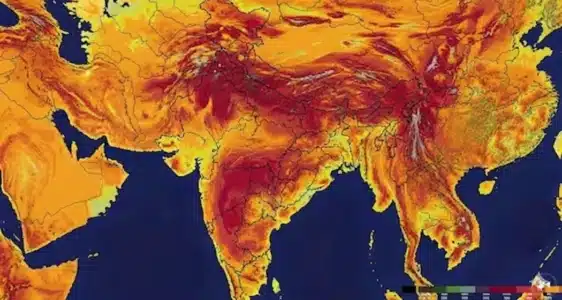
Weather monitors around the world have found an alarming pattern in the temperature of the world. According to the latest climate monitoring data, 97 of the hottest 100 cities in the world were in India on Friday afternoon, May 22, 2026. The figures offer a bleak picture of a brutal, unforgiving summer, well before the onset of monsoon rains on the subcontinent.
The heat wave in 1 country has left international weather monitors amazed.
The Indian locations had the same 99 places on another top 100 worldwide list a week ago. The numbers moved up a few points or down a few points around the weekend, but they haven’t changed more than a point and that’s it. A massive high pressure system, backed by hot dry winds across the central and northern plains has effectively made the country the focal point for the planet.
Monitoring the hottest places on earth.
The data, which was gathered by live global temperature tracking firm AQI.in, shows that temperatures went “above 45 degree Celsius” in several states at the same time by mid-afternoon. The eastern state of Odisha’s Balangir, which is also in the eastern part of the state, officially became the hottest place on earth with a scorching 48 °C.
Sasaram, in Bihar just behind it, recorded the high-temperature reading of 48 degrees Celsius.
The Uttar Pradesh, ancient city of Varanasi was next with temperature of 47 degrees celsius. The extreme danger of the heatwave is the lack of moisture in the air. During the hottest times of day, the humidity in these top cities fell as low as 6 percent to 8 percent. This water deprivation results in a severe thermal stress for the human body, that is unable to cool itself down by sweating, increasing the risk of sudden stress on the body’s organs.
The Only Three Non Indian Exceptions:
The global top 100 list was so packed with the Indian cities that only the top three cities outside the country made it. Intriguingly, each of these exceptions is on the northern border and in neighbouring Nepal.
They are Dhangadhi ranked at 23rd place in the world, Nepalgunj at 34th place and Lumbini Sanskritik, the ancient town, at 76th place in the world.
The same regional climate system over northern India caused temperatures to keep near 45-46 degrees Celsius in these towns in Nepal. Other than this little patch of Nepal, all the other places on the international top 100 list were in a town or city in India. The geographical extent of the heat is huge and includes the states of Punjab, Telangana, Madhya Pradesh, Jharkhand and Rajasthan.
Emergency Measures and Free Flow Traffic
Local Governments are making an effort to adjust to the extensive heat levels as this is an unprecedented event in the life of the planet. The police officers in the city of Banda, which is in the Indian state of Uttar Pradesh, opted for a bold step that is unusual; they switched off all the regular traffic lights in the afternoon peak hours.
They changed intersections to “free flow” as so that commuters would not be forced to sit on burning asphalt waiting for light changes.
In Banda, the district administration has also quickly started constructing shaded shelters at key intersections, in addition to offering drinking water and minimal overhead to outdoor workers. In the interim, the state government of Punjab made drastic changes, fully changing the operating hours of all government offices, schools and colleges. Early hours of operation were mandated for institutions, with the schedule adjusted to begin at 7:30 AM and the building’s doors closed completely at 1:30 PM, before the hottest part of the day.
Hospitals are getting a lot of dehydration cases.
The body burden on the population is becoming evident very quickly in local health care institutions. Several states’ public health departments have reported a sudden, alarming rise in heatstroke cases and extreme dehydration.
As of March 25, the state health department in Andhra Pradesh had reported more than 320 suspected cases of severe heatstroke, most of which were reported in the final two weeks of May.
Citizens are coming into ERs in the northern and eastern parts of the country in a massive line with heatstroke, diarrhoea and extreme exhaustion. The crisis is complicated by the fact that a number of rural communities in such states as Gujarat are now being forced to use emergency water tankers due to falling water levels. As per the official definition by the India Meteorological Department, a severe heat wave is when temperatures are 4.5 to 6.4 degrees above the historic normal baseline for the region, which is being breached on a daily basis.
And in the case of regional deviations, relief can be found.
The extreme weather pattern also results in very different climate conditions in other parts of the region, while the plains endure historic highs. The Kerala state in the south has not seen extreme heat warnings, but has been warned of heavy rainfall. The weather office is warning residents of the following districts of flash floods and possible landslides, but not heat stress, with orange alerts.
The north of the mountain states is short of relief.
Sudden afternoon thunderstorms in high altitude towns like Shimla and Kufri in Himachal Pradesh caused a sharp drop in the regional temperature. Even higher, the Rohtang Pass was sown with new snow on the weekend. But the weather experts say these cool offs won’t bring relief to the big heat dome that is deeply embedded over the rest of the country and is likely to stay through early of June as the pre-monsoon weather slowly sets in.