For advertisement on our platform, do call at +91 6377460764 or email us at [email protected].
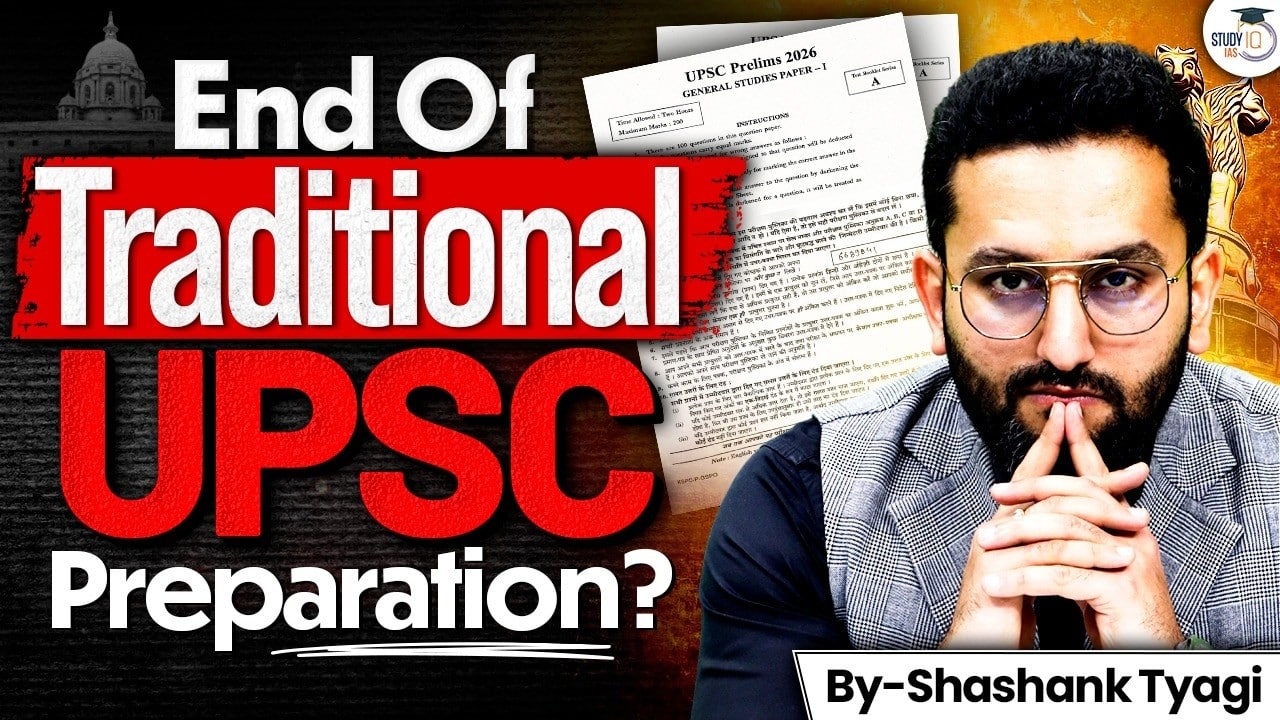
The Civil Services Preliminary Exam taken by Union Public Service Commission is always a stressful exam. It became much worse for more than 800,000 candidates in India on May 24, 2026. There has been a huge public outcry and online protests in relation to the General Studies Paper 1. Teachers and pupils are publicly crying foul about the unfairness and poor design of the test.Teachers and pupils are openly complaining about the unfairness and poor design of the test.
The difficulty of the questions is not the main problem. UPSC has a reputation for having high standards.
Rather, the issue is the length of the questions and the sudden switch to entirely new types of tests that appeared to be similar in content to the subjective Mains exam and not a conventional multiple choice preliminary test. Students were visibly drained and beaten after leaving the test centers. Many said they devoted over half of their allotted time reading the long paragraphs of text, but were unable to start working through the multiple choice answers.
Discuss hypothetical scenarios and the Ethics invasion.Discuss hypothetical scenarios and Ethics invasion.
The most surprising part of the test was a series of very specific situational logic and ethical scenarios questions. In the descriptive Mains phase, traditionally, applied administrative ethics and governance case studies are limited to GS Paper 4. UPSC broke this barrier this year.
When the candidates opened their booklets, they discovered huge paragraphs with the names of hypothetical people, Ms. X and Mr. Y.
One much ballyhooed question was about Ms. X, a mid-level urban development staffer who learns about unproven allegations of corruption against a short-listed infrastructure contractor. The dilemma placed before students was whether it should be revealed immediately, disclosed to nobody as a way to avoid delays in the project, or disclosed to a limited audience of an oversight committee. A second large question provided a layered communal and environmental dilemma as a waste management plant is being constructed close to a tribal village, and candidates were asked to be a government mediator.
These questions were not about memorized constitutional articles or dates from the past. They required high levels of analytical thinking in a short time frame. A regular reader reads these situational problems is 3-4 minutes to fully diges them. Students, during a test given to you where you have about 80 seconds per question, this killed all of that time management.
If you’re feeling a bit bored, try a little obscure trivia and a UN peacekeeping puzzle.
Students became even angrier when they had to hit the facts on the paper. In recent years, candidates have been depending on their current affairs compilation books and following the major headlines. The 2026 paper completely skipped tracking news.
UPSC introduced a very particular matching puzzle pertaining to old United Nations Peacekeeping operations. The candidates were asked to correctly match certain acronyms and identify their exact time of operation between 2002 and 2018.
There was considerable criticism of this particular question on social media from the side of prominent coaching mentors and former bureaucrats. According to Indian Forest Service officer Rahul Kumar Gupta, students don’t need to prepare for or even attempt such questions as they are “to make students panic inside the examination hall. A lot of the history and environment sections were also based on less commonly known biodiversity information, such as describing animals not listed in basic textbooks, or using very complex details of ancient regional history, which are not generally occurring in the textbook.
Teachers make a Direct Challenge to the Commission.
Social media was awash with memes and angry rants, and big name UPSC teachers took part in the protest. Well-known civil services coach, Amit Kilhor went viral after making a video in which he openly challenged the UPSC Chairman, Ajay Kumar, and the anonymous professors who framed the 2026 question paper.
Kilhor challenged the paper setters to sit down and take a fresh test under exam conditions and score 80 out of 200 marks.
He said the commission is ruining the lives and mental well-being of young students by developing such bizarre questions that the exam is unpredictable. Teachers feel that the test has turned into a game of chance, instead of a measure of work and knowledge. They claim that a student who studied as hard as he could for 14 hours a day for three years would not pass this particular paper.
They will discover that the traditional humanities fields are not as distinct as they once believed and that they are not mutually exclusive.
The changing structure of the economy and the science sections also received much criticism because they left students in non-science fields at a distinct disadvantage. The economic questions completely forsook the concepts of traditional macroeconomics, such as basic inflation, gross domestic product calculation, and the normal monetary policy.
Rather, UPSC wanted the candidates to possess a thorough understanding of the principles of digital finance.
The specific differences between the Unified Payments Interface (UPI) and the Central Bank Digital Currency (CBDC) were also asked. The candidates were also asked about modern business jargon such as tokenization, green hydrogen supply lines, and the functioning of large language models in AI. The paper, critics noted, seemed more like a blueprint for fintech startup founders and software engineers than for general administrative aspirants.
The Expected Drop in Cutoff Marks
Due to the huge reading load in the General Studies Paper 1 and a similarly difficult quantitative section in the CSAT qualifying paper, teachers anticipate that the official qualifying cutoffs are likely to be at historic lows this year. Many of the best students left up to twenty questions blank because they ran out of time due to the amount of reading.
There’s no official statement from the commission to the public yet. But, with the latest guidelines on transparency after a previous Supreme Court decision, UPSC is anticipated to publish the provisional answer keys on its official website sooner than ever before. This would give candidates a forum to raise objections against the keys through the Question Paper Representation Portal but it will offer nothing to relieve the mental fatigue of lakhs of students in the country.
If you are more interested in the question type and the actual reactions of students, you can also watch this UPSC Prelims Analysis Video that takes a detailed review of the most difficult sections of the exam immediately after the examination was concluded.