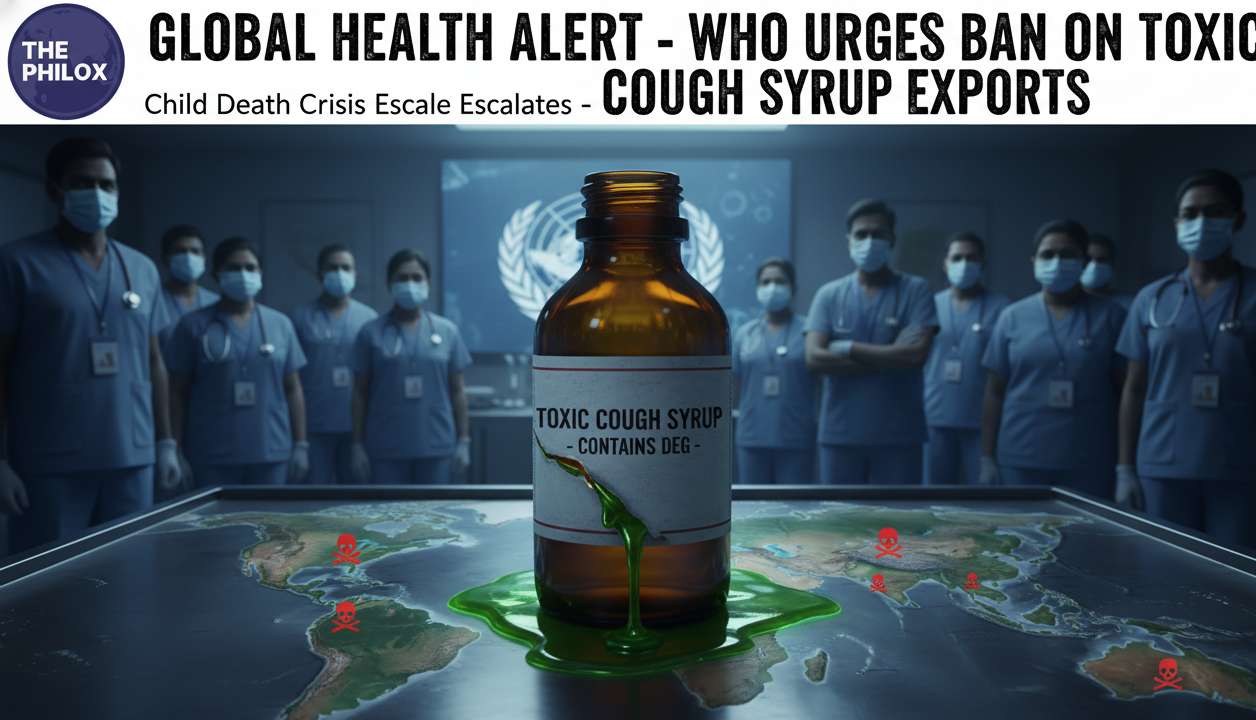
The World Health Organization (WHO) has passed an unprecedented decree on the health of all the world and it has required all the member states to immediately suspend the export of some over-the-counter cough syrup and other medicines which are somehow believed to contain lethal amounts of poisonous elements. The emergency order is an answer to an international crisis that is rapidly growing, with reports that these particular medicines manufactured mostly in some of the largest pharmaceutical centers in the globe are being linked to mass deaths in over a dozen countries on various continents.
For advertisement on our platform, do call at +91 6377460764 or email us at [email protected].
This categorical move is an indication that the WHO no longer believes that national regulatory authorities can control the deadly trade of counterfeit drugs, and therefore the burden of child protection is now transferred to the trade network in the world as a whole.
The recent spate of fatalities, including, most horrifyingly, a number of children, reported in South America and Southeast Asia in recent times, has catapulted the total, worldwide death toll to an atrocious and unacceptable stage, and it is mostly due to the illicit replacement of safe solvents with industrial grade chemicals such as Diethylene Glycol (DEG). In a passionate appeal to the global health community, the WHO Director-General said that the crisis was a systematic malfunction of quality control, ethical manufacturing, which crosses borders.
The mandate of the organization is also clear: the danger of permitting even another batch of contaminated goods into the international supply chain is now too great to be considered, and a total export ban is the only way to go until a new, globally managed quality assurance procedure can be introduced at the manufacturing facility.
This unconditional ban will send shocks of diplomacy and economics at once. It can be assumed that a number of leading pharmaceutical exporting countries will strongly challenge the order, arguing about excessive economic burden and the ability of WHO to interfere in the sovereign trade agreements. Nonetheless, economic arguments are soon being lost to the political backlash that is building up around the number of child victims.
Developing countries, where generic drugs play a large role in the health sector, are in a scramble to obtain safe alternative stocks and carry out recalls of its products nationally as it is feared that their local markets are flooded with the poisonous syrups. Although drastic, the action of the WHO is the last, but the necessary, step towards protecting the most vulnerable groups of people against an entirely avoidable tragedy organized by corporate malfeasance.
The last step to the directive of the WHO is the establishment of an emergency international task force, which will have the authority to make unannounced visits to manufacturing plants, irrespective of their location in a host country. The organization has made it clear that the period of self-regulation has passed by the companies that put a price tag on human life and have vowed to publicly blacklist, name and shame the pharmaceutical company that they were caught violating. The prohibition is an effective, albeit desperate, assertion of international public health jurisdiction over the mighty, frequently veil-shrouded, international drug trade.